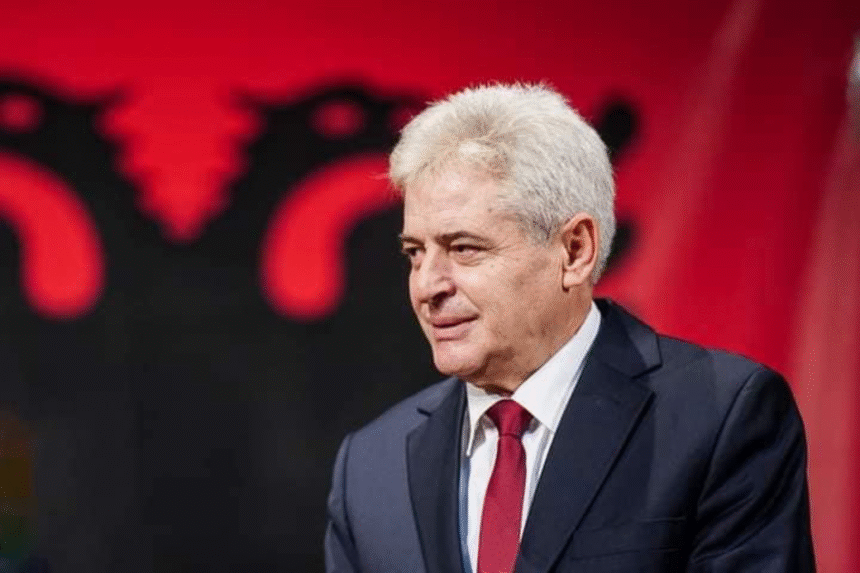
Democratic Union for Integration (DUI) leader Ali Ahmeti has commented on the Hague-based Kosovo Specialist Chambers’ verdicts against four former senior Kosovo Liberation Army (KLA) figures, arguing that the proceedings could have broader implications for Kosovo’s wartime history and statehood.
Ahmeti said he had known former KLA leaders Hashim Thaçi and Kadri Veseli since the early 1990s, while he met Jakup Krasniqi and Rexhep Selimi after the 1998–99 war.
“Hashim Thaçi and Kadri Veseli I have known since 1992–93, during the renewal of the Popular Movement of Kosovo and the formation of the first units of the Kosovo Liberation Army,” Ahmeti said.
He described the four men as colleagues and members of the broader Albanian national liberation movement, saying their political and wartime activities were known to him.
Commenting on the Specialist Chambers’ proceedings, Ahmeti argued that the case should not be viewed solely through the actions of the individuals convicted.
“What is being condemned here is the history of Kosovo, the Kosovo Liberation Army, not individuals,” he said, adding that, in his view, the proceedings risked shifting attention away from crimes committed against Kosovo Albanians during the war.
Ahmeti also alleged that Belgrade and Moscow have an interest in discrediting the KLA in order to challenge the international intervention that ended the Kosovo war and, ultimately, Kosovo’s independence.
“The tendency is to discredit the Kosovo Liberation Army and, at the same time, open a second chapter: the United States, NATO and the European countries that supported Kosovo’s liberation,” Ahmeti said.
He argued that portraying the KLA as a criminal or terrorist organization could be used to question the legitimacy of the U.S.-led international intervention against the government of Slobodan Milošević and the subsequent establishment of Kosovo as an independent state.
“These are my assessments of the entire situation that I have observed throughout this process,” Ahmeti said.
Ahmeti’s comments represent his political interpretation of the broader significance of the Specialist Chambers’ proceedings. The court’s judgments, however, concern the criminal responsibility of the individual defendants and are legally distinct from political claims about Kosovo’s independence or the role of the international community in the 1998–99 conflict.