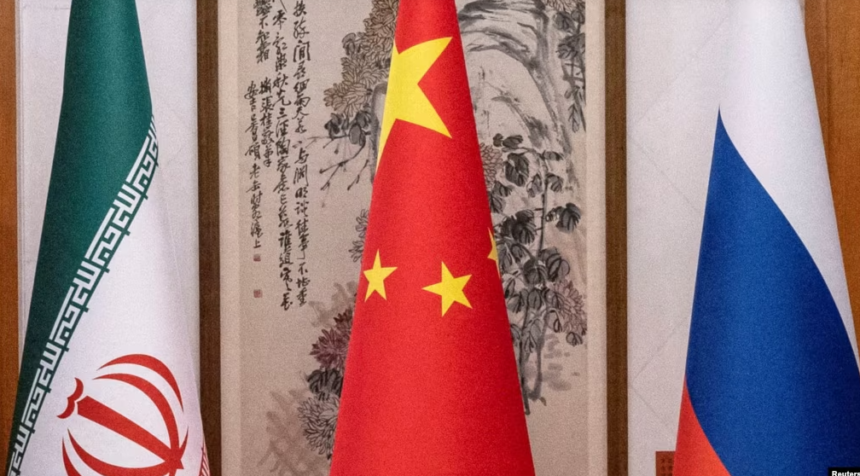
Political parties in Bosnia and Herzegovina have sharply different positions on the European Union and NATO, as well as on relations with Russia, China and Iran. Those differences could continue to shape the country’s foreign-policy direction following the October elections, although the timing of the vote remains contested among parties from Bosnia and Herzegovina’s two entities.
The Alliance of Independent Social Democrats (SNSD), led by Milorad Dodik, has maintained the closest political relationship with Russia among Bosnia and Herzegovina’s major parties. In recent years, the party has also expanded contacts with China, while expressing reservations toward the EU and opposing NATO membership.
By contrast, the Party of Democratic Action (SDA), which is seeking to return to government after four years in opposition, has the longest-standing political contacts with Iran. Party officials have frequently linked those ties to Iranian assistance during the 1992–95 war in Bosnia and Herzegovina.
At the same time, SDA maintains pragmatic relations with China and Russia while officially supporting Bosnia and Herzegovina’s integration into the EU and NATO.
The Croatian Democratic Union of Bosnia and Herzegovina (HDZ BiH) has also maintained contacts with Chinese and Russian officials, while its strategic documents emphasize the country’s European and Euro-Atlantic orientation.
The Social Democratic Party (SDP BiH), People and Justice (NiP) and Our Party (Naša stranka), whose strongest base is in Sarajevo, similarly identify Euro-Atlantic integration as a central foreign-policy priority.
Their positions toward Russia have generally hardened since Moscow’s full-scale invasion of Ukraine in 2022, while their approach to China is largely based on economic interests.
None of the major parties questions Bosnia and Herzegovina’s partnership with the United States, although their approaches to Russia, China and Iran differ considerably.
SNSD and its extensive relationship with Moscow
SNSD’s relationship with Russia extends beyond conventional diplomatic contacts and represents the most prominent example of political cooperation between a major Bosnian party and a foreign power.
Authorities in Republika Srpska maintain a representative office in Moscow, while the entity’s National Assembly cooperates with Russia’s State Duma. Russian officials and parliamentary delegations have also visited Banja Luka.
The Republika Srpska Interior Ministry maintains cooperation with Russian security institutions. According to foreign-policy analyst Harun Karčić, a memorandum with Moscow’s police was renewed and expanded this year.
“Members of the Interior Ministry of Republika Srpska have been sent to Moscow, while Russian delegations and instructors have visited Banja Luka,” Karčić told Radio Free Europe. He said cooperation has included activities described as counterterrorism, as well as training involving special units and service dogs.
Dodik has repeatedly met Russian President Vladimir Putin and other senior Russian officials. On September 11, he said he planned to travel to Russia again before the end of the month.
Putin publicly congratulated Dodik and SNSD ahead of Bosnia and Herzegovina’s 2018 and 2022 elections. Russian officials have also consistently backed positions taken by Republika Srpska authorities concerning the Dayton Peace Agreement, the future of the Office of the High Representative (OHR), and disputes between state and entity institutions.
Since Russia’s invasion of Ukraine in 2022, Dodik has repeatedly said that Republika Srpska would not support sanctions against Moscow. SNSD ministers at the state level have also opposed measures aimed at aligning Bosnia and Herzegovina with EU and Western sanctions against Russia.
At the same time, Republika Srpska authorities have promoted continued economic cooperation with Russia, including cooperation with Gazprom on gas and energy infrastructure.
Other major parties have no comparable ties to Moscow
No major party in the Federation of Bosnia and Herzegovina advocates closer political alignment with Russia.
SDP BiH, Our Party and NiP are among the clearest supporters of European integration and Euro-Atlantic cooperation. They have backed alignment with EU foreign policy, including sanctions against Russia and support for Ukraine.
SDA officials also support Ukraine’s territorial integrity and Bosnia and Herzegovina’s Euro-Atlantic path, although the party’s rhetoric toward Russia has generally been more cautious. SDA leader Bakir Izetbegović has continued to meet with Russia’s ambassador to Bosnia and Herzegovina.
HDZ BiH formally supports the country’s European and NATO path, despite contacts between its leadership and senior Russian officials.
Party leader Dragan Čović met Putin in Moscow in 2018 during the FIFA World Cup, when Čović was a member of Bosnia and Herzegovina’s tripartite Presidency. He has also met Russian Foreign Minister Sergei Lavrov. Those contacts, however, have not been accompanied by a broader HDZ BiH policy of alignment with Moscow or opposition to EU and NATO membership.
Opposition parties in Republika Srpska, including the Serbian Democratic Party (SDS) and Party of Democratic Progress (PDP), do not advocate cutting ties with Russia but have programs oriented toward European integration. Like SNSD, they do not support NATO membership.
Opposition figures including Jelena Trivić of the People’s Front and Nebojša Vukanović of the List for Justice and Order have repeatedly criticized Moscow’s support for Dodik and what they describe as Russian interference in Republika Srpska’s internal political affairs.
China builds influence through investment and party diplomacy
China’s approach differs from Russia’s in that Beijing does not appear to align itself exclusively with one political party or ethnic bloc. Chinese diplomats maintain contacts with most major political actors in Bosnia and Herzegovina and regularly organize visits by Bosnian politicians to China.
Beijing’s influence is primarily built through economic cooperation, infrastructure and energy projects, as well as financing provided through Chinese state-owned financial institutions.
Bosnia and Herzegovina and China established diplomatic relations on April 3, 1995. Sarajevo subsequently endorsed Beijing’s “One China” policy and does not recognize Taiwan as an independent state.
China’s economic presence expanded following the launch of the Belt and Road Initiative, with Chinese companies and financial institutions becoming involved in major infrastructure and energy projects.
Among Federation-based parties, HDZ BiH has maintained particularly visible contacts with Chinese officials. Čović and other party representatives regularly meet Chinese ambassadors, primarily discussing economic cooperation and potential Chinese investment.
In 2015, Čović, then serving as chairman of Bosnia and Herzegovina’s Presidency, visited Beijing, where he met President Xi Jinping and attended a military parade marking the 70th anniversary of the end of World War II.
Despite those contacts, HDZ BiH publicly continues to identify EU and NATO integration as its strategic orientation.
Political contacts between Bosnian parties and the Chinese Communist Party
SDA has maintained political contacts with Chinese institutions for years. According to official announcements, SDA representatives have attended international events organized by the Chinese Communist Party.
SDP BiH, NiP and Our Party have not developed comparable political ties with Beijing.
Nermin Nikšić, the SDP leader and current federal prime minister, has met Chinese ambassadors and supported Chinese investment in infrastructure and energy. NiP leader Elmedin Konaković, who serves as foreign minister, has also held meetings with Chinese diplomats while emphasizing Bosnia and Herzegovina’s EU and NATO integration.
Our Party has comparatively limited political ties with Russian, Chinese or Iranian structures.
“China is trying, primarily through capital, to establish a presence in Europe. And where could it do this better than in those parts of Europe that are in the ‘gray zone’?” Sarajevo political scientist Asim Mujkić told Radio Free Europe.
He also argued that cooperation with the Chinese Communist Party could raise questions about the political orientation of parties that establish such relationships.
SNSD’s partnership with Beijing is different from its relationship with Moscow
For Dodik and SNSD, China represents a different type of partner from Russia.
While the relationship with Moscow is strongly shaped by geopolitical considerations, ties with Beijing are largely pragmatic and connected to financing opportunities for infrastructure and other projects through Chinese state-owned banks.
Republika Srpska authorities have promoted Chinese investment for years, while Beijing has supported positions that overlap with SNSD’s international agenda, including calls for the closure of the Office of the High Representative.
As chairman of Bosnia and Herzegovina’s Presidency, Dodik participated in a 2021 virtual summit between China and Central and Eastern European countries hosted by Xi Jinping. Republika Srpska officials from SNSD have also made several visits to China and met representatives of Chinese state institutions and companies.
China’s approach to Dodik has nevertheless been more restrained than Russia’s. Beijing has not publicly endorsed SNSD in elections or openly intervened in Bosnia and Herzegovina’s domestic political disputes.
Opposition parties in Republika Srpska, including SDS and PDP, as well as Trivić and Vukanović, have fewer developed political links with Beijing.
From wartime ties with Iran to differing positions today
Relations between Sarajevo and Tehran are considerably more limited today than during the Bosnian war, according to former Bosnian ambassador to Iran Emir Hadžikadunić.
He said Iran supplied weapons to Bosnia and Herzegovina during the war after 1993, with the tacit approval of the administration of then-U.S. President Bill Clinton, citing subsequent testimony before the U.S. Congress.
Today, he described bilateral contacts with Iran as largely marginal, saying there is limited trade, no significant military cooperation and relatively little tourism.
Among Bosnia and Herzegovina’s major parties, SDA has maintained the most extensive political contacts with Iran, particularly through Izetbegović and other senior party officials.
Izetbegović visited Iran in October 2016, meeting then-President Hassan Rouhani and Supreme Leader Ayatollah Ali Khamenei. He described Iran as a “great and proven friend” of Bosnia and Herzegovina and has repeatedly highlighted Iranian assistance during the war.
Iran was among the first countries to recognize Bosnia and Herzegovina’s independence in March 1992 and subsequently opened an embassy in Sarajevo.
Former Bosnian Foreign Minister Bisera Turković, a senior SDA figure, attended the inauguration of Iranian President Ebrahim Raisi in 2021. She also hosted Iranian Foreign Minister Hossein Amir-Abdollahian in Sarajevo in December 2022 and described Iran as a partner and friend.
The visit took place amid widespread protests in Iran following the death in custody of Mahsa Amini. It prompted political reactions in Bosnia and Herzegovina, with some members of the country’s leadership declining to meet the Iranian foreign minister. Amir-Abdollahian subsequently met Izetbegović.
Other SDA officials have also participated in events organized by Iranian institutions in Bosnia and Herzegovina.
Other Sarajevo parties maintain diplomatic contacts but no comparable political partnership
The approach of most other Sarajevo-based parties toward Iran is markedly different.
Bosnian Presidency member Denis Bećirović of SDP BiH met Iran’s ambassador in 2024, with discussions focused in part on Iran’s support for the UN resolution on the Srebrenica genocide.
Similar messages were conveyed by then-House of Representatives Speaker Denis Zvizdić and an NiP representative during a 2025 meeting with the same ambassador, when they thanked Iran for supporting the resolution and Bosnia and Herzegovina’s sovereignty.
Foreign Minister Konaković has consistently linked his foreign-policy orientation to Bosnia and Herzegovina’s EU and NATO membership. While maintaining diplomatic contacts with Iranian representatives, he has also publicly criticized actions by Tehran.
The Democratic Front and its leader Željko Komšić, a member of the Presidency, have taken a different position. Komšić has repeatedly highlighted Iranian assistance to Bosnia and Herzegovina during the war and described relations between the two countries as friendly.
During discussions over a UN resolution condemning Iranian attacks against Gulf states and Jordan, Komšić took a different position from Konaković and Bosnia and Herzegovina’s UN ambassador Zlatko Lagumdžija. While Konaković and Lagumdžija supported Bosnia and Herzegovina co-sponsoring the resolution, Komšić opposed it, arguing that Iran’s actions could be characterized as defensive.
The differing approaches illustrate the broader divisions among Bosnia and Herzegovina’s political parties over how the country should balance its Euro-Atlantic integration with relations with Russia, China and Iran.