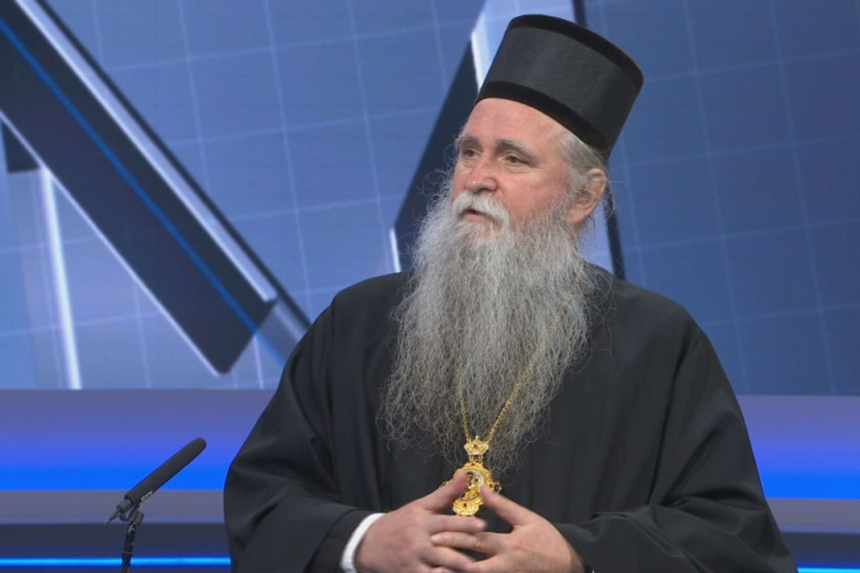
A strongly worded commentary published by Montenegrin outlet Aktuelno has renewed allegations concerning Metropolitan Joanikije Mićović and alleged attempts to conceal cases of sexual abuse within the Serbian Orthodox Church, following a children’s religious gathering held outside Cetinje Monastery.
The article, written by Milenko Mito Marković, focuses heavily on Joanikije’s participation in the event and questions why children were brought to a gathering where they could meet the metropolitan. Marković links his criticism to allegations previously made publicly by former Serbian Orthodox Church deacon Bojan Jovanović concerning the handling of alleged abuse cases within the church.
The allegations against Joanikije are not presented in the article as the result of a conviction. Rather, they are based on claims made by Jovanović and other critics, including allegations that church officials failed to properly address or report cases of alleged sexual abuse.
Jovanović has publicly raised such accusations for years and discussed them in his book Ispovest – Kako smo ubili Boga (Confession – How We Killed God). His allegations concerning the Serbian Orthodox Church and its handling of abuse cases have also been reported by regional media.
Allegations surrounding the death of Milić Blažanović
The commentary also revisits the case of Milić Blažanović, a young theology student whose death has been the subject of renewed allegations.
Jovanović has alleged that Blažanović’s death was connected to abuse and misconduct within church structures. In a 2026 interview, Jovanović called for renewed examination of the circumstances surrounding the death and said documentation had been submitted for international forensic analysis. These remain allegations and claims by Jovanović rather than established judicial findings.
Marković uses the issue to question whether the authorities in Montenegro and Serbia have adequately addressed allegations concerning abuse and alleged institutional cover-ups.
The commentary further claims that previous allegations involving Joanikije were submitted to Montenegro’s Special State Prosecutor’s Office. A Helsinki Committee report has also documented earlier allegations by Montenegro International concerning Joanikije and the handling of alleged abuse cases, while noting the allegations made by that organization.
Article links church controversy to wider political tensions
Beyond the allegations concerning abuse, Marković places the controversy within Montenegro’s broader political and identity conflict involving the Serbian Orthodox Church and competing interpretations of Montenegro’s relationship with Serbia.
The author accuses Serbian nationalist forces of using church structures for political influence in Montenegro and links the issue to the wider dispute over Kosovo. These are the author’s political interpretations, rather than independently established conclusions.
The article also sharply criticizes the organization and symbolism surrounding the children’s gathering, arguing that children should not be used for political or institutional image-building.
The controversy comes amid continuing scrutiny of allegations of sexual abuse within religious institutions in the region. Jovanović’s book and public statements have been part of that debate for several years, with his claims receiving coverage from regional media and advocacy organizations.
The Aktuelno commentary ultimately combines two separate issues — allegations concerning the handling of abuse cases and Montenegro’s wider political and church-related divisions — using the children’s gathering at Cetinje as the immediate trigger for renewed criticism of Joanikije.