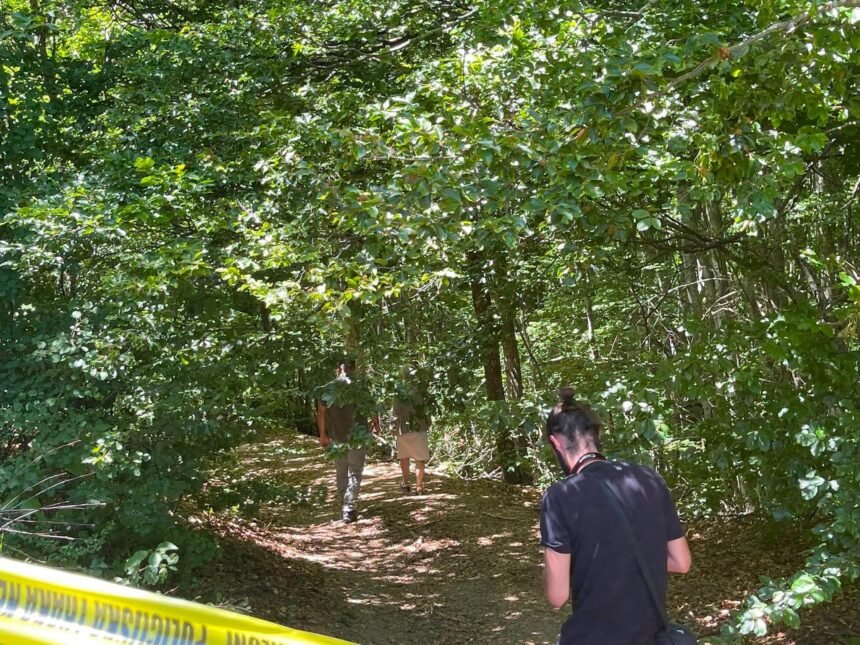
Bekim Blakaj from the Humanitarian Law Center Kosovo has described the ongoing excavations in Zubin Potok as a positive development, saying they could contribute to uncovering the fate of people who went missing during the 1999 war in Kosovo.
Speaking about the developments at the suspected mass grave site, Blakaj emphasized that the search and identification process for missing persons is of great importance for the victims’ families.
“It has been said that the excavations in Kalludër are the first excavations for suspected mass graves in several years. This is a positive development in terms of tracing and identifying missing persons,” Blakaj said.
He called on all parties to exercise caution during the process and stressed that information should only be provided by competent institutions.
“Every party should be careful regarding exhumations, and it is important that competent authorities, such as the Commission on Missing Persons and the Institute of Forensic Medicine, provide only accurate information,” he stated.
According to Blakaj, there are suspicions that the site may contain the remains of people who disappeared during the 1999 war, specifically members of the Mitrovica intellectual group who went missing on April 19 of that year.
“It has been reported that this location may contain the remains of missing persons from 1999, who disappeared on April 19. This concerns the Mitrovica intellectual group,” he said.
Blakaj criticized reactions from the Serbian side, saying they have focused more on the arrest of two suspects accused of war crimes rather than on uncovering the fate of the victims.
“The reaction from the Serbian side has been directed more toward the arrest of two individuals suspected of committing this crime. This is completely unnecessary. Every authority should stand on the side of the victims and the truth,” he said.
He stressed that the priority should be establishing the fate of missing persons, rather than obstructing or criticizing the actions of institutions working on this process.
“The fate of missing persons must be clarified, and the actions of institutions involved in uncovering these cases should not be criticized or targeted,” Blakaj added.
Regarding the arrested individuals, he said it is still too early to determine their responsibility, but anyone suspected of involvement in war crimes must face justice.
“It is too early to say whether these individuals are guilty or not. What matters is that every person suspected of involvement in war crimes is prosecuted before the court and that the truth is established,” Blakaj concluded.