Kosovo is continuously advancing its military capabilities in parallel with its ongoing diplomatic campaign for full international recognition, Bloomberg reports in a detailed feature on the Kosovo Security Force (KSF), featuring an interview with Kosovo’s Defense Minister, Ejup Maqedonci.
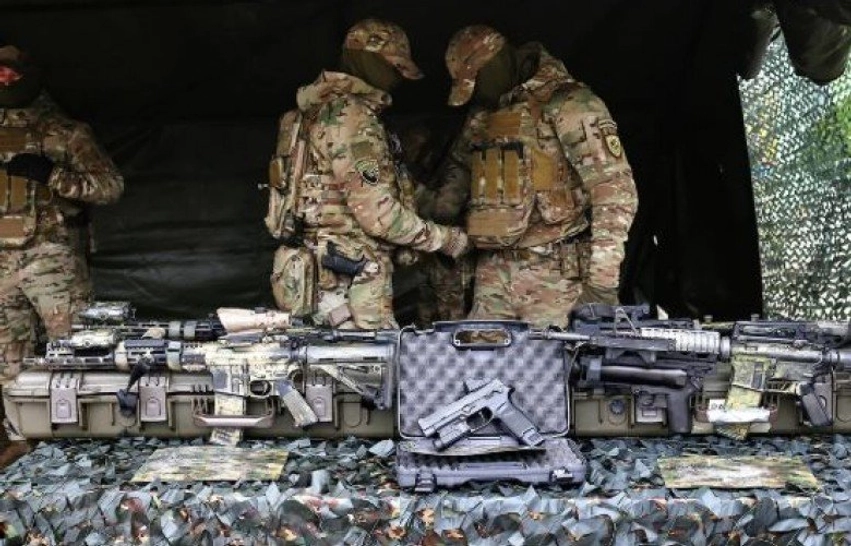
According to the article, Kosovo has allocated approximately $1 billion toward the foundational development of its military, having already secured weapon systems valued at around €460 million. Minister Maqedonci characterized these financial commitments as “very, very big steps” toward establishing a force capable of national defense and interoperability with international partners.
Maqedonci revealed that the strategic objective is for the KSF to reach a standing force of 5,000 active-duty soldiers, supported by a voluntary reserve system. Moving forward, the military intends to develop comprehensive air defense capabilities, artillery units, and tactical military aviation.
The Bloomberg profile highlights Maqedonci’s personal journey, noting that he has worn three distinct uniforms over the past 27 years: first as a combatant in the Kosovo liberation war, later in a civil emergency and humanitarian organization, and currently as the political chief spearheading the state’s military transformation.
“The three uniforms are displayed in his office at the ministry complex in Pristina, symbolizing the sheer complexity of building a military within a state that possesses limited international recognition,” Bloomberg writes, while emphasizing that the NATO-led KFOR peacekeeping mission continues to play a vital role in maintaining regional stability.
According to Maqedonci, Kosovo’s army is structurally designed to be a force “ready to protect Kosovo, its citizens, and to cooperate seamlessly with our partners.”
The comprehensive transformation of the KSF into a conventional military force began eight years ago, receiving strong backing from key Western allies, including the United States, Germany, the United Kingdom, and France.
Bloomberg notes that Kosovo has already integrated several types of unmanned aerial vehicles (drones) and advanced anti-tank missile systems into its inventory. Future acquisition plans focus on establishing air defense frameworks, procuring 155mm heavy artillery pieces, and acquiring Sikorsky UH-60 Black Hawk military helicopters.
Furthermore, the article underscores that Pristina is actively bypassing traditional institutional blockages by signing bilateral military agreements with individual NATO member states—primarily the United States and Turkey—to rapidly advance its defensive capabilities.
The expansion of Kosovo’s military remains a highly sensitive geopolitical issue due to fierce opposition from Belgrade, which rejects Kosovo’s 2008 declaration of independence. Bloomberg cited the Chief of the General Staff of the Serbian Armed Forces, Milan Mojsilović, who reiterated Belgrade’s stance that KFOR remains “the only legitimate armed formation” inside Kosovo under international law.
Concluding the report, International Crisis Group analyst Marko Prelec evaluated the situation, noting that while military modernization continues, the ultimate priority for long-term regional stability must remain the normalization of relations and a durable political agreement between Kosovo and Serbia.