Faced with growing concerns over potential student protests, leaders of the VLEN coalition have met with North Macedonian Prime Minister Hristijan Mickoski to urgently request a constitutional solution that would allow the state bar exam (jurisprudence exam) to be administered in the Albanian language.
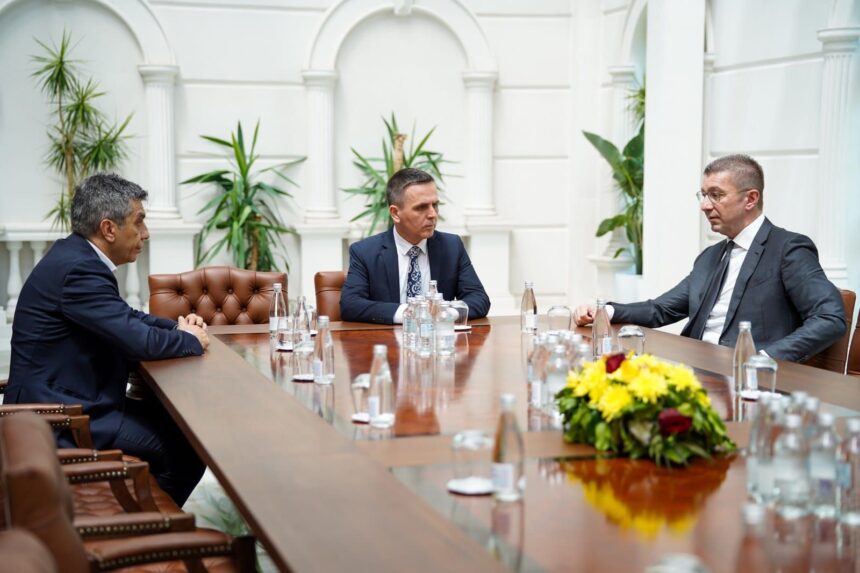
According to an official government press release, Prime Minister Mickoski held a working meeting with VLEN co-leaders Izet Mexhiti and Bilall Kasami. The primary focus of the discussion was resolving the ongoing deadlock surrounding the language rights of Albanian law graduates in the country.
“Prime Minister Hristijan Mickoski held a working meeting today with VLEN co-leaders Bilall Kasami and Izet Mexhiti, where the issue of language use in the jurisprudence exam was thoroughly discussed,” the Government of North Macedonia stated in its official announcement.
The state executive emphasized that any resolution must balance modern educational standards with existing legal frameworks.
“It was emphasized that only through a joint, wise, and dignified approach can we reach solutions that bring progress, mutual trust, and a shared step toward the future,” the statement continued. “The interlocutors agreed that education and knowledge form the foundation of any modern and successful state. Therefore, state institutions are actively working to find solutions that will be fully compliant with both the Constitution and the Law on the Use of Languages, ensuring legal certainty and institutional functionality.”
Political observers note that the sudden urgency from the VLEN coalition stems from increasing pressure by ethnic Albanian student organizations, who have threatened widespread protests if the state continues to mandate the bar exam exclusively in Macedonian. VLEN, a key partner in the governing coalition, is seeking to defuse ethnic tensions and deliver on campaign promises regarding linguistic equality without violating the country’s strict constitutional guidelines.