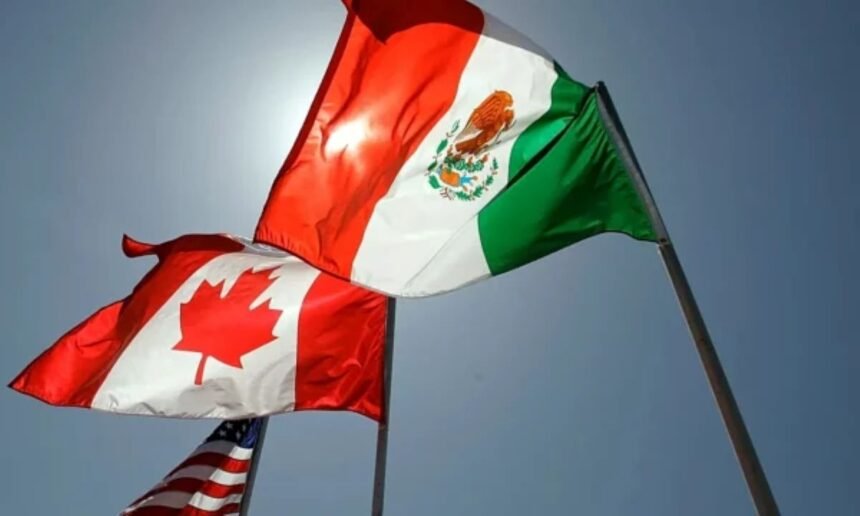
Ottawa and Mexico City are aligned in seeking a long-term extension of the North American trade alliance. The push comes just ahead of a critical July review deadline, and right after US President Donald Trump renewed public taunts about annexing Canada as the 51st US state.
Canada has officially requested that the United States and Mexico formally extend their trilateral free trade agreement for an additional 16 years. The diplomatic push comes despite volatile rhetoric from Washington, where US President Donald Trump recently revived controversial remarks suggesting Canada should simply become the 51st American state.
In formal letters dispatched to US Trade Representative Jamieson Greer and Mexican Economy Secretary Marcelo Ebrard, Ottawa emphasized that the United States-Mexico-Canada Agreement (USMCA) remains “massively beneficial for each of our countries and for the deeply integrated North American economy.”
Dominic LeBlanc, the Canadian minister overseeing relations with the US, confirmed that all three nations have now exchanged formal positions. Crucially, Ebrard confirmed that Mexico stands fully aligned with Ottawa, also backing the maximum 16-year extension.
Understanding the USMCA Review Mechanism
The exchange of letters serves as a high-stakes prelude to the treaty’s mandatory joint review scheduled for July. The USMCA—the modernized successor to the 1990s-era NAFTA agreement—includes a strict “sunset clause” framework that forces all three nations to decide on the treaty’s long-term future.
┌────────────────────────────────────────────────────────────────────────┐
│                        USMCA Joint Review Scenarios                    │
├────────────────────────────────────────────────────────────────────────┤
│  SCENARIO A: Trilateral Consensus reached by July 1                    │
│  ▶ Pact is locked in and extended for a stable 16-year term.           │
├────────────────────────────────────────────────────────────────────────┤
│  SCENARIO B: No Trilateral Consensus reached                           │
│  ▶ Pact stays active for 10 years, but triggers grueling annual        │
│    reviews, maintaining constant market and tariff uncertainty.        │
└────────────────────────────────────────────────────────────────────────┘
“As Ambassador Greer has stated publicly, if there is no trilateral consensus by July 1 for the 16-year extension, the agreement simply remains in force for 10 years, subject to a grueling series of annual reviews,” Minister LeBlanc explained following a bilateral meeting with Greer in Washington.
Weaponized Economic Uncertainty
During the Washington meetings, Canadian diplomats presented a series of concrete counter-proposals designed to directly address long-standing US grievances regarding border security, dairy supply management, and digital services taxation.
However, Canadian trade experts remain highly realistic. LeBlanc conceded that Washington may deliberately block the 16-year extension in favor of the rolling 10-year framework with annual reviews. Analysts note that the Trump administration views constant contractual renewal as a potent point of leverage, allowing the White House to maintain an environment of economic uncertainty over its neighbors to extract ongoing trade concessions.