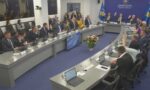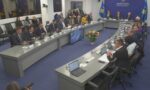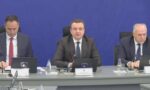
A lack of international legal cooperation, an outdated domestic legal framework, and severe difficulties in securing physical evidence and witness testimony remain the primary obstacles to successfully prosecuting and trying war crimes in Kosovo. These critical systemic issues took center stage today at a panel discussion titled “Strengthening Professional Capacities in the Prosecution and Adjudication of War Crimes in Kosovo,” organized by the Humanitarian Law Center Kosovo (HLCK).
Representatives from the Special Prosecution Office of the Republic of Kosovo (SPRK), the Kosovo Bar Association (KBA), and civil society experts agreed that despite a recent rise in indictments and the implementation of trials in absentia, the justice system urgently requires deep structural reforms, specialized training, and a unified evidence database.
Special Prosecution: “Operating Under Outdated Laws of the Former Yugoslavia”
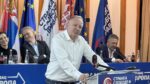
Ilir Morina, the Head of the War Crimes Department within the Special Prosecution Office, emphasized that institutional willingness to address these cases is not lacking. Instead, prosecutors face structural barriers that transcend their institutional drive.
                    WAR CRIMES PROSECUTION CHALLENGE MATRIX

       LEGAL & STRUCTURAL BARRIERS                    INTERNATIONAL IMPASSES
 ──────────────────────────────────────        ──────────────────────────────────────
 • Relying on outdated criminal codes          • Absolute lack of bilateral legal
   from the former Yugoslavia.                   cooperation from Serbian authorities.
 • Absence of a centralized database           • Critical evidence and suspects
   for fragmented war-time information.          remain outside Kosovo's jurisdiction.
According to Morina, the current domestic procedural framework was primarily built to combat modern organized crime and lacks the tools required for decades-old war crimes investigations.
“We are still facing this massive challenge because we are working with old laws, including those of the former Yugoslavia. The Criminal Procedure Code is simply not sufficiently adapted to war crimes cases. When we originally inherited these cases from EULEX [the EU Rule of Law Mission], we had to build our internal mechanisms from scratch to confront these difficulties.”
— Ilir Morina, Head of the War Crimes Department (SPRK)
Morina singled out the total absence of legal cooperation from Serbia and the International Criminal Tribunal for the former Yugoslavia (ICTY) archive access limitations as the greatest logistical hurdles, given that the vast majority of suspects and material evidence are located outside Kosovo’s borders. As an alternative path to justice, he highlighted the growing application of trials in absentia, though he acknowledged that collecting and centralizing highly fragmented information remains an uphill battle.
Bar Association: A Crucial Need for International Expertise
Presenting the defense perspective, Naim Rudari from the Kosovo Bar Association noted that the legal institute of trials in absentia is still a relatively new practice within the country’s judicial system, demanding highly specialized professional development.
Rudari acknowledged that the Bar Association faces difficulties in appointing defense attorneys to these specific cases, often due to public misconceptions regarding the role of a defense lawyer in war-related trials. He called for increased training led by international experts to ensure that defense attorneys can perform their duties at the highest level—not only to protect the constitutional rights of the accused but to ultimately assist the court in establishing the truth.
HLCK: Justice for Victims Strengthens Public Trust
Amer Alija from the Humanitarian Law Center Kosovo underscored that the resolution of war crimes carries an immense societal weight that extends far beyond technical legalities.
According to the HLCK, resolving these complex processes has a direct emotional and social impact on providing closure to victims’ families, dismantling the culture of impunity, and strengthening overall public confidence in Kosovo’s domestic judicial institutions. Alija welcomed the positive momentum observed over the past few years, which is clearly reflected in the substantial increase in the number of war crimes indictments brought forward by local prosecutors.
To gain a closer look at the practical work and investigative results of local authorities, you can watch this statement where prosecutor Ilir Morina discusses ongoing forensic efforts regarding missing persons. This video offers direct insight into the practical challenges and fieldwork being undertaken by the Special Prosecution Office to document the human toll of the conflict.