At the stroke of midnight, Kosovo’s political deadlock officially transformed into a full-scale constitutional crisis. Following the failure of the Assembly to elect a new President by the April 28, 2026, deadline, the legislature has been automatically dissolved, triggering the country’s third national election in just over a year.
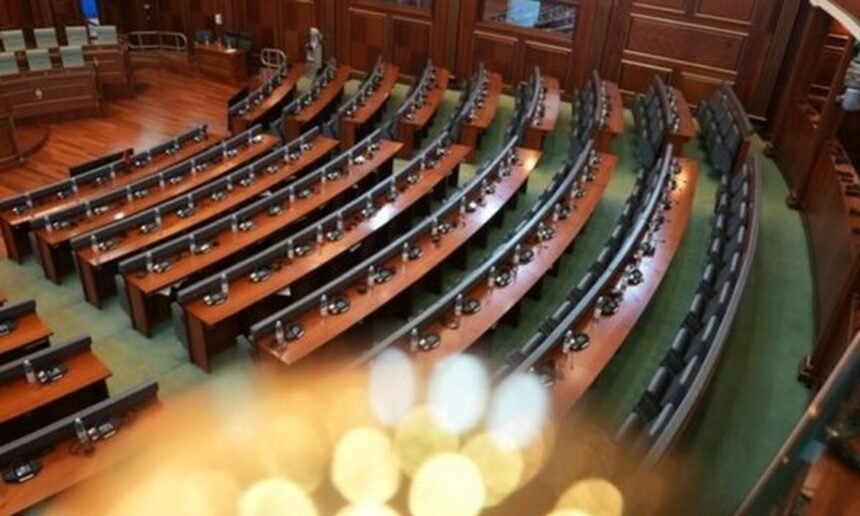
The late-night session, which Speaker Albulena Haxhiu had postponed until 11:00 PM in a desperate final attempt to secure a quorum, ended in silence. Despite hours of back-channel negotiations and public pleas, the opposition boycott held firm, leaving the chamber short of the 80 deputies required to validate the vote.
The Midnight Collapse
As the clock struck 12:00 AM on April 29, the constitutional mandate for the current Assembly reached its legal end. Under Article 86 and Article 82 of the Constitution:
- Automatic Dissolution: A parliament that fails to elect a head of state within the mandated 60-day window from the start of the process (which began on March 5) must be dissolved.
- Acting President: Speaker Albulena Haxhiu will continue to serve as Acting President until a new legislature is formed and can successfully hold a vote. She has a maximum of six months in this role.
- Snap Elections: New parliamentary elections must now be announced and held within 45 days.
The Fallout: A Nation in Limbo
The dissolution marks a significant defeat for Prime Minister Albin Kurti and his Vetëvendosje (LVV) movement, who were unable to persuade the LDK, PDK, or AAK to provide the necessary votes for their candidates, Feride Rushiti and Hatixhe Hoxha.
The immediate consequences for Kosovo are severe:
- Financial Paralysis: The country risks losing immediate access to nearly €1.3 billion in EU Growth Plan funds and IPA projects, which required a functional Assembly for ratification by June 30.
- Political Exhaustion: Citizens now face another grueling campaign season following the February and December 2025 elections, fueling fears of record-low voter turnout.
- Institutional Vacuum: With no Assembly and only an Acting President, major legislative reforms and international agreements are effectively frozen.
Opposition leaders have remained defiant, stating that the “unwillingness of the Prime Minister to offer a consensual candidate” is the primary cause of the collapse. Meanwhile, the ruling party has characterized the boycott as “sabotage of the state’s foundations.”
Official decrees regarding the election date are expected to be issued by Acting President Haxhiu within the next 48 hours.