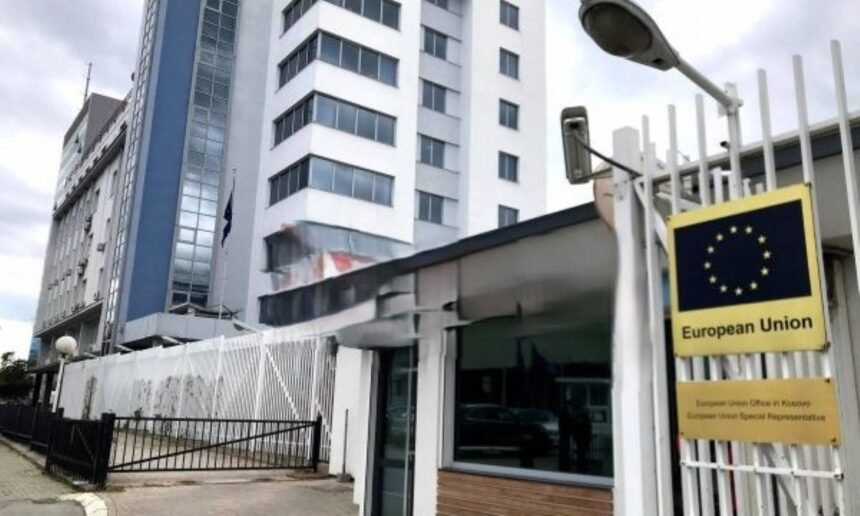
The European Union Office in Kosovo is closely monitoring the escalating political tensions in the Assembly regarding the election of the country’s new President.
In a statement provided to Gazeta Express, EU spokesperson Nikola Gaon emphasized that Kosovo’s political leaders must prioritize institutional stability over partisan interests to avoid repeating the administrative paralysis of the previous year.
A Call for Institutional Stability
Gaon warned that all political actors carry the responsibility of upholding the Constitution and finding a middle ground.
“The EU in Kosovo is closely following the developments in the Assembly. It is the responsibility of all political actors to implement the Constitution of Kosovo, reach the necessary compromise, and ensure institutional stability in the interest of the citizens,” Gaon stated.
The spokesperson pointedly referenced the political gridlock of 2025, describing it as a “lost year” for Kosovo’s development and European integration.
High Stakes: Millions in EU Funding at Risk
The EU’s urgency stems from the massive financial support currently tied to Kosovo’s legislative and executive functionality. Gaon highlighted that without a functional Government and Assembly, Kosovo risks missing critical deadlines for nearly €1.3 billion in aid:
- EU Growth Plan: Out of the €882.6 million destined for Kosovo, specific reform steps must be met by June 30, 2026, to unlock the funds.
- IPA Programs: €216 million in funding remains pending.
- WBIF Projects: €205 million for infrastructure projects.
“Since these funds are based on agreements that require ratification, both a functional Government and the Assembly must continue to operate,” Gaon added, noting that the EU needs reliable institutional partners to move forward.
The warning serves as a reminder to Kosovo’s parliamentary parties that failure to elect a President could trigger early elections, potentially freezing the country’s access to vital European financial instruments until the end of 2027.