Documents have been made public that, according to investigative journalists, show that the Kremlin is coordinating large-scale hybrid operations across Europe aimed at discrediting Ukraine and fostering political and social divisions within countries of the European Union.
According to materials obtained by journalists from Delfi Estonia and shared through the international investigative journalism network OCCRP, a structure known as the “Social Design Agency” — sanctioned by several countries — is alleged to have been used as a tool for organizing and carrying out such influence operations.
The documents suggest that the activities of this organization were not isolated but were directly connected to officials within the administration of Vladimir Putin, raising questions about the extent of state involvement in covert influence operations across Europe.
The published materials also describe detailed planning for the 2025–2026 period, including a range of hybrid-action scenarios. Among them are alleged plans for symbolic and provocative incidents, such as placing pig heads near mosques in Paris, acts of vandalism targeting Holocaust memorial sites, and a scenario involving damage to a monument of Charles de Gaulle, which would then allegedly be portrayed as the work of “Ukrainian nationalists.”
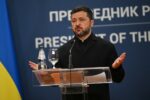
In addition, the documents mention a project aimed at spreading disinformation regarding alleged real-estate holdings of Volodymyr Zelenskyy, described in internal materials as a campaign with high potential for public impact.
According to the authors of the investigation, the findings illustrate the broad scale and structured nature of Russian influence networks operating in Europe through a combination of propaganda, disinformation, and coordinated symbolic actions.
Security experts cited in the analysis warn that the recruitment of actors outside Russia to participate in information and destabilization operations represents a long-term hybrid threat to European countries, requiring greater institutional vigilance and stronger oversight mechanisms to counter foreign influence networks.