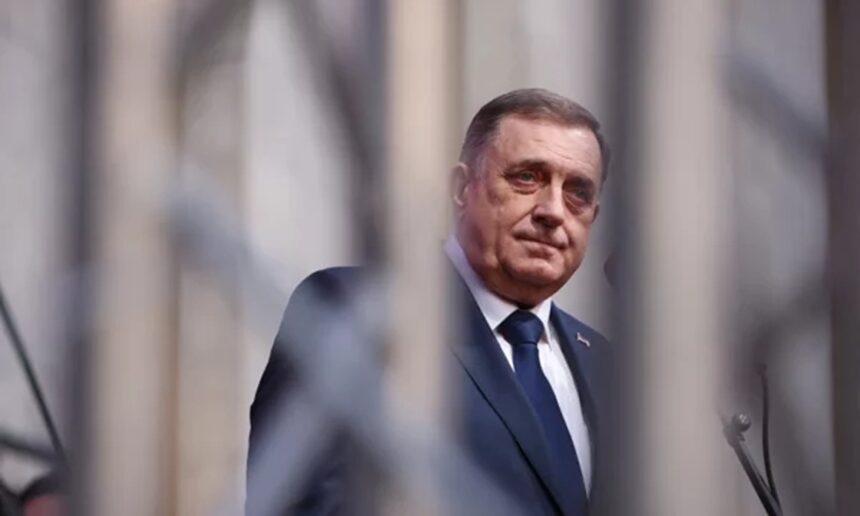
Milorad Dodik has once again threatened to declare the independence of Republika Srpska if High Representative Christian Schmidt imposes a law on state property.
Speaking in Banja Luka, Dodik warned that any move by Schmidt regarding state property would trigger an immediate response from Republika Srpska authorities.
“If Schmidt imposes the law on state property, at that same moment a decision on the independence of Republika Srpska will be made,” Dodik stated.
The SNSD leader also repeated his long-standing demand that all decisions imposed by Schmidt during his mandate be annulled before any political dialogue can continue within Bosnia and Herzegovina.
“We will not allow anyone to deal with us in this way anymore. Schmidt’s decisions must be annulled. Once that is done, Republika Srpska is ready for talks and agreements within Bosnia and Herzegovina. Before that, there will be no negotiations,” he said.
Dodik continued his nationalist rhetoric by accusing Serbs loyal to Bosnia and Herzegovina of “betrayal” and describing the Bosnian state as “anti-Dayton” and dysfunctional.
“This kind of distorted Bosnia and Herzegovina cannot survive. There is nothing left of what is written in the Constitution,” he claimed.
He also attacked the opposition in Republika Srpska, calling them “remnants,” and accused them of working together with “Muslim politicians” and the international community against the Serb entity.
“Bosnia and Herzegovina today is a Frankenstein for the Serbian people that cannot bring anything good for Serbs. The longer we remain in Bosnia and Herzegovina, the worse it will be for us,” Dodik added.
Despite the secessionist rhetoric, Dodik stated that Republika Srpska would not enter into military conflict, while expressing hope that global geopolitical changes would eventually create conditions for what he called the “right to self-determination” for the entity.
Political tensions in Bosnia and Herzegovina have intensified repeatedly in recent years due to Dodik’s separatist statements, which have drawn criticism from Western governments and international officials who view them as a threat to the stability and constitutional order established by the Dayton Agreement.