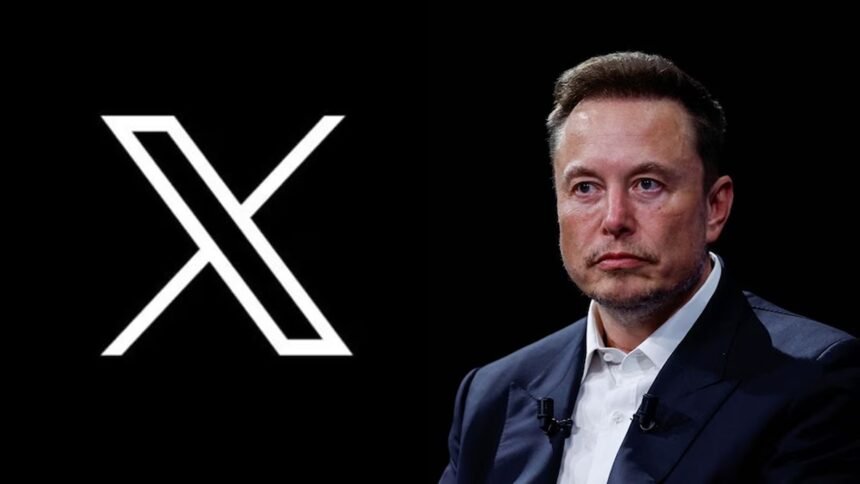
When Elon Musk’s SpaceX debuts on Wall Street on Friday, the controversial tech titan will almost certainly enter the history books as the world’s first trillionaire.
Musk already holds the title of the world’s richest person, with an estimated fortune of around $696 billion ahead of SpaceX’s record-breaking initial public offering announced on Thursday, according to the Bloomberg Billionaires Index.
But his 42% stake in the rocket and artificial intelligence company will push him into uncharted financial territory.
SpaceX is set to begin trading with a valuation of $1.77 trillion on the Nasdaq exchange, selling 555.6 million shares at $135 each.
Estimates of Musk’s share value range between $743 billion and $866.5 billion.
If everything goes as planned, Musk—who also leads Tesla—will officially cement his status as a trillionaire before markets close on Friday.
A trillion dollars is such a vast figure that it surpasses normal human comprehension.
If Musk were to spend $1 million every day, it would still take him 2,740 years to spend $1 trillion, according to the UK-based charity Oxfam.
Ranked among his peers, Musk would be more than three times richer than Google co-founder Larry Page, who is the world’s second-richest person with a net worth of $304 billion, according to the Bloomberg Billionaires Index.
Musk would also rank among the richest individuals in history.
While comparing wealth across history is difficult due to differences in purchasing power and living standards, Musk is on track to command a larger share of the US economy than 19th-century tycoons who defined the Industrial Age.
John Jacob Astor, widely considered America’s first multimillionaire and an archetype of the self-made tycoon, had a fortune of $20–30 million, roughly 1% of US GDP at the time of his death in 1848, according to the MeasuringWorth Foundation.
Decades later, steel magnate Andrew Carnegie amassed around $380 million, equivalent to about 0.5% of US GDP at his death in 1919.
Oil tycoon John D. Rockefeller held a fortune equal to roughly 1.5% of US GDP when he died in 1937, with an estimated wealth of $1.4 billion.
As a trillionaire, Musk’s wealth would amount to roughly 3% of US GDP.
Guido Alfani, professor of economic history at Bocconi University in Milan, said another way to compare Musk’s wealth with past tycoons is to measure how much human labor their fortunes could command.
“If we do this, we can certainly conclude that Elon Musk may be the richest person who has ever lived—excluding emperors or other rulers whose wealth is not easily separated from that of the state,” Alfani told Al Jazeera.
Alfani estimated that Musk could command the labor of 557,800 people in 2025, compared with 116,000 for Rockefeller in 1937 or 48,000 for Carnegie in 1901.
Although Musk is a polarising figure today, industrialists of the late 19th century were also highly controversial in their time.
“Wealth beyond anything previously seen”
Astor was known as one of New York City’s largest and most ruthless landlords.
Carnegie, Rockefeller and their contemporaries during the so-called Gilded Age were labelled “robber barons” for their aggressive and anti-competitive business practices.
Like Musk, Gilded Age industrialists were wealthier than anything Americans had seen before, said Richard Wright, professor emeritus of history at Stanford University.
“What made them famous was that they were very good at making and keeping money. There is little evidence they accomplished much else,” Wright told Al Jazeera.
“Some admired them for their wealth. Most of their contemporaries despised them.”
Wright said tycoons like Rockefeller understood that their fortunes depended on their ability to shape government policy.
“They all intervened in politics,” he said. “All of this involved, in the Gilded Age, a very high degree of corruption.”
Musk has also been deeply involved in politics, aligning himself with Donald Trump’s 2024 presidential campaign and later leading the Trump administration’s controversial initiative to cut waste and fraud in federal government.
Since acquiring Twitter in a $40 billion hostile takeover in 2022, Musk has used the platform—now called X—as a personal megaphone, promoting right-wing positions on issues such as immigration and transgender rights.
Despite similarities in political influence, Musk differs from earlier ultra-wealthy industrialists in other ways.
Unlike some Gilded Age magnates, who funded hospitals, universities, libraries and disease eradication efforts, Musk’s philanthropic record is more limited in traditional terms.
Public good and philanthropy
“Despite their many failings, Gilded Age robber barons were also pioneers of large-scale modern philanthropy,” said Christopher Nichols, professor of history at Ohio State University.
Carnegie donated 90% of his wealth in his final decades—worth about $42 billion in today’s terms.
His 1889 essay The Gospel of Wealth argued that the rich have a duty to use their fortunes for public good during their lifetime rather than pass it entirely to heirs.
In 2010, Bill Gates and Warren Buffett launched the Giving Pledge, encouraging billionaires to donate most of their wealth to charitable causes during their lifetime or in their wills.
Musk signed the pledge in 2012, but much of his philanthropy has reportedly been channelled through the Musk Foundation toward causes linked to his business interests.
He has also donated through donor-advised funds such as Vanguard Charitable and Fidelity Charitable.
In 2017, Musk gave $37 million to Vanguard Charitable, and between 2018 and 2020 he donated $39 million to Fidelity Charitable.
Observers note that, unlike past industrial revolutions that triggered major political and social reform, Musk’s immense wealth has not yet produced comparable structural change.
Historian Joshua Rosenbloom said today’s political and economic system is more resistant to disruption than the more fluid era between the 1870s and 1920s.
The Gilded Age saw major labour unrest and political activism that eventually led to landmark antitrust laws, the creation of the Federal Trade Commission, and federal income tax.
Daniel Waldenström noted that Musk’s fortune is not guaranteed, pointing out that corporate valuations can change rapidly.
“There is a high chance that some of Musk’s assets will lose value if reality changes,” he said, citing Tesla’s significant losses during the 2022 market downturn.