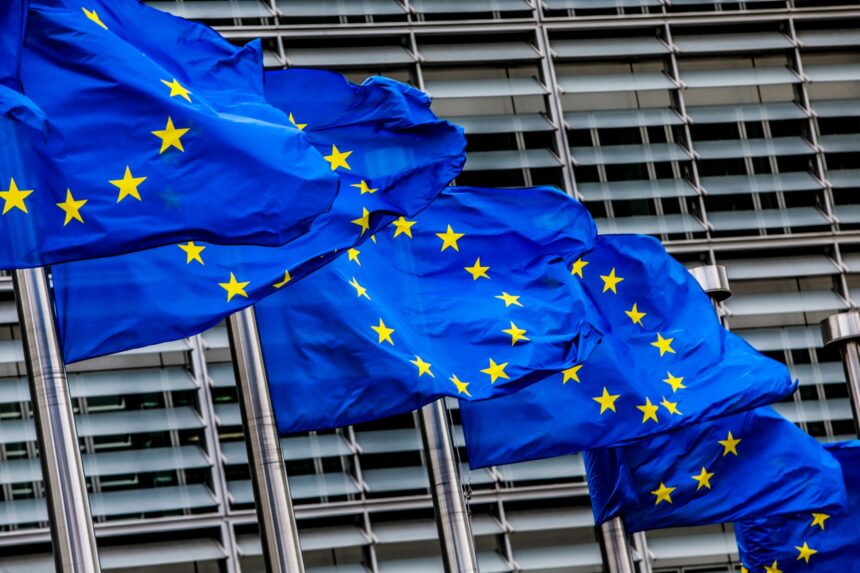
The long-standing promise of full European Union membership for Ukraine, Moldova, and the Western Balkans is facing a stark geopolitical reality. As internal institutional bottlenecks and domestic voter fatigue tighten their grip on core European capitals, a growing consensus among diplomats and think-tank architects suggests that the traditional path to accession is effectively blocked for the foreseeable future.
Even for a frontrunner like Montenegro, which has advanced further through the negotiating chapters than any other candidate state, the risk of a single-member veto remains disruptively high. Consequently, Brussels is facing mounting pressure to abandon its rigid “all-or-nothing” enlargement strategy and begin designing pragmatic, tiered alternatives.
The Structural Dilemmas Paralyzing Full Integration
The hesitation surrounding full institutional expansion is not merely a matter of political will; it is rooted in deep structural challenges within the current EU framework:
- The Unanimity Trap: The EU’s accession process requires unanimous approval from all current member states at dozens of individual procedural stages. This structure allows individual capitals to weaponize the expansion process to gain leverage over bilateral border disputes, minority rights, or historical grievances.
- The Absorption Challenge: Admitting a massive agrarian nation like Ukraine, alongside Moldova and the six Western Balkan states, would profoundly disrupt the EU’s internal mechanics. Under current budgetary rules, it would severely strain the Common Agricultural Policy (CAP) and turn several current net-beneficiary nations into net-contributors. Furthermore, adding eight new voting members would risk completely paralyzing decision-making within the Council of the EU under current unanimity requirements.
Mapping the Real-World Alternatives
To prevent candidate nations from drifting into a geopolitical vacuum, policy analysts are urging the European Commission to formalize intermediate integration frameworks. Rather than offering distant, uncertain political integration, these models prioritize immediate economic alignment.
1. Staged and Phased Accession
Proponents of this model advocate for replacing the binary entry system with a progressive, performance-based ladder. Instead of waiting decades for full political membership, a country like Montenegro or Ukraine could gain full entry into the EU Single Market as soon as it aligns its regulatory and judicial standards.
This would grant candidates immediate access to the “Four Freedoms”—the free movement of goods, capital, services, and people—alongside substantial EU cohesion funds, while delaying their voting rights in core political institutions like the Council and the European Parliament.
2. The “European Economic Area Plus” (EEA+) Model
This framework mirrors the EU’s highly successful relationship with prosperous non-members like Norway and Iceland. Under an EEA+ model, candidate states would completely integrate into the European trade zone, eliminating tariff barriers and adopting standardized European regulations.
While this model provides a massive boost to localized GDPs and stabilizes the business environment for foreign investors, it carries a distinct political trade-off: candidate nations would become “fax democracies,” obligated to adopt laws passed in Brussels without holding a vote or a seat at the table to shape them.
3. A Multi-Speed, Concentric-Circle Europe
This vision reorganizes the European continent into distinct functional layers rather than a uniform bloc:
          [THE CONCENTRIC CIRCLES MODEL]

                 ┌───────────────┐
                 │  INNER CORE   │ ◄── Eurozone, Schengen,
                 │  ┌─────────┐  │     Deep Defense Integration
                 │  │ OUTER   │  │
                 │  │ CORE    │  │ ◄── Standard EU Members
                 │  │ ┌─────┐ │  │     with Select Opt-Outs
                 │  │ │ ASSO│ │  │
                 │  │ │CIATE│ │  │ ◄── Ukraine, Moldova,
                 │  │ │     │ │  │     Western Balkans (Single Market)
                 │  │ └─────┘ │  │
                 │  └─────────┘  │
                 └───────────────┘
In this model, the Inner Core consists of nations deeply integrated within the Eurozone, Schengen Area, and joint defense initiatives. The Outer Core comprises standard member states with specific political opt-outs. The Third Ring (Associate Membership) would serve as a permanent, stabilized home for Ukraine, Moldova, and the Western Balkans, anchoring them within a shared security architecture, energy grid, and green transition market without full political federation.
The Cost of Inaction: Why Intermediate Steps Matter
Transitioning the diplomatic narrative toward intermediate frameworks is increasingly seen as a geopolitical necessity rather than an act of exclusion.
Maintaining the current status quo risks triggering profound “reform fatigue” across Southeastern Europe and the Eastern Partnership. When the ultimate reward of full membership is pushed decades into the future, domestic governments lose the political leverage needed to implement difficult, painful anti-corruption and judicial reforms.
By offering concrete, intermediate milestones—such as full single-market access paired with increased development funding—the EU can stabilize its immediate periphery, deliver tangible economic benefits to candidate citizens, and secure its borders against competing global influences.