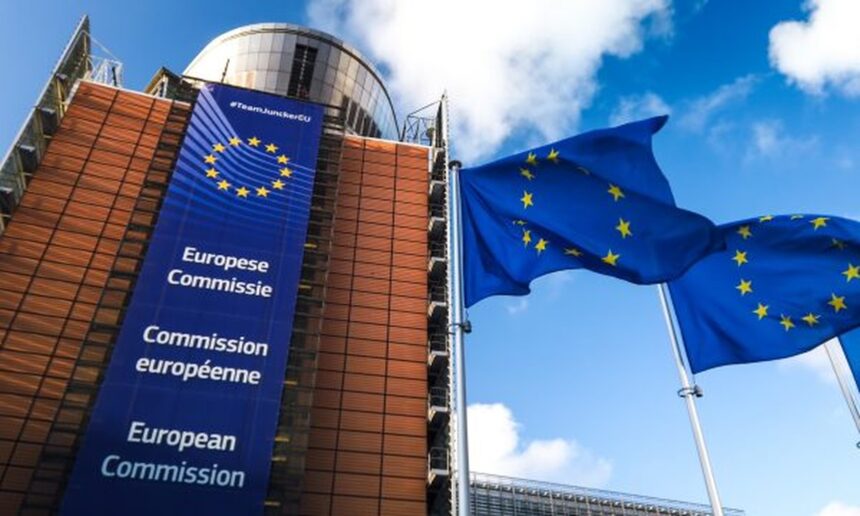
The European Union has warned that Serbia has made no progress in its EU accession negotiations during the reporting period, while corruption, the risk of state capture and the deteriorating media environment remain serious challenges.
Speaking at the presentation of the European Commission’s annual report, EU Ambassador to Serbia Andreas von Beckerath said that the rule of law, democracy, media freedom and the fight against corruption are areas where the EU’s expectations fully coincide with those of Serbian citizens.
In the presence of Bojana Selaković, coordinator of the National Convention on the European Union (NCEU), von Beckerath said the parliamentary elections held on 25 October had opened a new chapter in Serbia’s political life and created an opportunity for renewed political engagement and reform.
“On 25 October, the citizens of Serbia made their position clear. They wanted a government that would fight corruption, a free and independent judiciary, free and independent media, democratic institutions that serve citizens, and the protection of human rights,” von Beckerath said.
He noted that although Serbia is among the countries with the highest levels of alignment with EU legislation and is well prepared in areas such as the single market and competition, no progress was made in its accession negotiations during the reporting period.
According to him, the European Commission reiterates that Serbia has met the technical criteria for opening negotiations in the area of the judiciary, while some progress has been made in aligning legislation and technical standards in other areas.
“However, during the reporting period, there was no progress in Serbia’s EU accession negotiations. This period was marked by growing polarisation in society and a breakdown of trust between the Serbian authorities and civil society,” he said.
Von Beckerath stressed that corruption remains a serious challenge and that the risk of state capture persists. He also pointed to obstacles in several key areas, particularly media freedom and freedom of expression, as well as public administration.
The report also identifies deterioration in education and culture, while highlighting Serbia’s poor level of alignment with the EU’s Common Foreign and Security Policy.
EU Highlights Attacks on Students, Activists and Journalists
A significant part of the ambassador’s remarks focused on the situation facing civil society in Serbia. Von Beckerath said the report documents attacks against students, activists and journalists, as well as the lack of an adequate institutional response.
He pointed to increasing pressure, attacks and intimidation targeting civil society organisations, alongside smear campaigns against their representatives and human rights defenders. According to him, these campaigns involve both tabloids and senior government officials.
The report also notes attempts by the authorities to portray protests as efforts to stage a “colour revolution”, without providing evidence to support such allegations.
Von Beckerath also drew attention to the lack of follow-up action in cases involving intimidation and allegations of spyware use, as well as the use of strategic lawsuits against public participation (SLAPPs), which he said obstruct the work of civil society organisations and undermine the democratic environment.
He thanked the Serbian Parliament, the European Movement and civil society organisations for their contribution to the European integration process, noting that these organisations have maintained consistent positions despite continued attacks in the media and criticism from senior state officials.
Only Eight of 130 Recommendations Implemented
Bojana Selaković, coordinator of the National Convention on the European Union, said political changes in Serbia had not happened overnight, just as the system against which citizens had protested had not been built overnight.
She announced that the Convention’s working groups had assessed the implementation of 130 recommendations issued the previous year. According to her, only eight had been fully implemented, 61 had been partially implemented, while approximately the same number had not been implemented at all.
“This does not surprise us, considering the findings of previous years and the continuing trend of institutions in this country, which participated in the European integration process, being unwilling to accept contributions coming from civil society,” Selaković said.
Reflecting on von Beckerath’s final days in Serbia, she said that during his slightly more than one year in the country, the ambassador had witnessed developments that many diplomats do not experience throughout their entire careers.
She referred to students travelling on foot and by bicycle to Strasbourg and Brussels, police entering universities, the suppression of protests, the suspension of negotiations and the freezing of funds under the EU Growth Plan.
“The changes that took place in Serbia did not happen overnight. They were a process, just as the system against which citizens protested did not emerge overnight,” she said.
Selaković stressed that the Convention would continue to play the same role under the new government, positioning itself neither formally as an opposition force nor as a political ally of those in power.
She said the new institutions deserved an initial degree of trust, but emphasised that the Convention would continue to monitor the European integration process objectively.
Von Beckerath, meanwhile, said the European Union was ready to work closely with Serbia’s next government and support the implementation of reforms in key areas.
However, he stressed that the rule of law must remain the priority, as it forms the foundation for all other reforms.
“The role of civil society and the Serbian Parliament during the transition to the new government will be decisive for the country’s progress towards European integration,” the ambassador said, praising the expertise, institutional memory and public trust enjoyed by these actors.