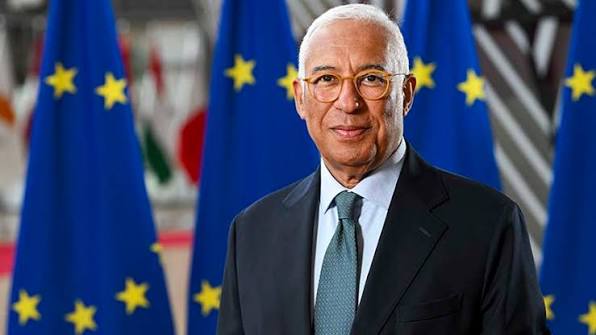
European Council President Antonio Costa has strongly defended his unexpected decision to open a direct diplomatic communication channel with the Kremlin, a move intended to gauge whether the baseline conditions exist for future Ukraine peace negotiations.
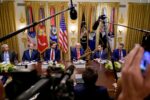
The revelation, which emerged during a high-stakes EU leaders’ summit in Brussels on Thursday, June 18, 2026, has exposed deep tactical rifts across the 27-nation bloc, even as Costa’s team acknowledges that immediate prospects for peace remain highly unlikely.
The controversy ignited earlier this week following reports that Costa’s Chief of Staff, Pedro Lourtie, had conducted a series of discrete phone calls with Yuri Ushakov, a top foreign policy adviser to Russian President Vladimir Putin. While Costa has placed maintaining the internal unity of the EU at the very center of his presidency, the unilateral opening of a Moscow backchannel caught several member states completely off guard.
“Diplomats Doing Diplomatic Work”
An anonymous senior EU official sought to de-escalate the internal friction following the summit, clarifying that the communication was strictly procedural rather than a shift in European foreign policy:
“The President explained that he had instructed his office to open a diplomatic channel with Russia. The objective was simply to be ready, when the right moment arrives, to protect the strategic interests of the European Union. What we are talking about here are short, operational contacts—without any exchange on the core substance of the conflict and without formal negotiations. This is simply diplomats doing diplomatic work. The most critical aspect is that Europeans remain perfectly coordinated on how to engage with Russia, and managing that 27-nation coordination is the core duty of the Council President.”
A Deeply Divided European Front
The diplomatic maneuver has split the European Union into distinct ideological camps, reflecting long-standing anxieties over how to handle Moscow:
The European Response to the Kremlin Backchannel

 ┌─────────────────────────────────────────────────────────┐
 │               MEMBER STATE ALIGNMENT MAP                │
 └────────────────────────────┬────────────────────────────┘
                              │
       ┌──────────────────────┼──────────────────────┐
       ▼                      ▼                      ▼
  [ THE SUPPORTERS ]     [ THE SKEPTICS ]       [ THE ALTERNATIVE ]
  Slovenia, Belgium,     Poland, Baltic states,  The "E3" coalition
  Austria, Slovakia,     and Nordic nations     (France, Germany, UK)
  and Bulgaria favor     argue the timing is    prefers deploying its
  immediate engagement.  highly premature.      own parallel channel.
The Pro-Engagement Faction
A notable group of leaders explicitly welcomed Costa’s proactive approach, arguing that any vehicle capable of halting active hostilities must be explored. Slovenian Prime Minister Janez Janša summarized this perspective following the session:
“Every single step that could potentially lead to a cessation of hostilities and the beginning of structured negotiations must be welcomed.”
Furthermore, diplomatic sources indicate that several leaders viewed Costa as the “natural representative” of the bloc’s collective interests, floating the possibility of formally appointing him as the EU’s special envoy for direct talks with Russia.
The Hardline Skeptics
Conversely, Poland, the Baltic states, and the Nordic nations voiced sharp objections during the Brussels summit. These member states maintain that opening lines of communication signals European weakness and that the geopolitical timing is entirely wrong.
Simultaneously, alternative diplomatic factions are emerging. Representatives from the “E3” framework (Germany, France, and the United Kingdom) have quietly been exploring the establishment of their own distinct channel to the Kremlin, raising concerns that parallel tracks could dilute a unified European message.
The Ukrainian Catalyst
Despite the lack of broad prior consultation with national capitals, insiders close to the Portuguese politician insist that Costa did not act entirely on his own initiative. His inner circle revealed that the backchannel was established at the direct encouragement of Ukrainian President Volodymyr Zelenskyy, who has increasingly urged European leaders to assume a dominant, hands-on role in shaping the peace process.
Following a bilateral meeting with Costa at the G7 summit in Évian, France, earlier this month, President Zelenskyy publicly reinforced this stance:
“It is absolutely vital that Europe has a powerful, clear voice and an active presence in this peace process. It is entirely worthwhile to define precisely who will represent Europe concretely on this front.”
The push for a more assertive European footprint yielded its first official policy footprint on Friday. For the first time, the formal summit conclusions officially signed off by all 27 EU heads of state explicitly declare that the European Union stands ready “to scale up its direct engagement” in eventual peace negotiations.