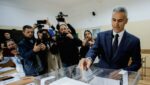
European leaders and officials from neighbouring Balkan countries have congratulated Serbia’s opposition Student List on its victory in Sunday’s snap parliamentary elections, expressing hope that the result will usher in democratic reforms, improve regional relations and accelerate the country’s path towards European Union membership.
Former Serbian President Aleksandar Vučić has acknowledged the Student List’s victory. Preliminary results published by Serbia’s Republic Electoral Commission on Monday showed the opposition winning 52.54 per cent of the vote, compared with 39.29 per cent for the ruling coalition led by Vučić.
European Commission President Ursula von der Leyen congratulated the winning list, reaffirming the EU’s readiness to support Serbia’s European integration.
“We stand ready to support reforms on the rule of law, media freedom, the fight against corruption and strong democratic institutions, and to work together to advance Serbia’s future in the European Union,” von der Leyen wrote on X.
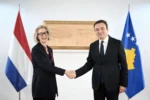
European Commissioner for Enlargement Marta Kos described the election as a potential turning point following nearly two years of student-led protests demanding democracy, the rule of law and political accountability. The protests began in 2024 after the deadly collapse of a canopy at the Novi Sad railway station.
“Dear Serbia, you have made your voice heard!” Kos wrote, congratulating the Student List on its victory and praising citizens for their participation.
She added that a new chapter could now begin for Serbia, stressing that the EU door remained open and that Brussels was ready to move forward with the country.
Council of Europe Secretary General Alain Berset also welcomed the outcome, praising Vučić’s acceptance of the results and his commitment to a peaceful democratic transition. He commended the student movement for its perseverance, energy and commitment to European principles and Serbia’s future.
Neighbouring countries hope for improved relations
Congratulations also came from neighbouring countries, several of which have experienced strained relations with Serbia during Vučić’s time in power.
Montenegrin Prime Minister Milojko Spajić said he hoped the election result would mark a turning point in relations between the two countries.
“I congratulate the representatives of the Student List and firmly believe that a new chapter lies ahead for Montenegro and Serbia, based on respect and open dialogue, without unnecessary escalation of tensions,” Spajić wrote on X.
Montenegrin President Jakov Milatović similarly described the result as an opportunity for a fresh start, expressing confidence that bilateral relations could develop around friendship, sincere dialogue and a shared European future.
In Croatia, both government and opposition figures welcomed the outcome.
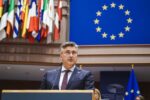
Prime Minister Andrej Plenković said the message from Serbian voters was clear: they wanted change. Speaking to reporters in Zagreb on Monday, he expressed hope for improved relations between Croatia and Serbia.
Plenković also confirmed that he had congratulated Ilija Srdanović, the Student List’s lead candidate, adding that he had heard moderate and reasonable messages from the winning political camp.
Siniša Hajdaš Dončić, leader of Croatia’s opposition Social Democratic Party (SDP), said the result offered an opportunity for political change and a new chapter in Serbia’s relations with Croatia and the European Union.
In a Facebook post, he praised the Student List and Serbian citizens who had persistently demanded government accountability and a fairer society, stressing that public trust brought significant responsibility.
The Croatian opposition party Možemo! (We Can!) described the result as a major democratic victory that could open the way to restoring independent institutions, strengthening the rule of law, protecting media freedom and combating corruption.
Regional leaders react to the result
Milorad Dodik, a longtime ally of Vučić and a prominent figure in Bosnia and Herzegovina’s Republika Srpska entity, also congratulated the Student List.
Dodik wrote on X that Republika Srpska and Serbia would continue to maintain close relations, cooperation and mutual support on regional and international issues.
Hungarian Prime Minister Péter Magyar also offered congratulations, saying he had spoken by phone with the Student List’s leaders and assured them of Hungary’s support.
Magyar, whose political movement defeated longtime leader Viktor Orbán earlier this year, said he was pleased to hear how much Hungary’s own electoral victory in April had encouraged the Serbian student movement during its campaign.
The international reactions reflect growing expectations that the Serbian election result could reshape the country’s domestic political landscape and relations with its neighbours and the EU. The Student List’s victory follows sustained student-led demonstrations calling for accountability, stronger democratic institutions and action against corruption.