As the June 7 general elections approach, security and media intelligence experts have exposed a sophisticated new vector of foreign interference: the structural poisoning of Artificial Intelligence models, including ChatGPT and Google’s AI Overviews, with pro-Kremlin and Belgrade-backed disinformation narratives.
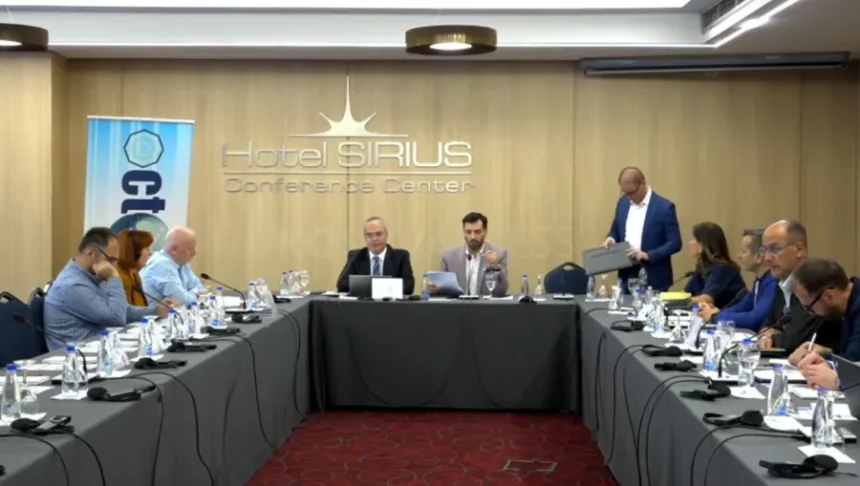
The alarm was raised during the “Octopus” Institute’s 2026 Forum, “Electoral Integrity in the Face of Hybrid Threats: Security Implications of Foreign Interference.” Panelists mapped out how standard political propaganda is being systematically optimized to compromise digital search engines and automated algorithmic models.
Algorithmic Subversion: How Disinformation Weaponizes AI
Festim Rizanaj, an open-source intelligence and media verification expert from Hibrid.info, detailed how state-backed narratives originating in Belgrade bypass traditional media firewalls by targeting the global digital ecosystem.
When high-ranking Serbian officials—such as Petar Petković (Head of the Office for Kosovo) or Milovan Drecun (Parliamentary Security Committee Chair)—issue synchronized statements, their rhetoric is amplified by state media agencies like Tanjug and tabloids like Informer. The portal Kosovo Online further translates these pieces into Albanian to force penetration into local feeds.
According to Rizanaj, this massive, coordinated digital volume directly impacts the training pipelines of Large Language Models (LLMs) and real-time search aggregators:
- Google AI Overviews: Search queries regarding the Kosovo elections in the Serbian language frequently generate automated AI summaries pulling heavily from Belgrade’s state-aligned references.
- Generative Chatbots: Prominent AI models—including OpenAI’s ChatGPT and DeepSeek—ingest these saturated digital data streams, risking the replication and normalization of biased geopolitical narratives when users query the platforms.
[The Algorithmic Poisoning Pipeline]
  State Orchestration (Belgrade Officials: Petković, Drecun, Vučević)
            │
            ▼
  Media Amplification (Tanjug, Informer, Kosovo Online translations)
            │
            ▼
  Digital Saturation (Saturating Serbian-language web data)
            │
            ├─► Google AI Overviews (Pulls biased real-time references)
            └─► LLMs / Chatbots (ChatGPT, DeepSeek ingest poisoned training data)
The Dominant Disinformation Narratives
The forum identified four core deceptive talking points systematically designed to flood the digital and algorithmic sphere to undermine Kosovo’s institutional credibility:
- “Institutional Terror”: Fabricated or heavily exaggerated claims of state-sponsored violence targeting minority populations.
- “Political Arrests”: Characterizing legitimate rule-of-law actions by Kosovo law enforcement as ethnically motivated kidnappings.
- Electoral Sabotage: Preemptively claiming the June 7 vote is rigged to delegitimize the final results.
- Diaspora Vote Invalidation: Framing external and mail-in ballots from the diaspora as illegal tools used for demographic manipulation.
Cyber Operations and Grassroots Coercion on the Ground
The hybrid threat spans both digital networks and physical communities. Valdete Daka, former head of Kosovo’s Central Election Commission (CEC), recalled a history of cyber warfare targeting election infrastructure.
Daka highlighted past instances, specifically pointing to a major cyberattack in 2017 attributed to Russian hacker groups that completely disabled the CEC’s live results transmission system, alongside similar digital blackouts observed during the 2025 electoral cycle.
Concurrently, Kosovo Police representative Vëllaznim Sordolli confirmed that law enforcement is tracking economic and administrative coercion on the ground. Sordolli pointed to the recent targeted arrests of seven municipal and institutional directors in Gračanica as a textbook hybrid warfare tactic. These officials allegedly abused their administrative power over local schools and hospitals to issue retaliatory job dismissals against staff members who refused to pledge political allegiance to Lista Srpska.
Countering the Russo-Serbian Strategic Alignment
Dr. Iryna Synelnyk, an international asymmetric warfare analyst, emphasized that Belgrade’s current tactics are perfectly synchronized with Moscow’s long-term geopolitical objective: fracturing Western Balkan democracies through information manipulation.
“There is a high probability that Serbia will try to influence the elections in Kosovo with methods that have been successful in Russian attempts to influence various countries,” Synelnyk warned, urging state institutions to shift resources toward building societal media literacy and robust digital defenses.
Arben Fetoshi, Director of the “Octopus” Institute, concluded that neutralizing these multi-layered interventions is no longer simply a local law enforcement issue. In the context of current global geopolitical volatility, preserving the integrity of the June 7 vote is a critical national security imperative essential to stabilizing the Western Balkans and protecting fundamental European democratic values.