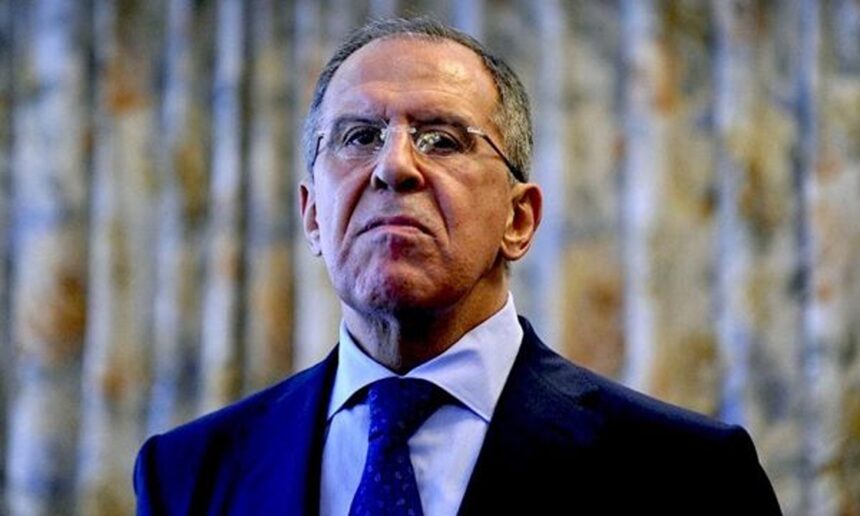
Russian Foreign Minister Sergey Lavrov has informed U.S. Secretary of State Marco Rubio that the Russian Armed Forces have initiated a wave of “systematic and continuous” missile and drone strikes targeting military infrastructure and strategic “decision-making centers” inside the Ukrainian capital of Kyiv.
The high-stakes disclosure came during a tense direct diplomatic telephone call between Moscow and Washington, signaling a volatile escalation in the theater of operations.
Preserving “Red Lines” and Demanding U.S. Evacuations
According to a formal communique released by the Russian Ministry of Foreign Affairs, Lavrov stated that the intensified air campaign was ordered directly by President Vladimir Putin. Moscow is framing the bombardment as a retaliatory strike following recent Ukrainian cross-border operations hitting civilian infrastructure on Russian soil.
Crucially, the Kremlin used the call to pass a stark tactical warning to Washington regarding its assets on the ground:
The Kremlin’s Warning to Washington: Foreign Minister Lavrov explicitly urged Secretary of State Marco Rubio to take immediate, proactive measures to evacuate all American diplomatic personnel, embassy staff, and U.S. citizens from the Ukrainian capital ahead of the expanding air operations.
Accusations of Violating the “Anchorage Accords”
During the exchange, Lavrov leveled harsh criticism against European political leadership and the administration in Kyiv. He accused Western powers of systematically dismantling and undermining the landmark agreements brokered in Anchorage in August 2025.
According to Moscow’s geopolitical stance, the Anchorage framework was meant to lay the structural foundation for a long-term diplomatic resolution to the conflict. Russia asserts that the current Western military posture has entirely hollowed out those commitments.
[Global Diplomatic Review — Lavrov-Rubio Call]
   │
   ├─► Ukraine Theater ──────► Systematic strikes on Kyiv decision centers
   │                          ► Direct demand for U.S. diplomatic evacuation
   │
   ├─► Strait of Hormuz ─────► Joint review of crisis management initiatives
   │
   └─► Caribbean Security ───► Stabilization talks regarding the situation in Cuba
Broader Geopolitical Agenda: Hormuz and Cuba
While the immediate flashpoint of the communication focused on the skies over Kyiv, the Russian Foreign Ministry noted that the discussion extended into a broader review of global security flashpoints where Washington and Moscow retain opposing strategic interests.
The two top diplomats exchanged views and potential crisis-management frameworks regarding the ongoing maritime bottleneck and security crisis in the Strait of Hormuz—a critical global oil transit chokepoint—as well as the compounding political and security situation surrounding Cuba. The inclusion of these topics underscores that despite the intense kinetic warfare in Eastern Europe, broader back-channel horse-trading over global spheres of influence remains active between the superpowers.