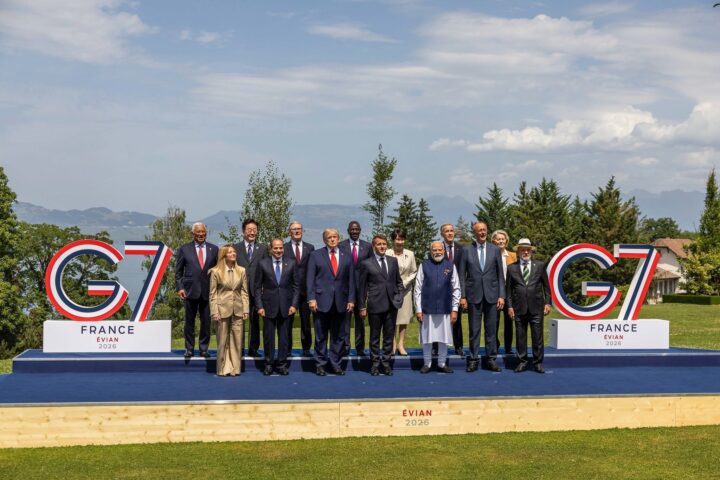
EVIAN-LES-BAINS, France — In a major geopolitical breakthrough, leaders of the Group of Seven (G7) nations issued a powerful, unified declaration on Wednesday, June 17, 2026, pledging unyielding defense of Ukraine’s territorial integrity while rolling out a sweeping new wave of financial warfare targeting Russia’s wartime economy.
Meeting at the high-stakes annual summit in the French lakeside town of Evian-les-Bains, the leaders of the world’s most advanced economies confirmed they are moving to systematically choke off Moscow’s primary remaining revenue lifelines, specifically targeting global oil and gas supply networks.
Concurrently, the summit delivered a secondary diplomatic shockwave, with the G7 formally welcoming a freshly minted bilateral agreement between the United States and Iran, signaling a coordinated global pivot to stabilize volatile international energy markets.
1. Suffocating the War Machine: The Energy Sanctions Escalation
The centerpiece of the joint G7 communique is a direct, coordinated escalation of economic penalties. Recognizing that previous sanctions packages contained loopholes that allowed Moscow to fund its military campaigns, the G7 is shifting from general trade restrictions to aggressive, sector-specific energy containment.
The Strategic Targets of the New G7 Economic Package

 [ THE OIL & GAS BLOCKADE ] ──► TOTAL SECTOR CLOSURE
 • Implementing tighter enforcement on the oil price cap and banning corporate
   loopholes to prevent third-party nations from laundering Russian crude oil.

 [ ASSET SEIZURE ENFORCEMENT ]──► REVENUE DIVERSION
 • Finalizing the institutional framework to siphon interest generated by frozen
   Russian sovereign central bank assets to directly fund Ukrainian defense.

 [ TECHNOLOGY EMBARGO ]     ──► INDUSTRIAL SABOTAGE
 • Blacklisting shipping conglomerates and maritime insurers that provide covert
   logistical aid to Russia's elusive "shadow fleet" of unregistered tankers.
“In this context, we will strengthen our sanctions against Russia, including those on the oil and gas sectors.”
— Official G7 Joint Communique, Evian-les-Bains
2. The US-Iran Breakthrough and Global Energy Realignment
In an unexpected parallel development, the G7 summit served as the global launching pad for the newly struck accord between Washington and Tehran. The Western allies formally endorsed the deal, framing it as a crucial mechanism to offset the planned reductions in Russian energy output.
The Geopolitical Energy Strategy Post-Summit
┌────────────────────────────────────────────────────────────────────────┐
│                                                                        │
│  [ THE US-IRAN AGREEMENT ] ────────────────────────────────────────┐   │
│  • G7 leaders formally welcomed the bilateral breakthrough, expressing   │   │
│    immediate readiness to assist logistically in implementing its terms.│   │
│                                                                        │   │
│  [ RE-ROUTING TRANSIT DEPENDENCY ] ────────────────────────────────┤   │
│  • The alliance announced concrete, long-term plans to diversify global │   │
│    energy shipping lanes, specifically reducing systemic reliance on the│   │
│    highly vulnerable, conflict-prone Strait of Hormuz.                │   │
│                                                                        │   │
│  [ ACCELERATING STRATEGIC RESERVES ] ──────────────────────────────┘   │
│  • Member states committed to aggressively boosting domestic emergency │
│    energy reserves to insulate consumer economies from sudden supply shocks.│
└────────────────────────────────────────────────────────────────────────┘
3. Strategic Transition: Replacing Vulnerable Energy Corridors
The decisions made at Evian-les-Bains signal a structural reorganization of global energy commerce. By doubling down on Russian oil sanctions while simultaneously preparing for an influx of monitored Iranian supply, the G7 is attempting to insulate Western economies from retaliatory supply cuts.
| Strategic Metric | The Pre-Evian Security Framework | The Post-Evian G7 Mandate |
| Russian Sanctions Policy | Incremental restrictions with persistent enforcement gaps across global maritime insurance and third-party refining. | Full-Scale Containment: Explicit targeting of foundational gas and oil nodes with strict penalties for sanction evaders. |
| Middle Eastern Transit | Critical dependence on the Strait of Hormuz for global crude supplies, risking economic shocks during regional crises. | Diversification Shift: Active investment in alternative shipping corridors, trans-continental pipelines, and local logistics. |
| Economic Self-Reliance | Reliance on just-in-time global energy shipping markets, leaving domestic prices highly vulnerable to geopolitical spikes. | Strategic Stockpiling: Mandatory building of massive, sovereign energy reserves to withstand long-term supply market blockades. |
The Evian-les-Bains summit demonstrates that the G7 views economic policy as an extension of international security. By coupling expanded energy sanctions against Russia with a pragmatic approach to the US-Iran accord, the alliance aims to achieve two critical goals at once: starving Moscow of war revenue while re-engineering global trade routes to protect Western economies from energy disruptions.