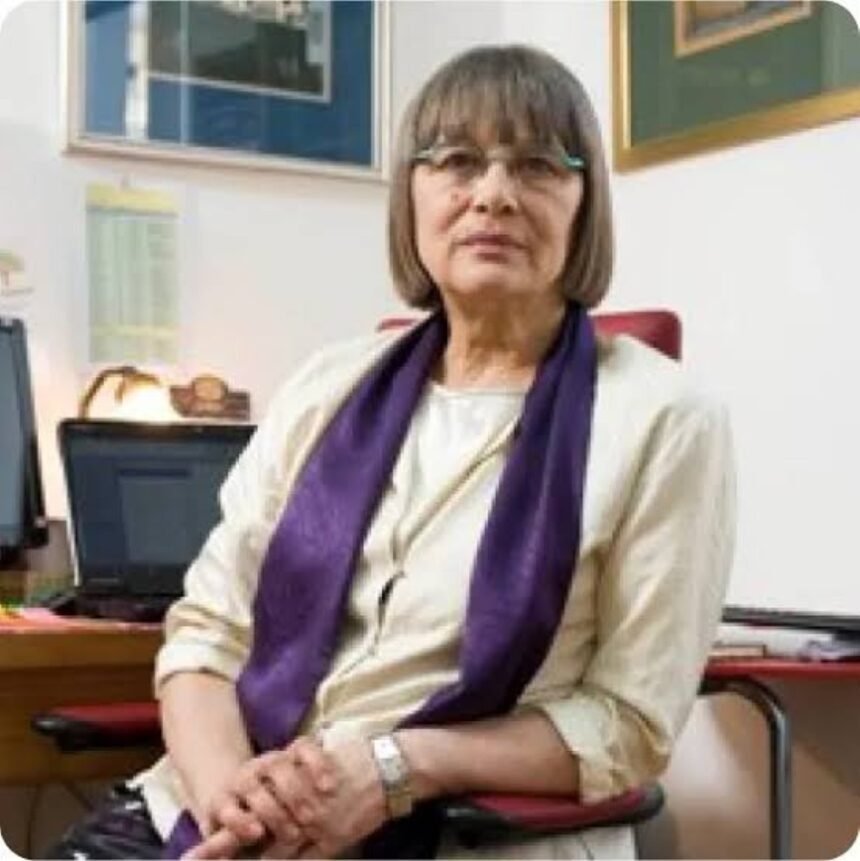
Human rights activist Nataša Kandić, founder of the Humanitarian Law Center (HLC), has sharply condemned the statement made by Serbia’s Minister of State Administration and Local Self-Government, Snežana Paunović, regarding the ethnic cleansing of Kosovo.
Kandić expressed her reactions on the social media platform X (formerly Twitter), emphasizing that she does not view the minister’s words as mere historical commentary, but as a alarming signal about the present political climate.
Key Points of Kandić’s Response
1. Historical Amnesia and Localized Knowledge
Kandić highlighted that Minister Paunović is a native of Peć (Peja) and is therefore fully aware of the realities of the 1999 conflict in that specific region:
- The Expulsions: Kandić pointed out that on March 27, 1999, Serbian police expelled almost the entire ethnic Albanian population from Peć, forcing them to flee on foot toward Montenegro or deporting them by bus to Albania.
- The Massacres: She reminded the public that Paunović is well aware of the war crimes committed in neighboring villages such as Ćuška, Pavljan, Zahać, and Lybeniq (Ljubenić), where civilians were systematically killed and their bodies burned.
- The Critique: Kandić argued that despite knowing these historical facts, Paunović “publicly presents ethnic cleansing as a desirable political solution and regrets that it was not carried out in 1998.”
2. A Living Ideology
For Kandić, the most concerning aspect of the minister’s statement is what it reveals about current political attitudes in Serbia:
“I do not experience her words as talk about the past, but as a message that this ideology has not been abandoned.”
— Nataša Kandić, Founder of the Humanitarian Law Center
3. Support for Prishtina’s Decision and Calls for Financial Audits
Kandić fully backed the Kosovo government’s decision to declare Paunović persona non grata, calling the permanent entry ban a “correct decision.”
Furthermore, she urged state financial authorities to investigate the minister’s past financial claims:
- She called for an audit to determine whether Paunović has been receiving state compensation for travel expenses (commuting between Peć and Belgrade) despite having been restricted from entering Kosovo for years.
- Kandić demanded that if any budget misappropriation is uncovered, the minister must face criminal prosecution.
4. Division of Opinions Among Kosovo Serbs
Kandić also pointed out a sharp division in how these remarks are perceived within the Serbian community:
- She claimed that Serbs who worked in state institutions often hold similar views to Minister Paunović.
- Conversely, she emphasized that the families of victims (excluding those aligned with the ruling SNS party for positions), along with displaced Serbs from Gjakova (Đakovica), Prizren, Peć, and mixed-ethnicity villages, do not share the minister’s extremist perspective.