The rapid acceleration of Ukraine and Moldova’s accession into the European Union has hit a major diplomatic roadblock, with the Western Balkans at the center of the dispute.
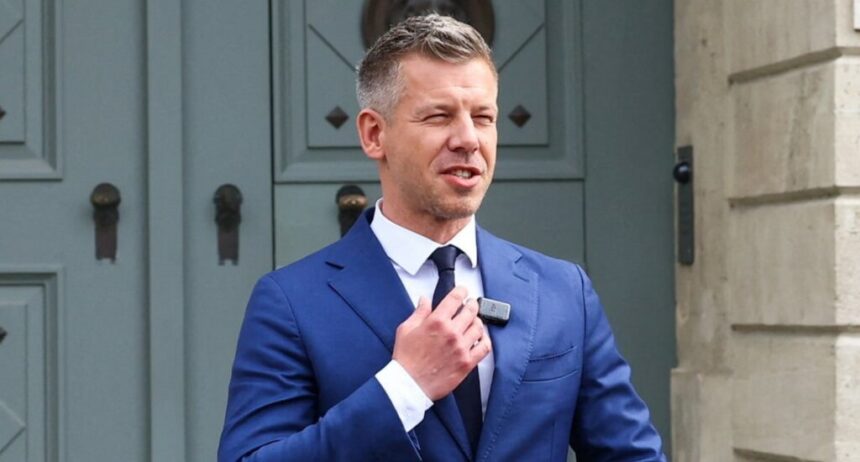
Two days ago, Hungary single-handedly blocked a critical procedural step aimed at fast-tracking membership talks for Kyiv and Chișinău. While Kyiv has set a highly ambitious goal to open all six negotiating clusters by mid-July, Hungary’s new Prime Minister, Péter Magyar, firmly rejected the proposal, warning that bypassing standards sends a dangerous, discouraging signal to nations in the Western Balkans that have spent decades waiting at the EU’s doorstep.
Hungary Demands Equal Treatment for Balkan Candidates
On June 15, the EU officially opened the first negotiating chapters with Ukraine and Moldova. However, Kyiv’s drive to open all remaining clusters simultaneously was paralyzed when Hungary emerged as the sole EU member to oppose sending the recommendation to the European Council and European Commission.
Prime Minister Magyar successfully insisted on removing the phrase “as soon as possible” from the official written conclusions of the EU leaders’ summit regarding Ukraine’s membership timeline.
Prime Minister Péter Magyar: ““There are six distinct clusters, and opening all six at once is a highly flawed approach. The ink has barely dried on the first one. Doing this would send a completely wrong message to Serbia, Albania, Montenegro, and North Macedonia, all of whom have been grinding through reforms for years to achieve EU status.””
The Agricultural and Minority Subtext
Political analysts suggest Budapest’s firm stance serves dual strategic interests. Branka Latinović, a former ambassador, noted that while Magyar presents himself as a pragmatic European, national interests remain his primary driver:
- The Grain Factor: Incorporating Ukraine—the undisputed “granary of Europe”—would profoundly disrupt the EU’s internal market, a pressing concern recently echoed during a Visegrád Group meeting.
- Domestic Responsibility: Latinović also pointed out that while Ukraine and Moldova have shown aggressive reformist energy over the past two years, Western Balkan states must stop waiting for “membership as a gift.” Merits and deep societal transformation remain the true currency of Brussels.
Central and Southern Europe Pull the “Handbrake”
Budapest is far from isolated in its skepticism; several EU capitals are pushing back against dual standards.
EU Split Over Fast-Track Enlargement (June 2026)
========================================================================
Pro-Fast-Track   --> Bordering states seeking immediate security guarantees for Kyiv.
Pro-Equal-Terms  --> Hungary, Poland, Austria, Greece demanding Balkan parity.
The Core Stance  --> Candidates must fulfill strict criteria with zero shortcuts.
========================================================================
- Poland: Polish Prime Minister Donald Tusk publicly backed Magyar’s position, warning that the phrase “as soon as possible” reflects empty enthusiasm. He insisted that the Western Balkans cannot be subjected to a completely different set of rules than Ukraine.
- Austria: Austrian Minister for Europe Claudia Bauer sharply criticized the “overtaking lane” policy, stating it is unacceptable for some nations to end up with one foot in the EU overnight while others spend decades working for it.
- Greece: Athens reinforced its solidarity with Kyiv’s European perspective but explicitly stated that it must not materialize at the expense of the Western Balkans, whose European path was guaranteed back in 2003.
The Twin Hurdles to Enlargement
According to Igor Novaković of the ISAK Fund, the wider enlargement debate is being deeply complicated by two structural anxieties:
- The Veto Dilemma: Core EU members fear expanding the bloc before internal voting reforms are passed, worried that new members could weaponize their veto powers or act as geopolitical proxies.
- The “Trump Timeline”: In early February, U.S. President Donald Trump pushed the EU to grant sweeping concessions to Ukraine, sparking rumors that Kyiv could gain full membership within a year of a finalized peace truce.
As a result, a visible geographical rift has widened within the bloc: nations bordering Ukraine are aggressively prioritizing Kyiv, while countries adjacent to the Western Balkans are fighting to keep the integration process strictly balanced and rule-based.