A landmark investigation released today by the Digital Forensic Center (DFC) warns that Montenegro faces severe vulnerabilities to deep-seated foreign interference as it approaches its 2027 parliamentary elections.
The study, titled “Elections Under the Microscope: Threats to the Electoral Process in Montenegro,” sounds the alarm on a sophisticated, coordinated apparatus linking Kremlin-backed networks, the Serbian government, and elements of the Serbian Orthodox Church (SPC). The report warns that these actors are actively deploying hybrid-warfare models—highly reminiscent of recent subversion tactics seen in Moldova—to systematically undermine Montenegro’s pro-EU integration, stoke identity-driven polarization, and engineer political crises.
The SPC as a Political Mobilization Engine
The DFC explicitly categorizes the Serbian Orthodox Church (SPC) as a powerful sociopolitical force whose operational capacity extends far beyond religious boundaries into highly effective nationalistic and political mobilization.
Foreign Influence & Polarization Network
[ Moscow / Kremlin Hybrid Apparatus ] ───► [ Belgrade / Vučić Regime ]
                                                    │
             ┌──────────────────────────────────────┴──────────────────────────────────────┐
             ▼                                                                             ▼
[ Radical Right-Wing Extremists ]                                            [ SPC Infrastructure (Metropolitan Metodije) ]
             │                                                                             │
             └──────────────────────────────────────┬──────────────────────────────────────┘
                                                    ▼
                             [ Target: Montenegro 2027 Election Sabotage ]
                                    • Lovćen Chapel Identity Crisis
                                    • Diaspora Disenfranchisement
                                    • Anti-EU / Kosovo Derogation Narratives
The report highlights a clear operational blueprint where the SPC leverages its widespread clerical infrastructure to ethnically and politically homogenize the electorate in favor of pro-Serbian and pro-Russian factions. This trend was heavily documented during the September 2024 local elections in Podgorica and Kotor, where regular liturgies and public religious gatherings were weaponized to beam highly charged identity-political propaganda directly to voters.
The Lovćen Flashpoint and Strategic Escalation
The DFC warns that the upcoming election cycle will see a coordinated escalation surrounding cultural-religious symbols—most notably the aggressive push to reconstruct the Njegoš Zavjetna Kapela (Pledge Chapel) on Mount Lovćen.
- The Strategic Objective: The DFC notes this initiative is not a benign debate over cultural heritage, but rather a deliberate instrument designed to artificially inflate social grievances.
- The Threat Actor: The consolidation of these radical elements is increasingly directed by Metropolitan Metodije of Budimlja-Nikšić, who was elevated to his rank in May 2025 and has since emerged as the principal unifying figure for pro-Russian and pro-Serbian hardliners in the region.
Electoral Architecture and Diaspora Disenfranchisement
A key vulnerability exposed by the DFC is Montenegro’s permanently stalled electoral reform. The parliamentary Committee for Electoral Reform, originally convened in 2023, has largely failed to fulfill its mandate, leaving critical loop-holes in the Law on the Voters’ List and Residence Registers.
The current ruling coalition is utilizing data showing that registered voters comprise an anomalous 88% of the total population to force a drastic revision of the Law on Residence.
Critical Warning from the DFC Dossier:
“The actual, calculated effect of this legislative push would be the systematic purging of the Montenegrin diaspora from voting registries. Simultaneously granting citizenship and voting rights to a pro-Serbian demographic while stripping it from the diaspora will trigger radical, artificial shifts in the state’s electoral architecture.”
The report contrasts this aggressive push with regional standards, pointing out that all of Montenegro’s neighbors constitutionally guarantee voting rights to their diaspora, and historically, all major Montenegrin electoral adjustments required a strict two-thirds parliamentary consensus. The upcoming local elections, consolidated into a single day scheduled for June 13, 2027, will serve as a critical litmus test for these systemic vulnerabilities.
Sinergy of Extremism and Historical Revisionism
The DFC details an extensive, multi-layered infrastructure for foreign subversion that blends political parties, radical right-wing proxy groups, and highly coordinated social media networks. This network has already demonstrated its destabilizing capacity through real-world operations, including:
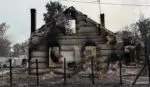
- The violent clashes involving foreign nationals in the Zabjelo neighborhood.
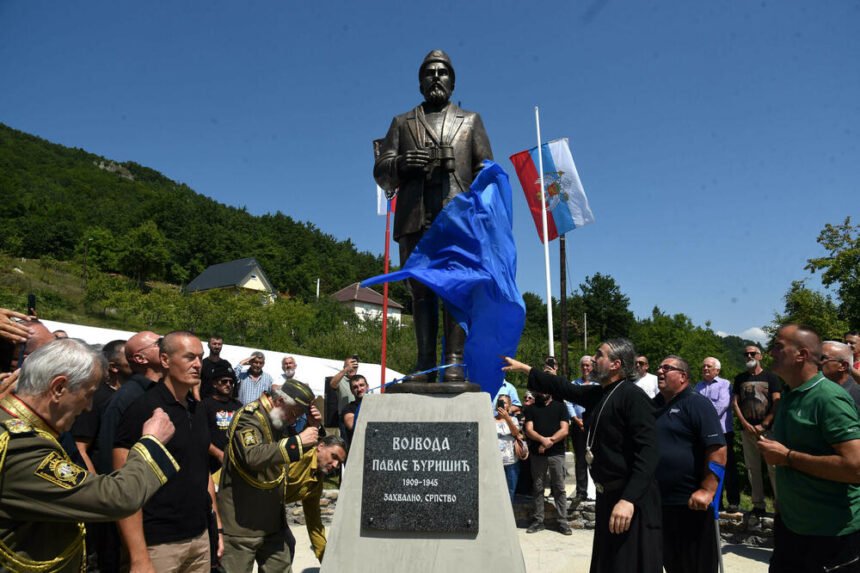
- The highly provocative installation of a monument dedicated to WWII Chetnik commander Pavle Đurišić in the village of Gornje Zaostro near Berane.
| Weaponized Pre-Election Narrative | Key Political Proponent | Geopolitical Objective |
| The “Ambasadoristan” Construct | Milan Knežević (President, Democratic People’s Party – DNP) | Undermining Western embassies; falsely claiming ethnic Serbs are systemically victimized and excluded from executive power. |
| Constitutional Language & Flag Revisions | Pro-Serbian State & Non-State Actors | Forcing the Serbian language and the tricolor flag into the Constitution to trigger deep civic polarization. |
| Kosovo Recognition Revocation | Municipal Caucuses led by the DNP | Shifting local parliamentary focuses away from the EU integration agenda and toward Belgrade-coordinated foreign policy disruption. |
Rosatom and Nuclear Energy: Russia’s New Hybrid Frontier
In a chilling breakdown of evolving geopolitical strategy, the DFC identifies nuclear energy partnerships as the latest sophisticated vector for Russian malign influence in the Balkans. Because Russia’s state-owned atomic energy monopoly, Rosatom, has successfully evaded direct European Union sanctions, the Kremlin is actively utilizing it to build long-term structural dependencies in Eastern Europe.
Anatomy of Russian Nuclear Dependency
[ Russian State-Owned Rosatom ]
               │
               ├── (Provides Tech, Fuel, Training & Multi-Decade Regulatory Controls)
               ▼
[ Recipient Balkan State (e.g., Serbia) ] ──► Permanent Geopolitical Lock-In
The DFC points to Hungary’s Paks II nuclear expansion as the primary blueprint for this strategy. The report warns that this exact model is now being deployed to establish deep nuclear cooperation between Russia and Serbia.
This atomic pivot is directly linked to the forced restructuring of Russia’s regional economic footprint. Following aggressive US sanctions targeting Serbia’s national oil company, NIS (Naftna Industrija Srbije) due to its Russian ownership, the US government delivered an ultimatum demanding the complete exit of Gazprom Neft and Gazprom from NIS ownership.
As traditional fossil-fuel capital is forced out, Moscow is strategically pivoting to nuclear contracts to lock the Western Balkans into multi-decade logistical, financial, and technological dependencies on the Russian state, effectively creating a permanent lever to disrupt the region’s alignment with the European Union.