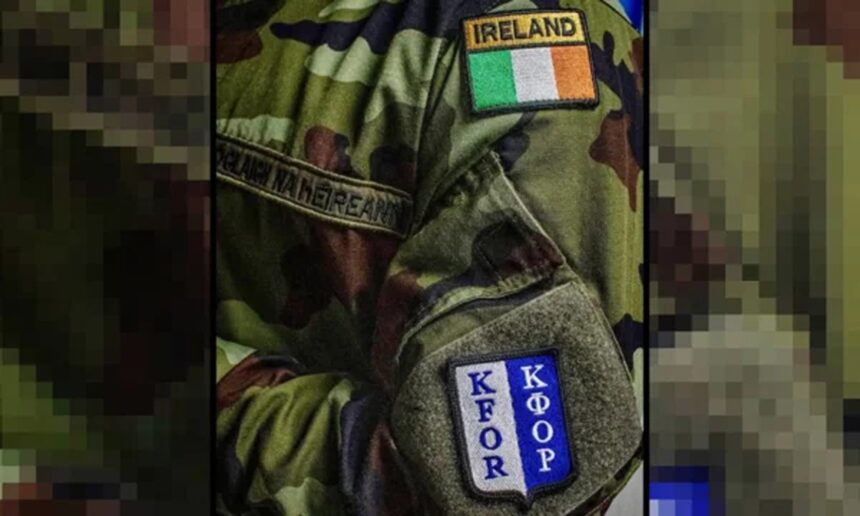
Ireland is considering a significant increase in the number of troops it contributes to NATO’s Kosovo Force (KFOR) following the planned end of its United Nations peacekeeping mission in Lebanon.
According to Irish media, around 13 Irish soldiers are currently serving with KFOR. Military planners are examining the possibility of increasing troop deployments both to the NATO mission in Kosovo and to the European Union’s military operation in Bosnia and Herzegovina, known as EUFOR Althea, The Irish Times reports.
Discussions are reportedly still at an early stage, and no decision has been made on how many additional soldiers could be deployed.
The review comes after the decision to gradually end Ireland’s participation in UNIFIL, the United Nations Interim Force in Lebanon, where more than 300 Irish troops are currently deployed. The withdrawal is expected to begin early next year, bringing Ireland’s nearly five-decade military presence in the region to an end.
Irish military representatives have called on the government to identify new international missions in which the Defence Forces could participate, creating opportunities for personnel while maintaining troop deployment levels.
Ireland’s Chief of Defence, Lieutenant General Rossa Mulcahy, said the end of the Lebanon mission would present a challenge for the Irish military but would not mark the end of its participation in overseas operations.
A potential increase in Ireland’s contributions to KFOR and EUFOR Althea could also proceed under the so-called Triple Lock mechanism, as both missions operate under United Nations mandates.
The mechanism requires a UN mandate for Ireland to deploy more than 12 soldiers on overseas peacekeeping missions. The Irish government wants to abolish this requirement, arguing that it allows Russia and China, as permanent members of the UN Security Council, to block Irish troop deployments.
Opposition parties, however, consider the mechanism essential to protecting Ireland’s neutrality.