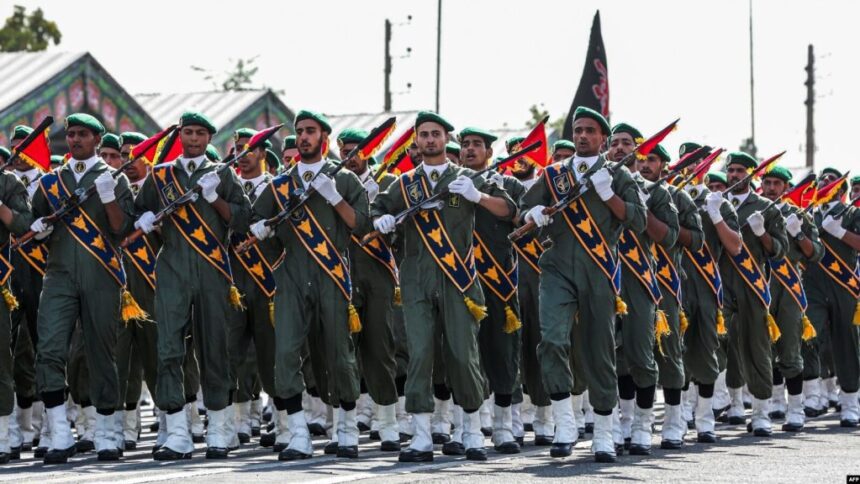
In a decisive move during Monday’s government cabinet meeting, the Republic of Kosovo officially designated the Islamic Revolutionary Guard Corps (IRGC) of Iran as a terrorist organization.
Prime Minister Albin Kurti stated that this decision serves as a firm affirmation of Kosovo’s commitment to international security and its alignment with Western democratic values.
Strategic Alignment with Global Allies
By blacklisting the IRGC, Kosovo joins a growing list of nations—including the United States and the European Union—that have taken formal action against the Iranian military branch.
“Through this decision, Kosovo strengthens its position in protecting international security, democratic values, and human rights,” PM Kurti declared. “This is a clear alignment with our strategic allies in the fight against terrorism.”
Kurti further described the IRGC as a structure that utilizes organized violence and terrorism as instruments of foreign policy, directly contributing to both regional and global destabilization.
What is the IRGC?
The Islamic Revolutionary Guard Corps was established following the 1979 Iranian Revolution to protect the country’s clerical establishment. Over decades, it has evolved into a massive entity with significant reach:
- Military Power: It operates its own land, sea, and air forces, distinct from the regular Iranian army.
- Economic Influence: The Guard controls vast sectors of the Iranian economy, including construction, telecommunications, and energy.
- Ideological Enforcement: It is responsible for internal security and has been heavily involved in the suppression of domestic dissent.
The Human Rights Context
The move by Pristina follows a period of extreme civil unrest in Iran. Human rights organizations report that over 6,000 people have been killed during recent anti-government protests. The IRGC and its paramilitary wing, the Basij, have been accused by international monitors of using lethal force to crush demonstrations.
Implications of the Blacklisting
The official designation in Kosovo triggers several immediate legal and financial consequences:
- Asset Freezes: Any assets or financial interests associated with the IRGC within Kosovo’s jurisdiction will be frozen.
- Visa Restrictions: Leaders and members of the organization are prohibited from entering the territory of Kosovo.
- Security Cooperation: Kosovo’s security agencies will increase monitoring for any potential IRGC-linked activities within the region.
Note on Diplomatic Relations: Iran, a nation of over 91 million people, does not recognize Kosovo’s independence and maintains no formal diplomatic ties with Pristina. This designation further solidifies the geopolitical divide between the two nations.