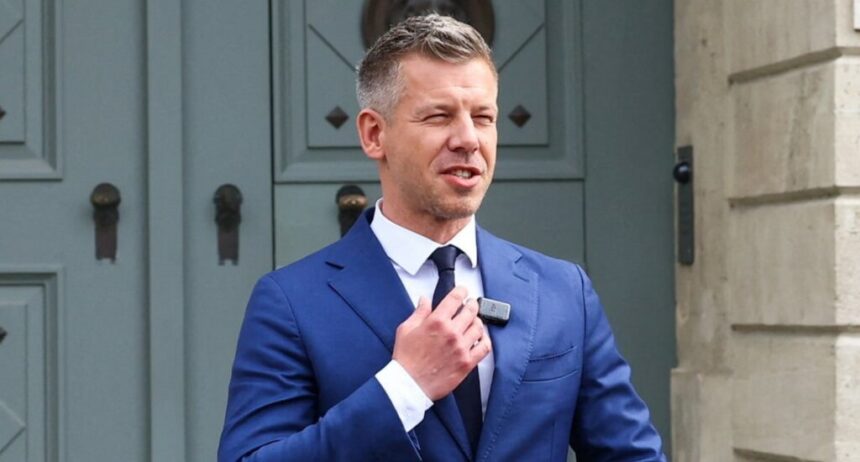
In a major shift for Hungarian foreign policy, Prime Minister-elect Péter Magyar announced today that Hungary will rejoin the International Criminal Court (ICC) and fulfill all legal obligations, including the execution of international arrest warrants. This specifically includes the warrant issued for Israeli Prime Minister Benjamin Netanyahu.
The announcement follows Magyar’s historic landslide victory in the April 12 general elections, which ended sixteen years of rule under Viktor Orbán.
Reversing Orbán’s Exit
Last year, on June 2, 2025, the outgoing Orbán administration officially notified the United Nations of Hungary’s withdrawal from the Rome Statute, the treaty that established the ICC. Orbán’s decision was largely seen as a move to shield Prime Minister Netanyahu from arrest during visits to Budapest. Under ICC rules, this withdrawal is set to become effective on June 2, 2026.
However, Magyar confirmed today that his new government will immediately move to relaunch Hungary’s membership.
“If a country is a member of the ICC and a wanted person passes through its territory, then they must be detained,” Magyar told reporters following his first parliamentary group meeting. “I take it for granted that every head of state knows these laws.”
The “Contradictory” Invitation
The Prime Minister-elect’s remarks have sparked debate due to a recent introductory phone call between him and Netanyahu. During the call on April 15, Magyar invited the Israeli leader to Budapest for the 70th anniversary of the 1956 Hungarian Uprising, scheduled for October 23, 2026.
When questioned by journalists about the apparent contradiction of inviting a man he claims he must arrest, Magyar clarified his diplomatic approach:
- The Invitation: He stated that he extended an invitation to all world leaders he spoke with following his election victory.
- The Legal Reality: Magyar suggested that the invitation does not override international law. “I don’t need to say everything on the phone,” he added, implying that the legal risks of traveling to a pro-ICC Hungary remain Netanyahu’s responsibility to evaluate.
A New Direction for Budapest
Magyar’s victory with his Tisza Party has been described as a “political earthquake” for Central Europe. By securing a two-thirds constitutional supermajority, Magyar has the legislative power to swiftly undo Orbán-era policies. His commitment to the ICC is part of a broader “reorientation” toward the European mainstream and international legal standards.
While Magyar emphasized that Hungary still values its “special relationship” with Israel—noting the large Hungarian diaspora there—he made it clear that “the beginning of a new era” means that political friendships will no longer supersede treaty obligations.