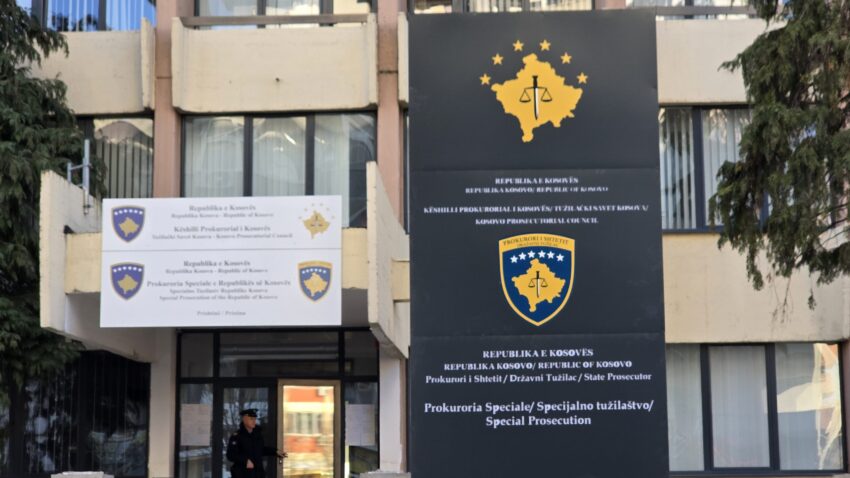
The Special Prosecution Office of the Republic of Kosovo (PSRK) has announced that it will soon file a formal war crimes indictment regarding the deadly March 1998 assault on the Jashari family home in Prekaz by Serbian security forces.
Kosovo prosecutors stated that the case is being handled as a high-priority matter and is reaching its final investigative phase. The announcement marks the first major domestic criminal prosecution aimed at delivering a legal epilogue to one of the most defining and bloody catalysts of the 1998–1999 Kosovo War.
A Long-Awaited Legal and National Epilogue
Prominent defense lawyer Visar Recaj highlighted that investigators have successfully secured extensive statements from the remaining living survivors and eyewitnesses of the three-day siege.
“The significance of this announced indictment is extraordinary from a legal, national, and state perspective,” Recaj remarked. “While one can debate whether this action has been delayed, it is vital for our judicial system that the filing is thoroughly detailed. This case will ultimately broadcast its final truth on the international stage.”
The KLA (UÇK) Veterans Organization strongly welcomed the prosecution’s breakthrough. Legendary veteran representative Hysni Gucati expressed deep institutional gratitude to the domestic prosecutors who assumed responsibility for investigating the Prekaz massacre, though he noted that the state should have formalized these indictments years earlier.
The Divergent Narratives of the Prekaz Assault
The upcoming indictment directly challenges the official historical narrative long maintained by authorities and state media in Belgrade regarding the events of March 5–7, 1998:
                  THE PREKAZ ASSAULT (MARCH 1998) NARRATIVE GAP

   BELGRADE OFFICIAL RECORD (POLITIKA)           KOSOVO SPECIAL PROSECUTION
 ──────────────────────────────────────       ───────────────────────────────────
 • Characterized as an anti-terrorist         • Investigated as a major war crime
   operation targeting KLA insurgents.          and unlawful civilian massacre.
 • Claims a 2-hour surrender window           • Focuses on the indiscriminate use
   was offered to non-combatants.               of heavy artillery on family homes.
 • Asserts Adem Jashari used relatives        • Documents the extrajudicial killings
   as human shields during the siege.           of 59 family members, including children.
According to historical records from the Serbian Ministry of Internal Affairs (MUP), the Special Antiterrorist Unit (SAJ), and the Special Operations Unit (JSO), the village of Prekaz i ulte was completely cordoned off following KLA guerrilla attacks in Drenica that killed four Serbian policemen. Belgrade has traditionally maintained that Jashari rejected a surrender protocol, fortified his compound, and prevented women and children from leaving—an assertion fiercely rejected by Albanian historians, survivors, and international human rights monitors who documented the indiscriminate use of heavy artillery against a civilian residence.
Ultimately, the multi-day artillery barrage resulted in the deaths of more than 50 members of the Jashari family, including women, elderly relatives, and dozens of children, alongside Adem Jashari himself. The event permanently radicalized the Kosovo liberation movement, shifting public sentiment toward open armed resistance. The upcoming indictment aims to formally identify and prosecute the surviving Serbian commanders and personnel who orchestrated the assault.