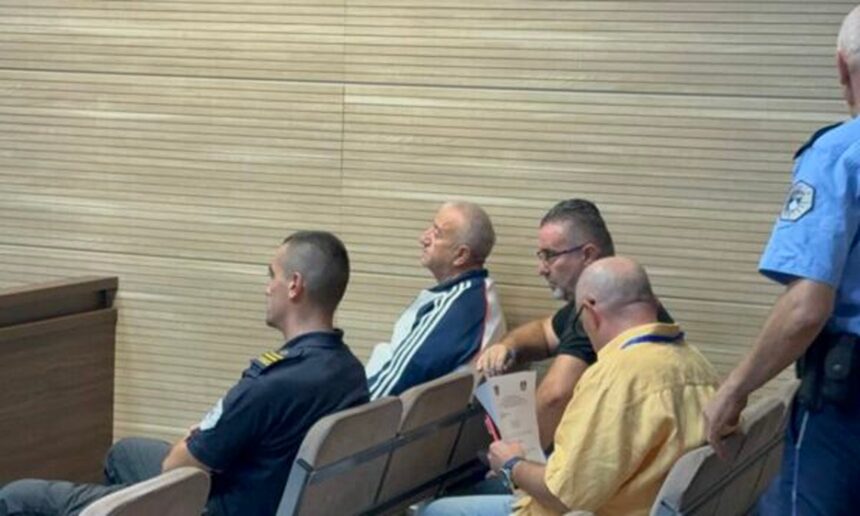
Kosovo authorities are facing growing questions over the scope of an alleged espionage case involving Fehim Sali, who has been ordered to remain in pretrial detention for one month amid suspicions that he provided information and assistance to Serbia’s intelligence service, BIA, in exchange for material benefits.
Sali was arrested on August 13 at the Merdare border crossing and is suspected of the criminal offense of espionage. The Basic Court in Prishtina ordered his detention until September 13, citing concerns that he could flee, interfere with witnesses or evidence, or repeat or continue the alleged offense.
The court said there is reasonable suspicion that the offense under investigation was committed and that the legal conditions for detention had been met. The allegations against Sali have not been proven in court, and he is presumed innocent unless found guilty through a final judicial decision.
The case has prompted security experts to call for a broader investigation that goes beyond the individual suspect and examines his contacts, communications and any possible links to other individuals or structures.
Racaj: Case should be treated as a national security matter
Retired Major General and security expert Prof. Dr. Muhamet Racaj told Bota sot that the case should be handled with particular seriousness while fully respecting the presumption of innocence.
He said investigators should determine whether Sali acted independently or as part of a wider network or cell.
“The very nature of the suspicion of espionage makes the case sensitive for national security,” Racaj said, explaining that espionage can involve not only the collection of information but also attempts to penetrate institutions, obtain classified data, identify institutional vulnerabilities and establish channels of influence on behalf of a foreign state or structure.
Racaj argued that investigators should examine the suspect’s contacts, communications, sources of information and any potential organizational links.
He also warned that, if the allegations are confirmed, the potential risks could extend beyond the disclosure of classified information to Kosovo’s defense capabilities, state institutions and strategic decision-making processes.
“In conditions of hybrid warfare, espionage can be combined with disinformation, political influence, economic pressure and cyber operations,” Racaj said.
He stressed that the investigation should establish whether the alleged activity was isolated or part of a broader network.
“If indications of other contacts or collaborators emerge during the investigation, the competent institutions should determine whether this was an isolated activity or part of a wider network,” he said.
Racaj added that Kosovo should maintain “zero tolerance” toward espionage while ensuring that investigations remain professional, lawful and evidence-based.
Burjani warns of possible wider networks
Jurist Blerim Burjani also raised concerns about the possibility that individuals suspected of hostile activity could be connected to broader structures.
Speaking to Bota sot, Burjani argued that Kosovo, more than two decades after the end of the war, still lacks a lustration law and continues to face concerns over individuals suspected of acting against the state.
“A network may exist, because Kosovo is facing security problems and threats in many situations. Kosovo still does not have a lustration law,” Burjani said.
He questioned whether sufficient measures have been taken over the years against individuals suspected of hostile activities.
“26 years after the war, Kosovo continues to face many people suspected of hostile activities against it, but so far there have not been sufficient measures against many figures who have managed to operate within its institutions,” he said.
According to Burjani, the challenge may extend beyond individual suspects to possible structures and networks capable of acting against Kosovo.
“Therefore, Kosovo is dealing with individuals, but not with the structures and networks that may exist and that undertake activities against Kosovo,” he said.
The detention of Sali is expected to give investigators additional time to examine the allegations and determine whether the case concerns an isolated individual or potentially points to a broader intelligence operation. Any wider conclusions will depend on evidence gathered during the ongoing investigation.