Kosovo’s caretaker Prime Minister and Vetëvendosje leader Albin Kurti has said that a political agreement on the proposed presidential candidate Bekim Sejdiu remains in force, despite growing difficulties in securing the votes needed for his election.
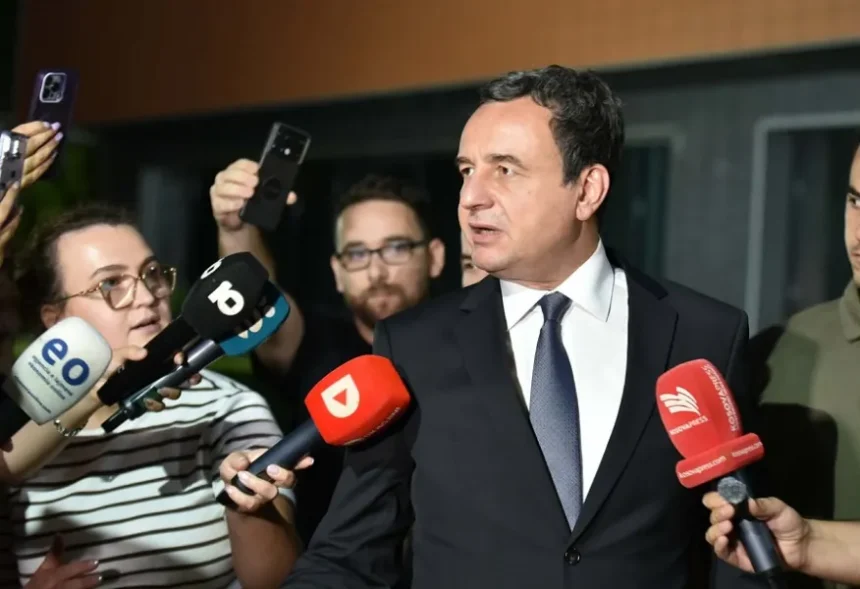
Speaking after a meeting with representatives of Kosovo’s non-majority communities, Kurti said efforts were continuing to avoid sending the country to new elections amid the political deadlock over the presidency.
Kurti said the agreement reached with the Democratic League of Kosovo (LDK) had identified Professor Bekim Sejdiu as the agreed candidate for president.
“We discussed the political agreement we reached with the LDK on the specific name for president, and we have already agreed on Professor Bekim Sejdiu,” Kurti said.
He added that representatives of non-majority communities had expressed regret that the agreement could not currently be implemented because six LDK MPs had not supported it.
The meeting with community representatives followed Kurti’s earlier meeting on Wednesday with LDK leader Lumir Abdixhiku, during which the two discussed the latest developments surrounding the presidential election.
According to Kurti, 10 representatives attended the meeting with the non-majority communities, including five members of the current government and five representatives from the next legislature.
“We will continue moving forward together while trying to avoid elections, now that we have an agreement,” Kurti said.
He acknowledged that the political situation had become more difficult following recent developments but insisted that there had also been progress.
“Yesterday afternoon there was a negative development, but we have made progress,” Kurti said, adding that the current legislature has more votes available for the election of a president than the previous one.
Kurti said he would hold further consultations with the leadership of Vetëvendosje to determine the next steps.
The Vetëvendosje leader also reiterated that Bekim Sejdiu remains the party’s proposed candidate, despite divisions within the LDK over the agreement.
“We reached an agreement and had the authorization to negotiate. Thankfully, the negotiations resulted in an agreement, but it appears that someone had a much bigger problem with us reaching an agreement than when we did not have one,” Kurti said.
Earlier, Abdixhiku said Kosovo was facing what he described as an “impossible numerical situation” for electing a new president, warning that the distancing of other political parties could push the country toward new elections.
The latest consultations underline the growing pressure on Kosovo’s political parties to find sufficient parliamentary support for a presidential candidate and avoid another election cycle.