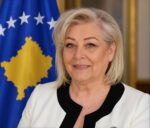
European Commissioner for Enlargement Marta Kos has canceled her planned visit to Belgrade in protest over the public glorification of convicted war criminal Ratko Mladić and the military honors surrounding his funeral.
Speaking to CNN, Kos described the cancellation as “the only possible decision,” saying that honoring convicted war criminals and giving military honors to a person responsible for the Srebrenica genocide and some of Europe’s gravest crimes since World War II was unacceptable.
“It is in direct contradiction to the core values of the European Union — the rule of law, reconciliation and respect for victims,” Kos said.
She said she had decided, both as a politician and as a person, that she could not travel to the Serbian capital following the events surrounding Mladić’s funeral.
“Can you imagine how I could ever look the mothers of Srebrenica in the eyes, who lost so many members of their families?” Kos said, recalling her meetings with relatives of the genocide victims.
According to Kos, the Mothers of Srebrenica have become symbols of reconciliation despite the suffering they endured.
“They told me: ‘We will never forget, but we can forgive,’” she recalled, stressing that their message makes continued efforts toward reconciliation essential.
Kos said she expects Serbia, as an EU candidate country, to demonstrate a clear commitment to confronting its past and advancing reconciliation.
She argued that a serious discussion is now needed about how Serbia intends to continue on its European path.
“The path to the EU requires confronting the past, genuine reconciliation and respect for the victims of war crimes. This is what I expect. We expect Serbia to move clearly and decisively on its European path,” Kos said.
The European commissioner stressed that EU membership involves more than aligning national legislation with European rules. It also requires respect for the Union’s fundamental values, a clear strategic orientation and a commitment to reconciliation.
Kos placed particular responsibility on Serbia’s political leadership to address the legacy of the wars of the 1990s rather than deepen existing divisions.
“It is the responsibility of the leadership in Serbia to heal the wounds of the past and not pour salt into them again, so that they never heal,” she said.
Her decision to cancel the Belgrade visit comes amid growing criticism from European officials over the public glorification of Mladić following his death, with the controversy increasingly becoming a test of Serbia’s commitment to the values underpinning its EU accession process.