A controversial decision by the Zeta Municipal Assembly to adopt a declaration “annulling” the recognition of Kosovo within its local territory has sparked a sharp reaction from the central government of Montenegro.
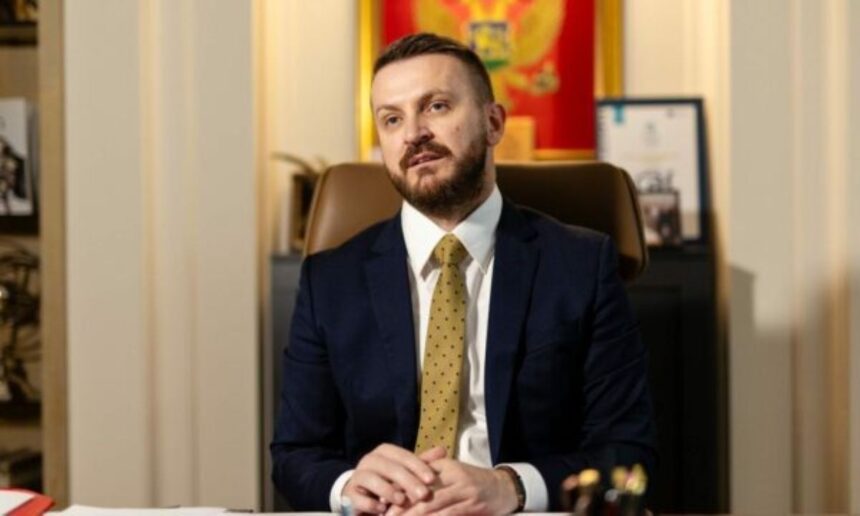
Marash Dukaj, Montenegro’s Minister of Public Administration, expressed deep regret over the move, though he noted that he was “not surprised” by the actions of the newly formed municipality.
Minister Dukaj’s Reaction: Key Points
Minister Dukaj criticized the move as an overreach of local authority and a blow to the country’s pro-European trajectory.
- Usurpation of Power: Dukaj emphasized that local municipalities do not have the legal or constitutional authority to dictate foreign policy, which is the sole competence of the state government.
- A “Step Backward”: He labeled the declaration a significant setback for Montenegro’s European future and its commitment to regional stability.
- Political Motivation: The Minister suggested that the move was a calculated attempt to gain “particular political benefits” linked to specific geopolitical strategies rather than serving the interests of local citizens.
“Instead of the newest municipality doing everything to create better living conditions and prosperity for its citizens, we are witnessing an attempt to destroy institutions through deviations of parts of the system,” Dukaj wrote.
Legal Status of the Declaration
Despite the political noise generated by the vote, legal experts and government officials have clarified that the Zeta declaration has no binding legal effect.
- Constitutional Supremacy: Under Montenegrin law, foreign policy is conducted exclusively by the state. The 2008 decision to recognize the Republic of Kosovo remains the official and unchanged position of Montenegro.
- Institutional Integrity: Dukaj warned that such “phenomena” are attempts to undermine friendly relations with neighbors and weaken state institutions from within.
The Context of Zeta
Zeta is Montenegro’s youngest municipality, having recently gained independent administrative status. The local assembly is dominated by political forces that have traditionally opposed Kosovo’s independence and favored closer ties with Belgrade and Moscow.
While the “derecognition” is symbolic, it highlights the internal political friction within Montenegro as it attempts to balance its NATO and EU commitments with segments of the population that remain aligned with different geopolitical interests.