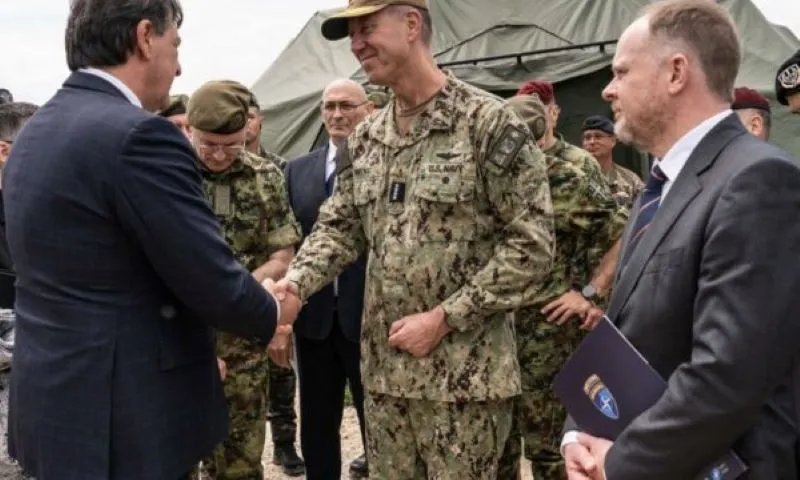
In a dramatic geopolitical development on May 29, 2026, NATO formally announced the successful conclusion of its first-ever joint tactical military exercise with the Serbian Armed Forces.
According to an official press release issued by the Alliance, the two-week drill marks a historic “milestone of practical cooperation” under the umbrella of the Partnership for Peace (PfP) program. The exercise represents a calculated diplomatic tightrope walk, taking place amidst severe regional tensions and intense international scrutiny over Belgrade’s parallel, unyielding security relationships with Moscow.
The Tactical Breakdown: 600 Allied Troops in Action
The high-intensity exercise lasted fourteen days and mobilized approximately 600 troops from across the Alliance to train alongside Serbian military personnel. The operations relied on complex, fictional scenarios engineered to optimize professional military cooperation, establish mutual tactical communication, and streamline battlefield coordination.
[Multinational Coalition Framework: NATO-Serbia 2026]
                         Peace Support Operations
                                    │
       ┌────────────────────────────┴────────────────────────────┐
       ▼                                                         ▼
Serbian Armed Forces                                     NATO Allied Nations
(Host Personnel)                                  (Deploying Tactical Units)
                                                                 │
       ┌───────────┬───────────┬───────────┬───────────┬─────────┴─┬───────────┬───────────┐
       ▼           ▼           ▼           ▼           ▼           ▼           ▼           ▼
    United    United      Germany     France      Turkey      Romania     Italy    Montenegro
    States    Kingdom
The exercise focused exclusively on peace support operations within a highly volatile, multinational environment, testing the units’ collective agility in urban terrain, humanitarian corridors, and perimeter defense maneuvers.
High-Level Endorsements from NATO Command
Top NATO officials heavily praised the technical success and professional execution of the military drills, framing the achievement as the blueprint for future Balkan connectivity.
Admiral George M. Wikoff (Commander of Allied Joint Force Command Naples):
“This exercise demonstrated the professionalism, expertise, and readiness of the Serbian Armed Forces working alongside Allied troops. By training together, we enhance interoperability, build mutual trust, and strengthen our ability to respond effectively to shared security challenges. It is a credit to everyone involved and a great moment as we build our future partnership together.”
Ambassador Kevin Hamilton (NATO Deputy Assistant Secretary General for Political Affairs and Security Policy):
“This year’s NATO-Serbia exercise represents a tangible demonstration of how far the NATO-Serbia relationship has grown. How much Serbia’s partnership with NATO has developed, and how much our political dialogue and practical cooperation have progressed.”
Navigating the Razor-Thin Margin of “Military Neutrality”
Aware of the sensitive political landscape inside Belgrade—where public sentiment remains deeply skeptical of the Alliance due to the legacy of the 1999 intervention—NATO went to great lengths to emphasize that the drill was executed with absolute respect for Serbia’s self-declared constitutional doctrine of strict military neutrality.
| Key Diplomatic Position | Tactical & Geopolitical Reality |
| NATO Strategic Stance | The Alliance insists the exercise proves that political neutrality is not an obstacle to deep, localized, and practical military integration with Western forces. |
| Belgrade’s Double-Game | While Serbian forces optimized interoperability with advanced NATO tech from the U.S., UK, and France, the Vučić administration simultaneously refused to sanction Russia and maintained open communication with the Kremlin. |
| Regional Signalling | By actively integrating Montenegro and Romania—two regional neighbors currently facing direct airspace vulnerabilities from the broader Eastern European conflict—the exercise sends a deterrent signal regarding Balkan security stability. |
Looking ahead, Admiral Wikoff reiterated that NATO stands fully prepared to scale up its joint maneuver packages and intelligence-sharing frameworks with Belgrade, provided future operations continue to strictly respect Serbia’s sovereign framework. Whether this historic field success translates into a permanent pivot away from Russian security influence, however, remains an open question in Western capitals.