NATO is working urgently to provide Ukraine with the air-defense capabilities it “desperately needs,” Secretary General Mark Rutte said, as Kyiv faces a severe shortage of interceptor missiles and warns that Russia is preparing to significantly increase ballistic missile production ahead of winter.
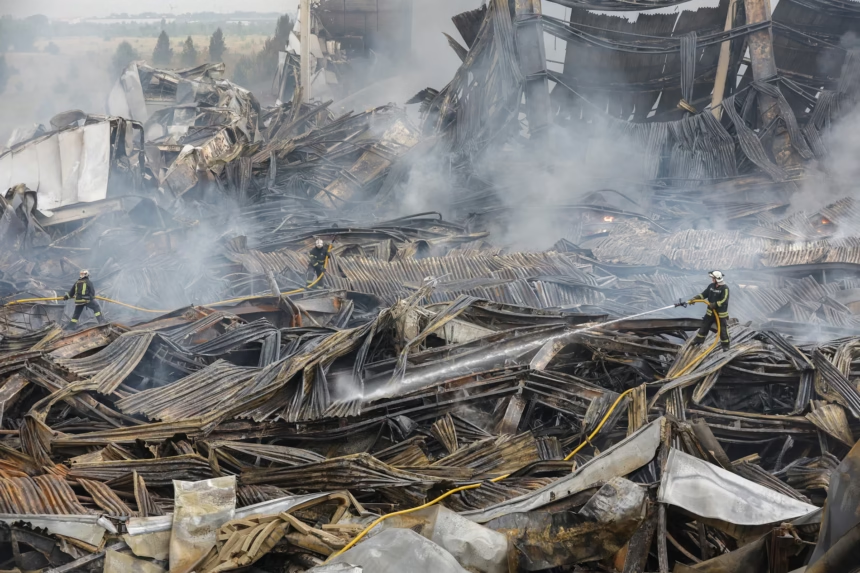
The warning came after a Russian overnight attack in which Ukrainian air defenses reportedly intercepted 98 of 115 drones, but failed to shoot down any of the 24 ballistic missiles launched at the country. At least 17 people were killed in the attack.
Following a conversation with Rutte, Ukrainian President Volodymyr Zelenskyy stressed the need to remove bureaucratic obstacles and make the political decisions required to accelerate deliveries of air-defense missiles.
“It is important to eliminate all bureaucracy and make the necessary political decisions. Every day, the lives of people here in Ukraine depend on the determination of our partners in Europe and the United States,” Zelenskyy said.
Speaking at a meeting of Ukraine’s National Security and Defense Council focused on preparations for the winter, Zelenskyy warned that Moscow was seeking to substantially increase its production of ballistic missiles as the colder months approach.
He also suggested that delays or reductions in Western missile supplies could potentially be aimed at increasing pressure on Kyiv to make concessions in any future peace negotiations with Russia.
Zelenskyy said deliveries of air-defense missiles from Ukraine’s Western allies during the first half of 2026 had fallen to around one-third of the level supplied during the same period last year.
Serhii Beskrestnov, an adviser to the Ukrainian president on defense technology development, estimated that Russia could eventually be capable of launching around 100 ballistic missiles per month against Ukrainian logistics hubs, industrial facilities, food warehouses and other targets.
“The war of attrition has entered its next phase,” Beskrestnov said.
Ukraine has faced a persistent shortage of U.S.-made Patriot interceptors, which are among the few systems capable of defending against Russia’s most advanced ballistic missiles, including the Iskander-M, S-400 and Zircon, according to Ukrainian air force assessments.
The shortage has become particularly acute in recent months. Kyiv says the depletion of interceptor stocks has been exacerbated by the U.S.-Israeli conflict with Iran, which consumed large quantities of Patriot and other air-defense missiles.
Russia has increasingly combined ballistic missiles with cruise missiles, drones and decoys, forcing Ukrainian air-defense operators to track multiple threats simultaneously while rationing a limited supply of interceptors.
The pressure is expected to intensify ahead of winter, when Russia has historically targeted Ukraine’s energy infrastructure in an effort to disrupt electricity and heating supplies.
NATO has said that Europe’s first Patriot missile production facility is expected to open in Germany in September, potentially providing an additional source of supply for Ukraine in the longer term.
Washington has also sent mixed signals regarding Ukraine’s potential production of Patriot missiles. At a NATO summit last month, U.S. President Donald Trump said Washington would provide Kyiv with a license to manufacture Patriot missiles. Around three weeks later, however, Trump said he had not made a final decision.
Even if approval is granted, officials and defense experts have warned that establishing a Ukrainian production capability would take years.
The United States and Ukraine are nevertheless continuing discussions over a possible arrangement that would allow Ukraine to manufacture Patriot interceptor missiles, according to Reuters. One option under consideration reportedly involves Ukraine producing certain components, with final assembly taking place elsewhere in Europe.
For Kyiv, the immediate challenge remains securing enough interceptor missiles to protect major cities and critical infrastructure from an increasingly intense Russian missile campaign before the next winter offensive begins.