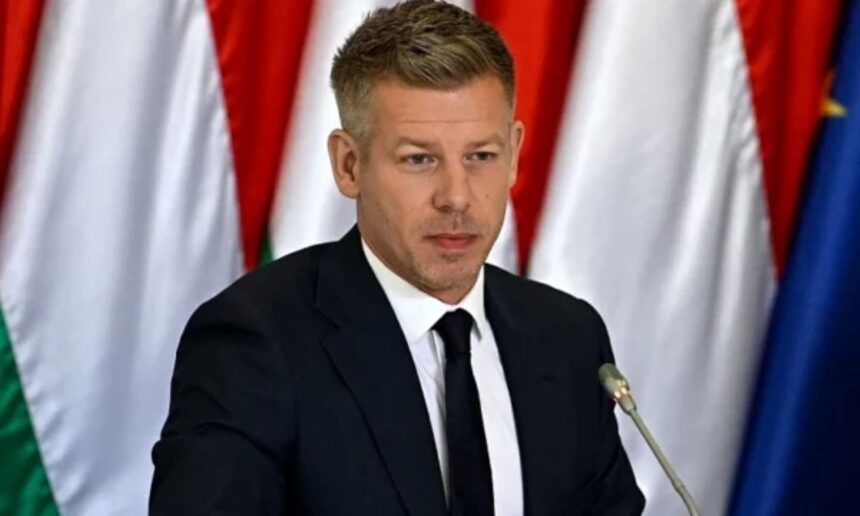
In a major shift for Hungarian foreign policy, Prime Minister Péter Magyar announced that the Russian Ambassador has been summoned for urgent talks following Moscow’s latest large-scale drone assault on Ukraine.
The move marks a definitive break from the previous administration’s stance, as the attack directly threatened the Zakarpattia region, which is home to a significant ethnic Hungarian minority and borders Hungary itself.
The Attack: Uzhhorod Targeted for the First Time
On May 13, 2026, Russia launched an unprecedented swarm of over 800 drones across Ukraine. The strikes resulted in at least six deaths and dozens of injuries, including children.
Of particular concern to Budapest was the targeting of Uzhhorod, the regional capital of Zakarpattia. This marks the first time since the start of the full-scale invasion that this border city, located directly on the frontier with the European Union, has been targeted by Russian munitions.
A New Diplomatic Direction
Prime Minister Magyar, who unseated longtime leader Viktor Orbán in a historic election earlier this year, has moved quickly to repair relations with Kyiv.
- Humanitarian Aid: Foreign Minister Anita Orbán is in active contact with the Hungarian Consul General in Uzhhorod, offering immediate government assistance to the region.
- Zelensky’s Reaction: Ukrainian President Volodymyr Zelensky praised Budapest’s condemnation of the attack, stating it sends a vital message that Moscow is a “common threat” to all of Europe.
- Proposed Summit: In late April, Magyar proposed a high-level meeting with Zelensky in Transcarpathia to discuss the rights and support of the Hungarian minority, signaling a transition from obstructionism to cooperation.
Strategic Context
Under the previous government, Hungary often blocked EU aid to Ukraine and maintained close ties with the Kremlin. The summoning of the ambassador indicates that the Magyar administration views the security of the Transcarpathian region and its ethnic Hungarian inhabitants as a red line that Moscow has now crossed.
“Moscow has once again shown that it poses a shared threat not only to Ukraine but also to its neighbors and Europe as a whole,” Prime Minister Magyar emphasized, echoing the growing sentiment in Budapest that Hungary’s security interests are now firmly aligned with Western allies.