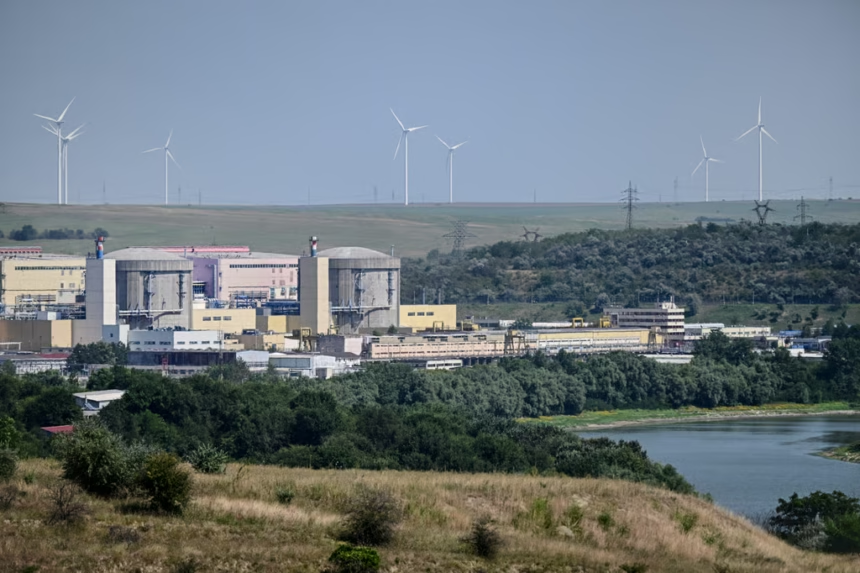
Romania shut down the second and last operating reactor at the Cernavodă nuclear power plant on Thursday after drought-driven record-low levels on the Danube left the river unable to provide sufficient cooling water.
Romania’s Energy Ministry said Unit 2 was shut down in a controlled manner at 10:53 a.m. local time, following a continued decline in the Danube’s flow and water level.
The shutdown deepens an energy crunch already affecting parts of Europe after weeks of extreme heat and prolonged drought.
Romanian authorities said the national electricity grid remained stable and that the loss of nuclear capacity would be offset through electricity imports, hydropower, wind, coal-fired generation and reserve capacity.
Romania had already notified the European Commission of an electricity crisis following the shutdown of Unit 1 on July 28. Unit 2 provides approximately 700 megawatts of electricity, equivalent to around 10 percent of Romania’s national power production.
The reactor could remain offline for an extended period. Cernavodă plant director Romeo Urjan told Romanian broadcaster Digi24 that forecasts showed the Danube’s flow and water level continuing to decline over the following 10 days, meaning Unit 2 was not expected to restart during that period.
Authorities had previously carried out emergency measures, including dredging, rock blasting and positioning barges in the river, in an effort to maintain sufficient water levels around the plant and extend its operation.
The Cernavodă shutdown is the latest consequence of an exceptionally severe drought affecting major European rivers.
Satellite imagery released by the European Space Agency showed the Danube dramatically reduced compared with the previous summer, with extensive sandbanks and areas of dried-out land visible along parts of the river.
The Danube has reached record-low levels in Hungary, while Romania has also reported historically low water levels, disrupting shipping and placing additional pressure on energy and water supplies.
Hungary is facing similar challenges at its Paks nuclear power plant, which relies on the Danube for cooling. As river levels have fallen, authorities have taken emergency measures to maintain operations, including plans for a riverbed barrier and preparations to deploy barges if water levels decline further.
The situation highlights the growing vulnerability of Europe’s energy infrastructure to extreme weather and prolonged drought.
Cernavodă’s two reactors normally generate around one-fifth of Romania’s electricity. Before this summer, the last time drought forced a reactor at the plant offline was in 2003.
The simultaneous pressure on nuclear and hydropower generation, combined with increased demand during periods of extreme heat, is adding to concerns over electricity supplies across southeastern Europe.