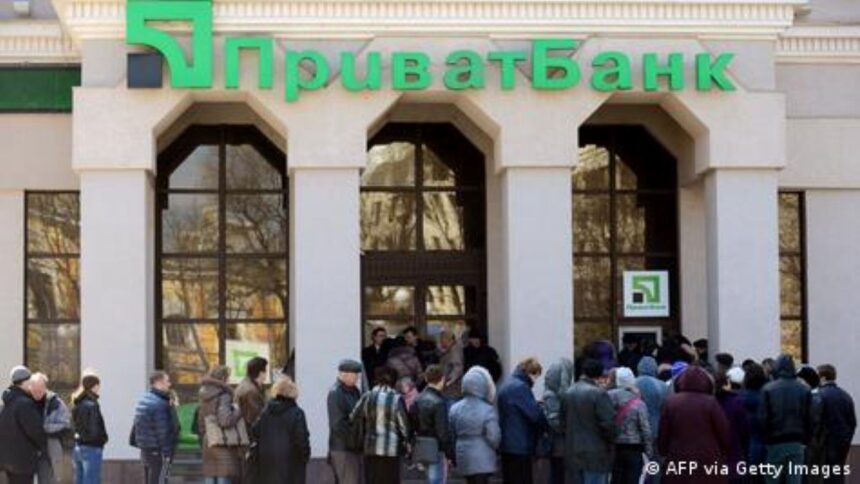
Growing concerns over the security of personal savings and the stability of Russia’s economy are prompting individuals to withdraw increasing amounts of money from banks, while major companies are reportedly transferring more capital abroad.
Around 2.4 trillion rubles, equivalent to roughly €24 billion, were reportedly withdrawn from Russian bank accounts during the first seven months of the year alone. The figure exceeds the 2.2 trillion rubles withdrawn during the first year of Russia’s full-scale invasion of Ukraine in 2022, when authorities imposed strict measures to prevent a rush on banks.
According to a forecast by Sberbank, withdrawals could reach approximately 3.8 trillion rubles by the end of the year.
Reports also indicate that large Russian companies are increasingly moving capital abroad, citing concerns over possible nationalization or asset seizures, economic instability linked to Kremlin policies and the growing impact of Ukrainian drone attacks on Russian industrial and energy infrastructure.
Fears of nationalization and confiscation
Russian media have reported growing fears and speculation that the government could eventually force citizens to convert part of their savings into war bonds as the financial burden of the war increases.
Russia’s budget deficit has reportedly expanded sharply amid rising military expenditures and declining revenues from refineries, factories and large industrial facilities affected by Ukrainian drone attacks. The deficit has already reached around €65 billion, reportedly almost twice the amount originally planned for the entire year.
At the same time, parts of Russia’s civilian economy are experiencing recession, while state-controlled prices in the defense industry are reportedly failing in some cases to cover production costs. The deterioration has contributed to a rapid increase in troubled loans within the Russian banking sector.
These developments are adding to concerns among households that their bank deposits and savings could become vulnerable.
The Central Bank of Russia estimated that the country experienced a capital outflow of approximately €8.1 billion in the second quarter of 2024. Wealthier Russians are reportedly increasingly transferring funds from domestic banks to brokerage accounts in countries including Kazakhstan, Kyrgyzstan and Armenia.
Official Russian data indicate that between 2022 and the end of 2025, authorities nationalized assets worth approximately €72 billion. These included assets belonging to Russian companies deemed undesirable by the authorities, as well as foreign-owned businesses that left Russia following the invasion of Ukraine.
Ukrainian drone attacks add to economic pressure
Ukraine’s increasingly frequent attacks on Russian oil refineries, logistics centers and defense-industrial facilities are adding further pressure to the Russian economy and contributing to growing uncertainty among the population.
The Russian government has repeatedly restricted internet access during periods of heightened drone activity, disrupting businesses and services in sectors including e-commerce, transportation and retail.
Drone strikes have also hit logistics facilities associated with major online marketplaces such as Wildberries and Ozon, reportedly destroying goods worth billions of euros and causing significant losses for Russian suppliers.
The combination of rising military spending, capital flight, asset nationalizations, pressure on the banking sector and disruptions caused by Ukrainian attacks is creating additional challenges for Russia’s economy.
While the Russian government continues to maintain that the economy remains resilient, the growing movement of household savings and corporate capital suggests that concerns over financial security and the long-term economic consequences of the war are becoming increasingly significant.