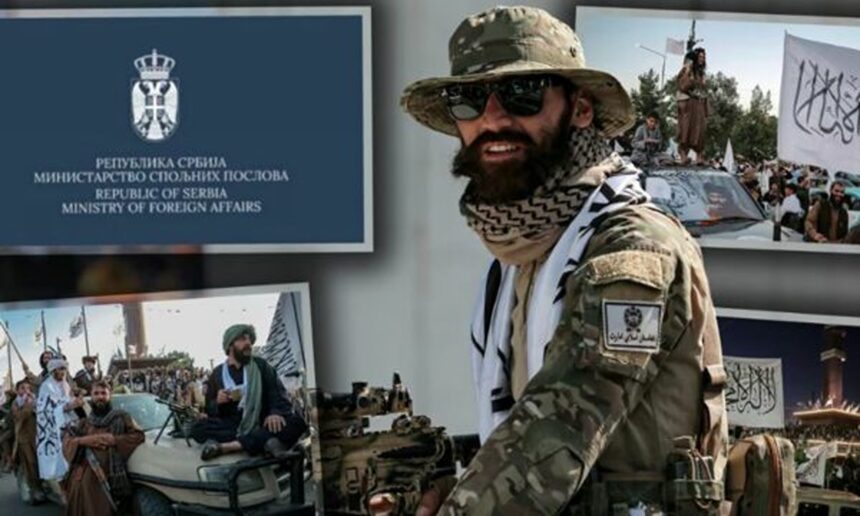
Serbia likes to present itself as a country firmly committed to its European path. But reports that Belgrade allegedly sent a diplomatic representative to an event celebrating the Taliban’s return to power in Afghanistan raise an uncomfortable question: how far is Serbia really willing to go while claiming to be heading toward the European Union?
According to Serbian and foreign media reports, a reception was held at the Afghan Embassy in New Delhi to mark the fifth anniversary of the Taliban’s return to power. The event was reportedly presented as a “Victory Day” celebration.
Among those allegedly represented at the reception was Serbia — reportedly the only European country whose diplomatic representative attended.
If confirmed, the symbolism is difficult to ignore.
While EU member states have largely maintained a cautious and critical approach toward the Taliban, Belgrade is once again appearing to position itself somewhere between competing geopolitical camps, maintaining its European ambitions while simultaneously cultivating relationships with actors far removed from the EU’s political mainstream.
The irony has not been lost on Serbia’s opposition.
Borko Stefanović of the Freedom and Justice Party accused the government of Aleksandar Vučić of pushing Serbia toward international isolation, sarcastically summarizing the alleged diplomatic choice as: “With the Taliban toward isolation and shame.”
Zdravko Ponoš, leader of Serbia Centre, mocked Belgrade’s repeated claims that it is aligning its foreign policy with the European Union.
The message was clear: if this is what “alignment with the EU” looks like, then someone in Belgrade may have seriously misunderstood the assignment.
There is, however, an important caveat. The alleged Serbian participation has not yet been officially confirmed. Serbian media reportedly contacted the Serbian Embassy in New Delhi and the Ministry of Foreign Affairs seeking clarification about whether a Serbian diplomat attended, at what level Serbia was represented and what the diplomatic rationale was.
So far, according to the reports, there has been neither confirmation nor denial.
And that silence only adds to the questions.
The reported guest list included representatives from Russia, China, Iran, Palestine, Bhutan, Eritrea, Uzbekistan, Kazakhstan, Niger, Qatar and Oman, while no EU representatives were reportedly present.
If Serbia was indeed represented, the episode would fit a broader pattern in which Belgrade seeks to maintain one foot in the European integration process while keeping the other firmly planted in a much wider network of partnerships.
Brussels may see a candidate country seeking membership. But Belgrade’s diplomatic choices increasingly suggest a country determined to keep every geopolitical door open — including doors the EU would rather see closed.
The real question is therefore not simply whether a Serbian diplomat attended one reception.
It is whether Serbia can continue claiming that its strategic destination is the European Union while repeatedly sending signals that its foreign policy is heading in several completely different directions.
Because you cannot keep selling Brussels a European future while simultaneously collecting invitations from every geopolitical corner of the world — and expect nobody to notice.