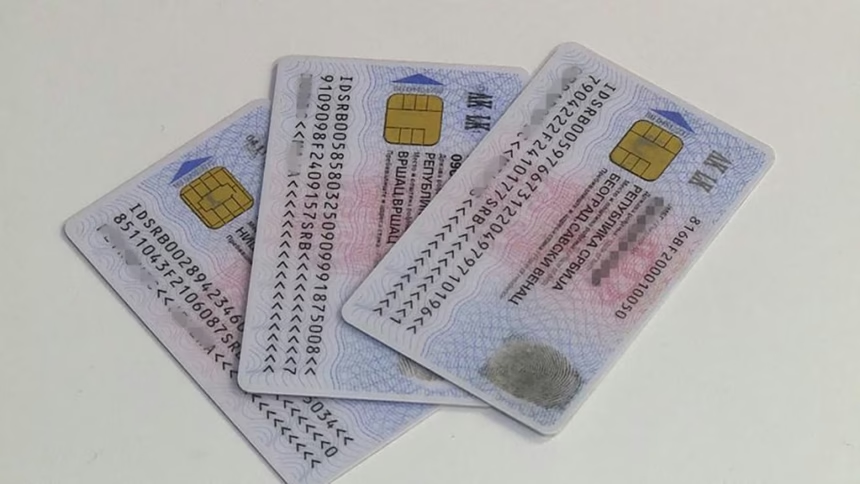
The number of valid identity cards in Serbia increased by 235,000 between May and September, prompting calls for an urgent explanation from the Ministry of Internal Affairs ahead of the October 25 early parliamentary elections.
Ognjen Rašuo, a member of the Commission for the Revision of the Voter Register, and Zoran Alimpić, a member of the Belgrade City Election Commission, told Nova.rs that the figures were concerning and required immediate clarification. The Interior Ministry has reportedly not explained the increase.
According to figures Rašuo said he received from the ministry, Serbia had 5.99 million valid identity cards on May 18, compared with 6.225 million on September 28.
“I asked them at the commission meeting whether the figure was accurate. I even urged them to check again in case it was an error or a typo,” Rašuo wrote on social media, adding that officials had not corrected the figure or indicated that they considered it unusual.
Rašuo said he had requested the data twice and had documents bearing official stamps. He added that the average number of identity cards issued quarterly had remained relatively stable since July 2024, making the reported increase difficult for him to explain.
He stressed, however, that the figures needed to be clarified rather than treated as proof of electoral manipulation.
Opposition Calls for Transparency
The Green-Left Front (ZLF) also called on the Interior Ministry to explain the increase before election day and allow members of the voter-register review commission to compare the voter register with the identity-card database.
An identity card is used to identify voters at polling stations, the party said, arguing that citizens were entitled to know why the number of valid documents had risen so sharply and whether the increase was reflected in the voter register.
The ZLF said commission members had repeatedly requested access to detailed identity-card records but had not received them. It argued that the ministry’s failure to explain the figures was itself a cause for concern.
Jelena Jerinić, a law professor and member of the ZLF presidency, called for high voter turnout on October 25 and strict monitoring at polling stations.
The party urged the Interior Ministry, the Ministry of Public Administration and Local Self-Government, and other relevant institutions to provide commission members with access to the data needed to compare the two databases.
Electoral Commission Member Warns of Possible Abuse
Alimpić said the timing of the increase was particularly concerning because the number of identity cards issued had remained relatively stable for several years before rising sharply ahead of the elections.
He said there could be legitimate explanations for an increase, including young people receiving their first identity cards, people acquiring Serbian citizenship, returning residents and citizens abroad applying for new documents after their previous cards had expired.
However, Alimpić warned that the possibility of identity documents being abused to vote more than once or at multiple polling stations had long been a concern in Serbia.
He called for heightened vigilance among polling-board members and election observers, followed by a detailed investigation after the vote.
Alimpić also cited other alleged irregularities in the voter register, including addresses where registered voters reportedly do not live, discrepancies between the number of registered voters and the adult population recorded in the 2022 census, and election notifications sent to addresses where no one appears to reside.
Questions Over Addresses in the Voter Register
Concerns have also been raised about voters registered at addresses with a house number of zero, even in streets where numbered properties exist.
Jelena Vranješ, a member of Serbia’s Republic Electoral Commission, said she had encountered such entries while reviewing voter-register documents. She called on the Ministry of Public Administration and Local Self-Government to explain the records and disclose the scale of the problem.
Ana Gođevac, a member of the voter-register review commission from the Freedom and Justice Party, separately alleged that people had been registered at fictitious addresses, particularly in Belgrade, during 2022 and 2023.
Gođevac said these cases had contributed to concerns about so-called “phantom voters” and pointed to a complaint before Serbia’s Constitutional Court that, she alleged, had not been addressed.
The reported increase in valid identity cards does not, by itself, establish that the documents were issued unlawfully or that electoral fraud has occurred. The central demand from the critics is for the authorities to explain the figures and provide the data needed to assess whether the voter register accurately reflects eligible voters.