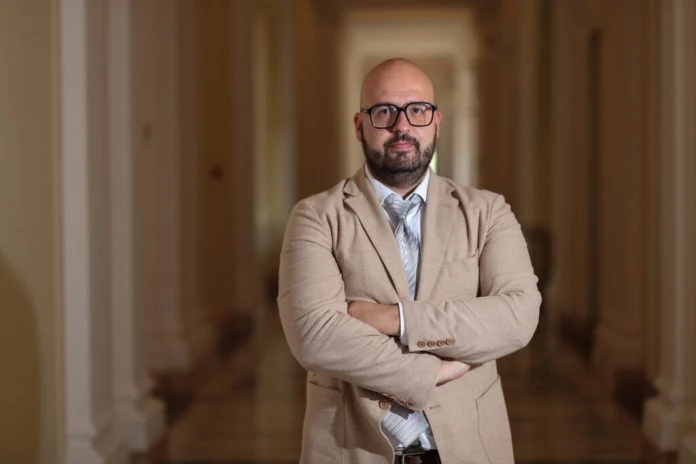
Stefan Janjić, secretary-general of the Serbia Centre (SRCE) party, has called for a comprehensive investigation into the conduct of Marko Kričak, head of Serbia’s Criminal Police Directorate (UKP), saying allegations of police violence and abuse of office must be examined alongside the circumstances surrounding his rise through the police ranks.
Speaking to the newspaper Danas, Janjić said he had expected Kričak to be arrested much earlier, including on election night, arguing that there had long been grounds for a serious examination of his conduct.
Janjić referred to public testimonies and criminal complaints alleging that Kričak had beaten students, citizens and minors. He also cited allegations made by Nikolina Sinđelić, who has accused Kričak of physically abusing her and threatening to rape her in a garage at the Serbian government building.
Despite the allegations, Kričak advanced to become head of the Criminal Police Directorate, Janjić noted. He said investigators should therefore examine how the relevant institutions handled earlier complaints, who approved Kričak’s promotions and whether any alleged misconduct was deliberately concealed.
Kričak is now suspected of abuse of official position in the Senjak case. Janjić said allegations of pressure on witnesses and suspects, as well as the use of violence to obtain statements, require a thorough investigation.
Depending on the evidence, he added, investigators may also need to examine possible criminal responsibility for extracting statements through coercion, as well as abuse or torture.
Janjić cautioned against drawing conclusions before reviewing the case files, but insisted that the investigation should cover all credible allegations, including complaints concerning police conduct during protests.
Calls for broader police reform
Asked whether the case could mark the beginning of fundamental changes within Serbia’s Interior Ministry, Janjić said further decisions would determine whether the developments lead to genuine depoliticization of the institution.
“One arrest is not enough to draw conclusions,” he said.
He argued that investigators must establish who may have used unlawful force, who issued the orders and who might have covered up such conduct. Any individual responsibility, he stressed, must be established through evidence.
Janjić said the Interior Ministry needed professionalization, with appointments and promotions based on expertise, integrity and respect for the law rather than political loyalty.
“If this ends with replacing one group of politically favored personnel with another, the systemic problem will remain,” he said.
“Substantive change happens when a police officer knows that party loyalty does not guarantee impunity,” Janjić concluded.
The allegations against Kričak remain subject to investigation and must be established through the relevant legal proceedings.