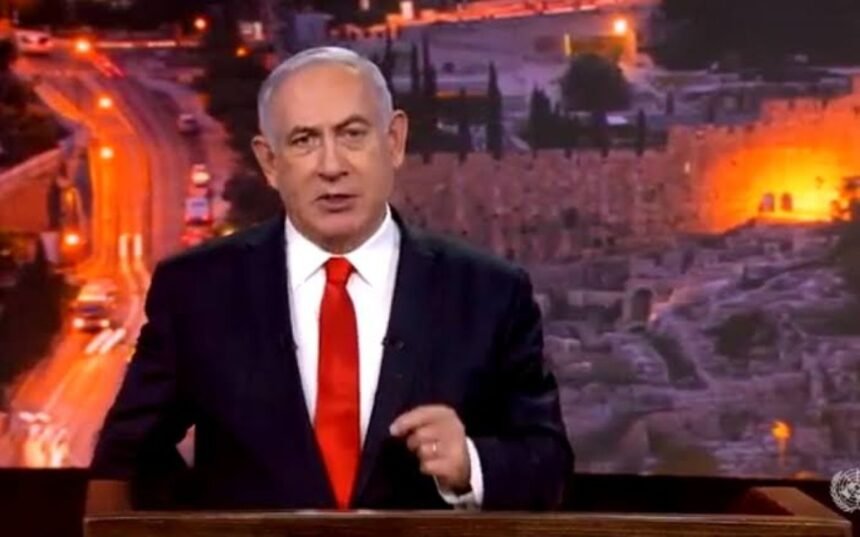
In a highly unusual and direct diplomatic maneuver, Israeli Prime Minister Benjamin Netanyahu issued a direct public appeal to the citizens of Lebanon. In a targeted video address, Netanyahu urged the Lebanese public to stand together with Israel to dismantle Hezbollah, declaring that the people of Lebanon are being held “hostage” by the Iran-backed Shiite militant group.
The address underscores Israel’s evolving strategy to combine intense military pressure in southern Lebanon with psychological and informational campaigns aimed at fracturing Hezbollah’s domestic political standing inside Lebanon.
The Core Message: “Our War is Not With You”
Delivered entirely in English to maximize international reach and broadcast directly across regional digital channels, Netanyahu’s speech sought to draw a sharp, unambiguous line between the Lebanese civilian population and Hezbollah’s operational network.
“Israel is not at war with you,” Netanyahu emphasized in the video broadcast. “We are at war with Hezbollah, which is holding your country hostage. We desire peace with you, with Lebanon.”
The Prime Minister framed Hezbollah not as a legitimate political or military force within the Lebanese state, but as an occupying proxy acting entirely on behalf of the Islamic Republic of Iran, sacrificing Lebanese security for Tehran’s regional ambitions.
The Two Futures for Lebanon (Netanyahu's Framework)
│
├── Current Path ────► Continued Hezbollah Control ──► Destruction & Strategic Hostage State
└── Proposed Path ───► Reclaim Sovereignty       ──► Unlimited Security & Prosperity
A Vision of Post-Hezbollah “Unlimited Prospects”
Netanyahu implored the Lebanese populace to break away from the institutional gridlock that has allowed Hezbollah to maintain an independent army stronger than Lebanon’s official military forces.
- Sovereign Reclamation: The Israeli Premier urged citizens to “take the future into your own hands,” framing the current military crisis as a pivotal window for Lebanon to reclaim its sovereign independence.
- The Shared Dividend: “Let us build security and prosperity for all our children,” Netanyahu continued, painting a picture of an integrated, economically stable Middle East.
- The Barrier to Peace: He assured listeners that “once Hezbollah is dismantled, the prospects for both our nations will be practically limitless,” implying that formal normalization and economic partnerships could quickly follow the group’s eradication.
While the message targets the growing frustration among Lebanon’s Christian, Sunni, and Druze communities—who have long blamed Hezbollah for dragging their country into devastating, unsanctioned regional conflicts—analysts note that such appeals are a double-edged sword. Within Lebanon’s highly volatile sectarian political landscape, direct overtures from the Israeli leadership can sometimes be weaponized by Hezbollah to brand its internal critics as foreign collaborators, even as public anger over the ruinous conflict continues to climb.