Serbian President Aleksandar Vučić’s recent broadside against a “sleeping” Europe wasn’t a diplomatic tantrum—it was a precise field report. For two years, Paris, Berlin, and Brussels have competed to offer him gifts while penalizing Kosovo, proving that in the modern Balkans, compliance is a currency that buys absolutely nothing.
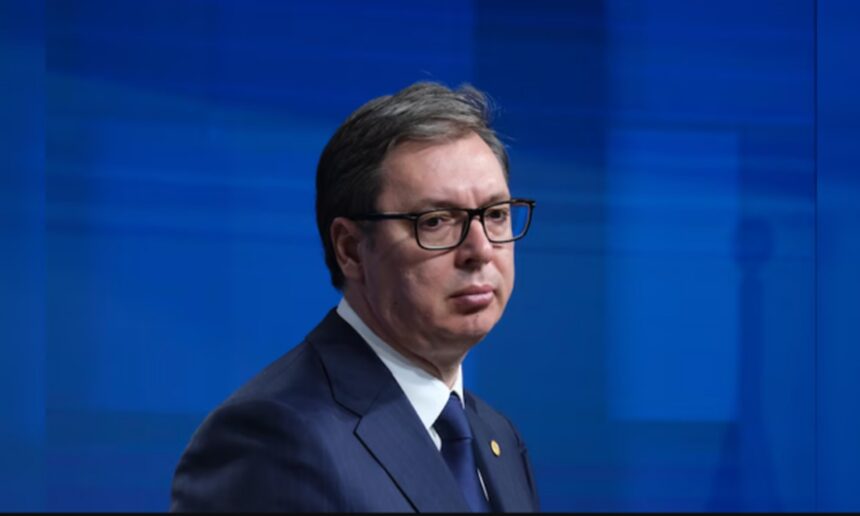
Sitting down with Bloomberg this week, fresh off a plane from Beijing with an additional $1 billion in Chinese financial pledges in hand, Serbian President Aleksandar Vučić did not mince words. He called Europe a continent fast asleep: complacent, slow, protectionist, and utterly blind to the geopolitical shifts occurring around it.
While he maintained that Serbia will technically continue to pursue European Union membership, Vučić made it clear he cannot wait forever. In the meantime, Belgrade will look after its own interests.
In Pristina, the immediate political reflex is to dismiss Vučić’s remarks as mere bravado or a standard nationalist tantrum. But it shouldn’t be. Vučić is describing, with chilling precision, a Europe he has spent the past two years reading from the inside. And the uncomfortable truth is that Europe itself taught him how to do it.
The Receipts of Appeasement: July and August 2024
To understand how Vučić reached this level of strategic comfort, one only needs to examine the actions of Europe’s two most powerful capitals during the summer of 2024.
┌─────────────────────────────────────────────────────────────────────────┐
│                    Serbia's Multi-Vector Diplomacy                      │
├─────────────────┬───────────────────┬──────────────────┬────────────────┤
│     GERMANY     │      FRANCE       │      CHINA       │ UNITED STATES  │
├─────────────────┼───────────────────┼──────────────────┼────────────────┤
│ Signed Lithium  │ Purchased 12      │ Secured Free     │ Discussing     │
│ & Battery Deal  │ Rafale Fighter    │ Trade Agreement  │ Major Strategic │
│ (July 2024)     │ Jets (Aug 2024)   │ & Billions Cash  │ Energy Package │
└─────────────────┴───────────────────┴──────────────────┴────────────────┘
July 2024: Berlin’s Lithium Rush
German Chancellor Olaf Scholz flew to Belgrade to sign a strategic partnership on lithium and batteries. The deal was struck just three days after Serbia revived a controversial mining permit for the Jadar valley—leveraging a court ruling fiercely loyal to the Vučić government.
While Berlin and a trailing delegation of German carmakers claimed the deal would cut Europe’s dependence on China, they conveniently ignored a glaring contradiction: Serbia’s comprehensive Free Trade Agreement with Beijing had just gone into effect. Brussels even sent a European Commission Vice President to bless the union.
August 2024: Paris’s Fighter Jet Sale
A month later, French President Emmanuel Macron arrived in Belgrade to finalize the sale of 12 Rafale fighter jets to Serbia for €2.7 billion, heavily financed by French bank loans.
Macron heralded the deal as a “demonstration of European spirit,” while simultaneously warning Belgrade that its balancing act between East and West was an illusion. Two years later, that balancing act boasts French jets on order, Chinese billions in the ground, and a major U.S. energy package currently under negotiation. The only real illusion was the one Paris sold itself at the signing table.
Cunning vs. Contradiction: The Costless Rental
This geopolitical maneuvering is frequently mistaken for diplomatic cunning. It is not. Vučić did not outmaneuver a united Europe, because a united Europe simply did not exist.
Instead, individual European actors aggressively underbid one another:
- Berlin bid for Serbia’s raw materials.
- Paris bid for Serbia’s defense budget.
- Brussels bid to maintain the fading credibility of its enlargement portfolio.
Each individual bid effectively canceled out the democratic and rule-of-law conditions that all three actors publicly claim to impose. Vučić lives comfortably inside his geopolitical contradictions at zero cost because the Western diplomats sent to collect the rent continually arrive at his door bearing lavish gifts.
The Price of Compliance: The Contrast with Kosovo
This brings us to the stark reality that Kosovo has felt acutely. While Belgrade was being courted with fighter jets and green-energy partnerships, Pristina spent two and a half years languishing under punitive EU measures.
“Compliance is the one currency Brussels does not pay for.”
Triggered in June 2023 over a localized dispute regarding four mayors in northern Kosovo and the administrative temperature of transferring municipal power, the EU apparatus swiftly froze funds and suspended high-level engagement. Those restrictive measures were only lifted this past winter, once the handover in the north was judged “peaceful enough” by Western mediators.
Holding the two diplomatic files side by side reveals the Union’s true preference:
- Belgrade offered lithium, a lucrative defense market, and the performative theater of an EU candidacy it has no intention of ever completing—and was richly rewarded for all three.
- Pristina offered actual compliance with Western democratic standards, only to find that Brussels treats compliance as a baseline expectation rather than something to be incentivized.
When Vučić tells the international press that Europe is asleep, the insult is not in his aggressive tone. The insult is that he is entirely correct. He is the man who walked through a sleeping house, systematically emptied the drawers, and was then formally invited by the household to describe the entire experience on the global news wires.