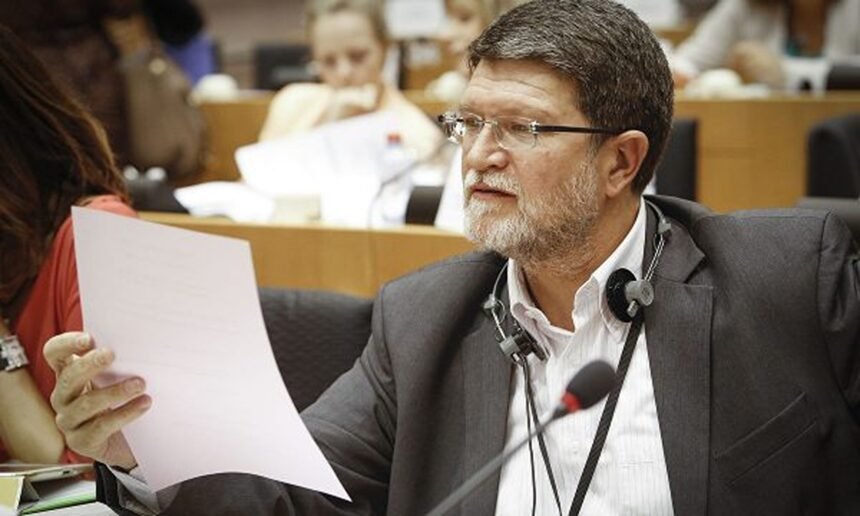
Croatian MEP and European Parliament rapporteur for Serbia, Tonino Picula, has called for a fundamental change in the European Union’s approach toward the authorities in Belgrade following the funeral of convicted war criminal Ratko Mladić.
Picula said Serbia was choosing its own path, but if it genuinely seeks EU membership, it must reject historical revisionism and the glorification of convicted war criminals. He argued that the EU needs to adopt a tougher policy toward Belgrade, describing “Vučić’s Serbia” as the main destabilizing force in relations across Southeast Europe.
Speaking on Croatian public broadcaster HRT’s “Dnevnik” program, Picula said Mladić’s funeral should mark a turning point in the EU’s relationship with Serbian President Aleksandar Vučić.
“The funeral of war criminal Ratko Mladić, who was finally convicted of genocide, should fundamentally change the European Union’s longstanding policy of appeasement toward Aleksandar Vučić,” Picula said.
He sharply criticized the European Commission and several influential EU member states for their approach to Belgrade.
“European leaders must finally move from the stage of shock to the stage of responding to what Vučić has been doing for years. His immunity from sanctions must finally be removed, and the policy of submission toward the regime must be rejected,” Picula said.
According to Picula, the Serbian government can no longer be treated as a privileged and untouchable partner of Brussels in the Western Balkans.
He also addressed developments in Bosnia and Herzegovina following Mladić’s funeral, including Foreign Minister Elmedin Konaković’s announcement concerning the expulsion of two Serbian Embassy personnel and the attendance of political leaders from Republika Srpska at the funeral.
“The funeral of a convicted war criminal must have consequences for relations in Southeast Europe, which has still not even remotely overcome the consequences of the aggression. Bosnia and Herzegovina is also entering a pre-election period, and this is adding fuel to already tense relations in the country,” Picula said.
The Croatian MEP said support was growing within the European Parliament for tougher measures against Serbia. Representatives of four major political groups in the European Parliament have written to EU Enlargement Commissioner Marta Kos, calling for action by the European Commission, while calls to freeze or suspend Serbia’s accession process have also intensified.
Picula said some MEPs had supported such measures for years and that attention was now turning to European Commission President Ursula von der Leyen.
He said it would be particularly significant whether von der Leyen, like Kos, cancels her planned visit to Belgrade and what position she takes toward the Serbian authorities in her State of the Union address in Strasbourg.
“The time has come to clearly change the situation and take tougher action against the regime in Belgrade,” Picula said.
Asked whether there was still room for diplomacy and whether Belgrade could publicly distance itself from the glorification of Mladić, Picula said he was not optimistic.
“Vučić had 12 years to do what he promised to do in Serbia. None of that happened. It is difficult to expect Vučić to change anything before election day. The space for diplomacy is narrowing,” Picula concluded.