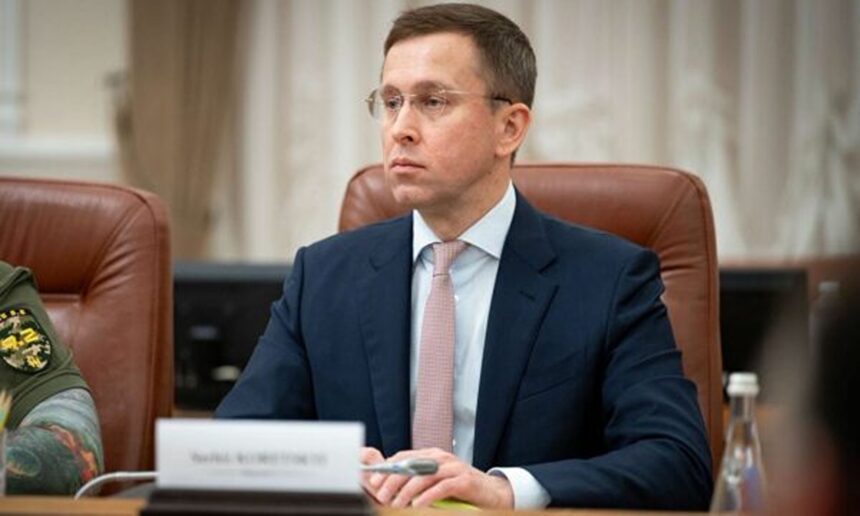
Ukraine should face only temporary restrictions on its agricultural products after joining the European Union, Ukrainian Prime Minister Sergii Koretskyi said at the Euronews Enlargement Summit, warning against permanent exclusions from the bloc’s single market.
“We understand the concerns of European farmers and are ready for an open and practical discussion. Transitional measures may be part of enlargement, but they must address specific risks, be proportionate, and include clear review and exit conditions,” Koretskyi said.
Last month, the European Commission proposed excluding certain Ukrainian agricultural products, particularly wheat and other grains, from the EU market even after Kyiv becomes a full member, following pressure from several member states.
“These measures cannot become a permanent restriction or create a subcategory within the single market,” the Prime Minister added.
He noted that Ukrainian farmers would need to make substantial investments to meet EU food standards as the country rebuilds following Russia’s attacks.
Since Koretskyi became Prime Minister in July, Ukraine’s EU accession efforts have gained momentum. Kyiv has established a joint working group with the European Commission to accelerate the negotiations.
Ukraine has recently joined the group of four leading candidates for EU membership, alongside Montenegro, Albania and Moldova. The European Commission is expected to publish an action plan on Wednesday, outlining the steps towards accession.
For Koretskyi, EU membership is one of the main reasons Ukraine continues to fight Russia for its freedom. He argued that Ukraine’s accession to the Union would significantly strengthen the bloc’s security.
“Ukraine’s EU membership is at the heart of government policy. It represents hope for a better future and the solidarity that brings peace, security and economic recovery to Ukraine and the continent,” he said.
The Prime Minister wants to open all remaining negotiating chapters this year and establish the conditions for provisionally closing some of them during Lithuania’s presidency of the Council of the EU in the first half of 2027.
“I understand that these are ambitious targets. We are not looking for shortcuts. We are looking for credible, merit-based pathways, with clear benchmarks and timely decisions once those benchmarks have been met,” he said.