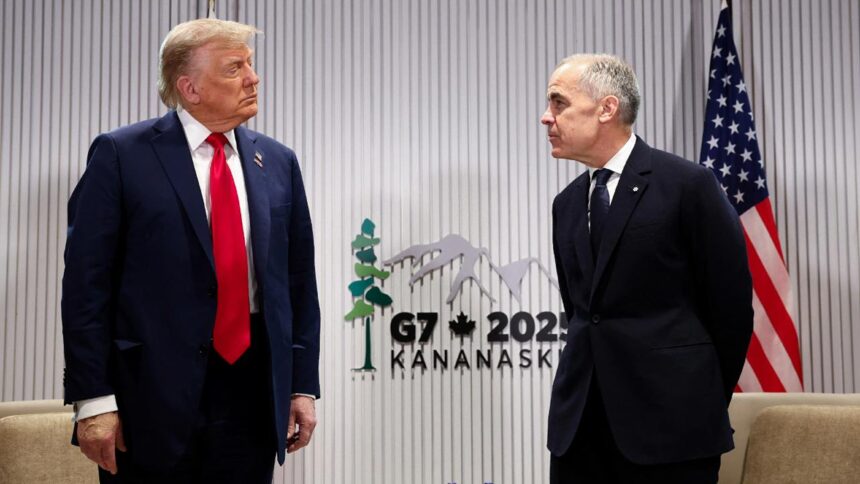
The trade dispute between the United States and Canada is entering a new and potentially more damaging phase after President Donald Trump threatened to impose 50% tariffs on Canadian vehicles, trucks, auto parts and steel.
The proposed measures are expected to take effect on January 1, 2027, following the collapse of intensive trade negotiations between Washington and Ottawa. Trump has indicated that companies manufacturing within the United States would be exempt from the new tariffs.
Canada, however, has made clear that it will not simply absorb the measures.
Prime Minister Mark Carney has warned that Ottawa will respond with “dollar-for-dollar” retaliatory tariffs, beginning on September 8. Potential targets include US steel, dairy products, household appliances and electronics.
The latest escalation follows negotiations that ended without an agreement, with both governments blaming the other for last-minute demands and changes.
Carney accused Washington of “asking for a lot and offering very little,” while US Trade Representative Jamieson Greer blamed Canada for introducing new demands and sought to downplay the significance of the failed talks.
The dispute now threatens to deepen a trade confrontation between two of Washington’s closest allies and major economic partners.
What began as a tariff dispute is increasingly becoming a broader test of the economic relationship between Washington and Ottawa — with businesses and consumers on both sides potentially paying the price.