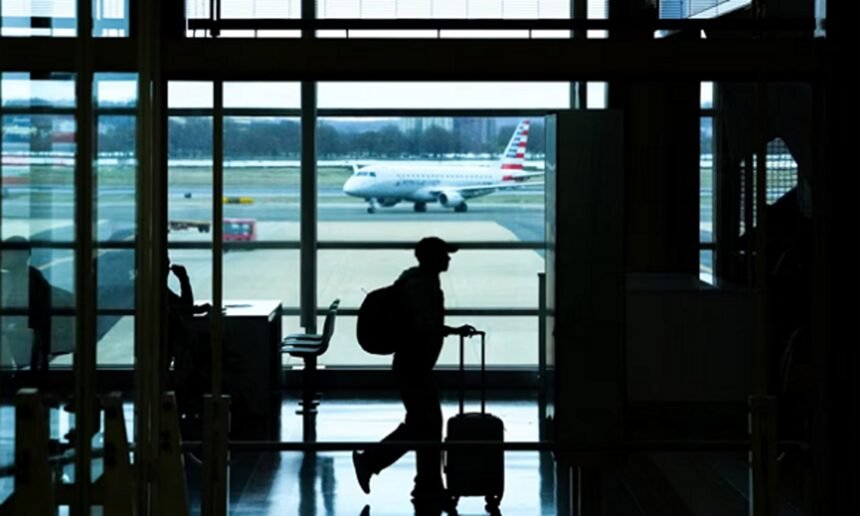
The Trump administration announced on Thursday that it will shorten the duration of visas for foreign students, participants in educational exchange programs, and journalists.
The new final regulation issued by the Department of Homeland Security (DHS) establishes fixed periods of stay for F visas (for international students), J visas (which allow participants in cultural exchange programs to work in the United States), and I visas (for media representatives).
Currently, these visas remain valid for the entire duration of a person’s academic program or employment in the United States.
Under the new rules, the validity period for student and exchange visitor visas will be limited to a maximum of four years.
Visas for journalists — which currently can remain valid for several years — will be restricted to 240 days, or 90 days for Chinese nationals.
The regulation will take effect 60 days after its publication in the Federal Register, unless it is blocked during the congressional review process.
President Donald Trump launched a broad campaign against immigration shortly after taking office in January 2025.
His administration has expanded scrutiny of legal immigration, revoking student visas and green cards of university students over alleged ideological concerns and removing legal status from hundreds of thousands of migrants.
The latest measure will create additional obstacles for international students, exchange program participants, and foreign journalists.
According to DHS, visa holders will still have the option to apply for extensions of their authorized stay.
New restrictions for students
The regulation prohibits graduate students from changing their educational objectives at any time or transferring to another university without prior authorization.
It also reduces by half the period students have to leave the United States after completing their studies or training, shortening it from 60 days to 30 days.
“Most Americans understand the value of welcoming international students and eliminating unnecessary bureaucracy,” said Doug Rand, a former DHS official. “This regulation will do exactly the opposite.”
David J. Bier, director of immigration studies at the Cato Institute, argued that there is no legal basis for the new restrictions related to academic programs and student transfers.
“International students, many of whom will have spent years in the United States, will now have only 30 days to find an employer willing to sponsor their visa or they will immediately be considered unlawful immigrants. Do these people not understand how life works?” he said.
In its announcement, the Department cited the significant increase in the number of these types of visas.
According to DHS, more than 1.8 million entries were recorded under student visas in 2024, representing an increase of more than 11% compared with the previous year.
The changes to student visas are also expected to affect Kosovars who travel to the United States for education.
Every year, up to 200 students from Kosovo enroll in universities in the US, according to Open Doors reports published by the Institute of International Education (IIE).
The latest report recorded 190 students from Kosovo studying in the United States during the previous academic year.
The United States also issued visas to more than 500,000 participants in exchange programs and 37,300 media representatives during the 2024 fiscal year, which began on October 1, 2023.
DHS stated that the significant increase in these visitors “poses a challenge to the Department’s ability to monitor and oversee these nonimmigrants during their stay in the United States.”
The Department added that there are many cases of students and exchange participants who have remained in the US for decades under these types of visas.
Under the new rules, visa holders who wish to remain in the United States beyond their authorized period of stay will need to apply to DHS for an extension or leave the country and re-enter after obtaining a new admission authorization.