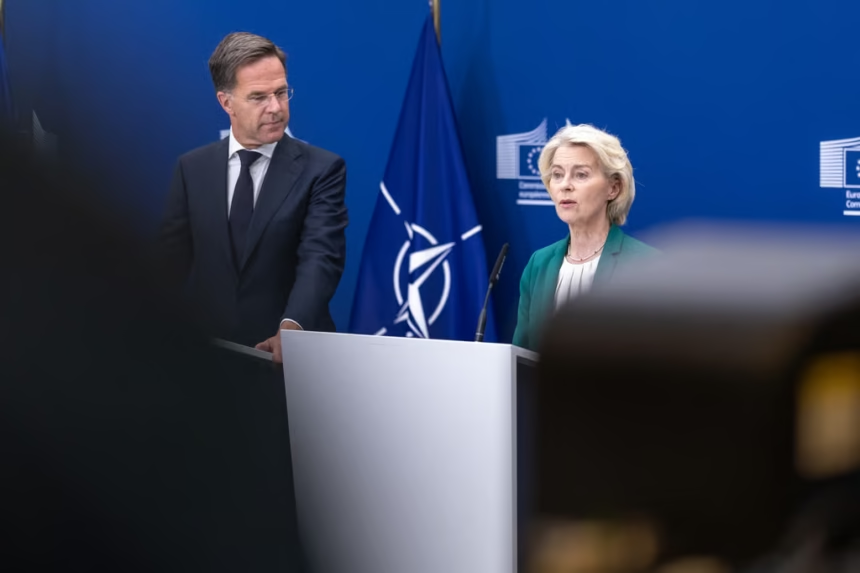
European Commission President Ursula von der Leyen and NATO Secretary General Mark Rutte have vowed that alleged Russian attacks and intimidation against European countries will not weaken Western support for Ukraine.
The joint message came after Germany formally attributed a foiled attack at Leipzig/Halle Airport to Russia, describing the incident as part of a broader pattern of alleged Russian hybrid activities targeting European infrastructure and support networks for Ukraine.
Speaking in Brussels on Wednesday, von der Leyen said the attack represented an escalation.
“This was an attack using military-grade material carried out by Russian operatives on European Union soil — we will not tolerate it,” she said.
“If the intention was to make us think twice about supporting Ukraine, I can tell you it has only strengthened my resolve; intimidation will not work.”
Rutte echoed the message, saying NATO remained united in its support for Kyiv.
“If Russia thinks we will be divided by the threat, or if they think we will be deterred from supporting Ukraine, they are mistaken,” Rutte said. “Our unity is unshaken — our support to Ukraine is clear.”
Leipzig attack raises tensions
Germany on Tuesday attributed an attempted attack on Leipzig/Halle Airport on August 4 to Russia.
According to reports, three drones carrying explosive material were spotted at or near the airport, including one found near a Ukrainian Antonov cargo aircraft used to transport ammunition.
The incident has intensified concerns among European governments about what they describe as a growing Russian campaign of sabotage, espionage and hybrid attacks on European territory.
Rutte cited the Leipzig incident alongside other alleged Russian activities, including drones and missiles entering NATO airspace and suspected acts of sabotage targeting facilities connected to Ukraine’s defense industry.
“The dangers Russia poses are clear,” the NATO chief said.
The German government has indicated that it is considering retaliatory measures following its attribution of the attack to Russia.
EU considers further sanctions and support for Ukraine
Von der Leyen said the European Union was prepared to deploy “rapid response teams” to assist member states affected by similar incidents and remained ready to impose additional sanctions on Russia.
EU foreign ministers meeting in Ireland were expected to discuss further measures against Moscow.
The EU and NATO leaders also made clear that the response to Russian pressure would include continued — and potentially increased — support for Ukraine.
Von der Leyen confirmed that EU countries were examining a new Ukrainian request for several billion euros in funding for air defense systems, including advanced U.S.-made PAC-3 Patriot interceptors.
Ukraine has warned of critical shortages in its air defenses as Russia continues to launch ballistic missile and drone attacks against targets across the country.
The request is expected to be examined by European Commission experts on September 7.
The joint appearance by von der Leyen and Rutte underscored a broader message from Brussels: rather than weakening European support for Kyiv, the alleged attack in Leipzig and other suspected Russian hybrid operations are being presented by European leaders as further evidence of the need to strengthen collective security and continue military assistance to Ukraine.