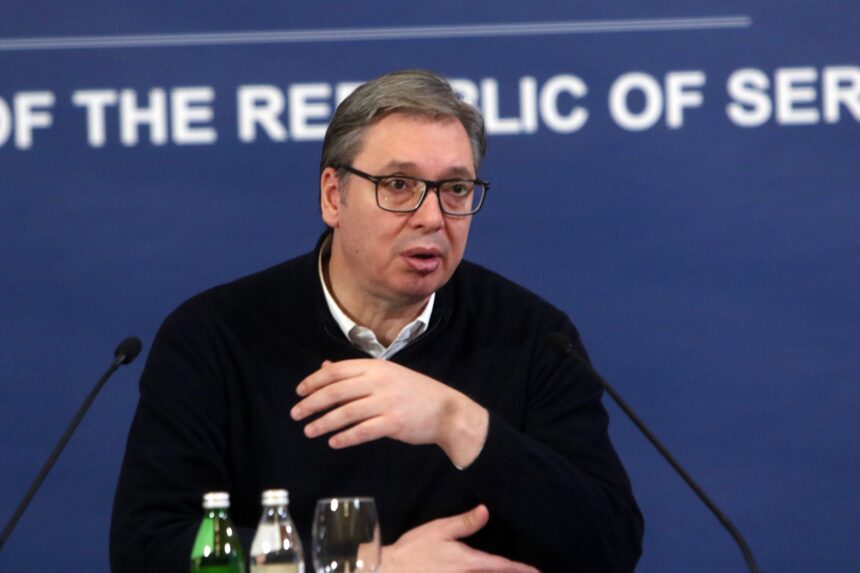
Serbian President Aleksandar Vučić has praised the leadership of Republika Srpska for what he described as consistent political support for Serbia, while sharply criticizing previous Serbian governments and Montenegro over their policies on Kosovo and other issues affecting Serb interests.
Speaking at a ceremony marking Remembrance Day for Serbs killed and expelled during Croatia’s 1995 “Operation Storm,” Vučić said Serbia had an obligation to maintain close relations with Republika Srpska and “never leave” it without support.
“I want to thank the leadership of Republika Srpska because you have always been with Serbia — not only through your love, attention and support, but also through your political actions,” Vučić said.
He argued that Republika Srpska had played a decisive role in preventing Bosnia and Herzegovina from recognizing Kosovo’s independence and joining NATO, contrasting its position with Montenegro, which recognized Kosovo and later became a NATO member.
“Did Bosnia and Herzegovina recognize Kosovo’s independence? Sarajevo and Mostar would have recognized it, but Republika Srpska did not,” Vučić said, referring to the role of the entity’s leadership under President Milorad Dodik.
Vučić also used the speech to revisit political developments in Serbia following the fall of Slobodan Milošević in 2000. He accused successive governments of making decisions that, in his view, weakened Serbia’s national position, including changes in the country’s relationship with Montenegro, the release of ethnic Albanian prisoners and what he described as an inadequate response to the March 2004 violence in Kosovo.
Discussing Kosovo’s declaration of independence in 2008, Vučić claimed that 85 countries supported independence at the time and criticized Serbia’s then-leadership for failing to mount an adequate response.
He also criticized Montenegro, accusing its authorities of repeatedly adopting resolutions and declarations concerning the Srebrenica genocide and of participating in commemorations of Operation Storm alongside Croatian officials.
Vučić said he had previously urged Montenegrin officials not to participate in events marking the Croatian military operation, arguing that doing so disregarded Serbian victims.
Despite his criticism of past and current regional policies, Vučić emphasized that he had not interfered in elections in Republika Srpska and did not expect its leadership to interfere in Serbia’s political processes.
He said Serbia’s relationship with Republika Srpska would remain a strategic priority and that Belgrade would continue working to strengthen ties with the Bosnian Serb entity.
“Serbia has an obligation never to leave Republika Srpska on its own,” Vučić said.
The remarks underscore Belgrade’s continued emphasis on its political relationship with Republika Srpska, while also highlighting Vučić’s longstanding opposition to Kosovo’s independence and criticism of neighboring Montenegro’s foreign and regional policies.