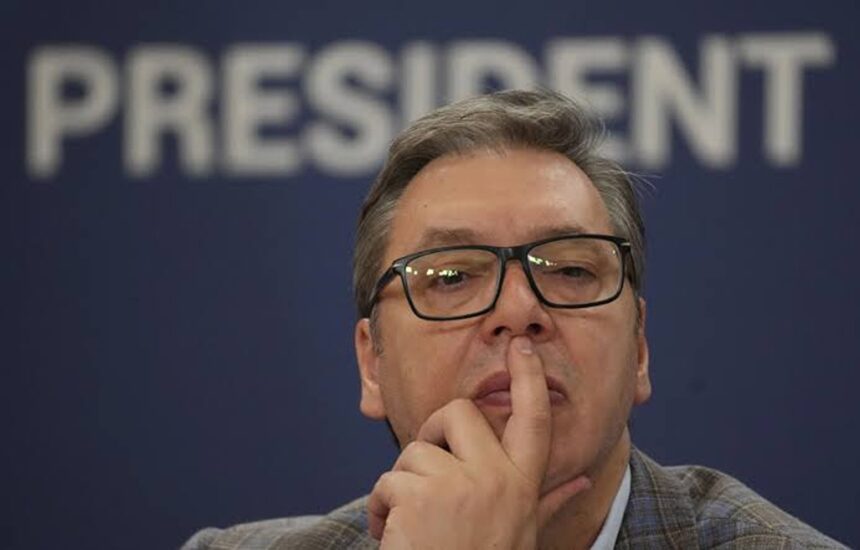
Aleksandar Vučić has once again turned Kosovo into the stage for political alarm. This time, the Serbian president’s target is the Ibër Bridge in Mitrovica and a date he claims could mark its reopening to vehicle traffic.
Vučić says he is “afraid” and that he will first ask European governments to prevent the opening. If Europe cannot stop it, he says, he will call Washington.
At that point, this looks less like a genuine security concern and more like a familiar exercise in political manipulation: create a sense of threat, present Serbs as victims, and then demand international intervention.
From a symbol of division to a bridge connecting communities
The basic fact missing from Vučić’s rhetoric is the history of the bridge itself.
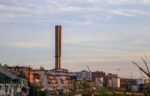
For years, the Ibër Bridge has been one of the most visible symbols of Mitrovica’s division. It physically separates the two parts of the city and has remained closed to vehicle traffic for a prolonged period.
Reopening it should not automatically be portrayed as an attack on Serbs.
If carried out safely and in coordination with international partners, reopening the bridge could mean greater freedom of movement, more contact between communities and fewer physical barriers dividing the city.
Yet Vučić presents this potential development almost as though Kosovo were preparing to launch an attack.
The familiar formula: fear, victimhood and foreign intervention
The pattern is difficult to miss.
A development in Kosovo is described as a threat. Serbian citizens are presented as being in danger. Belgrade then appeals to Brussels and Washington to intervene.
This time, the alleged crisis is a bridge.
Vučić can express concerns, criticise decisions and raise issues affecting Serbs in Kosovo. But that does not give Belgrade a veto over decisions made in Kosovo.
Kosovo is an independent state. Vučić is the president of Serbia, not the governor of Kosovo.
When division becomes political capital
There is a deeper contradiction in Vučić’s argument.
He regularly speaks about stability and coexistence, yet he is campaigning against the reopening of infrastructure that could physically reconnect the two parts of Mitrovica.
He speaks about protecting communities while reinforcing a political narrative built around separation.
And that is where the manipulation becomes particularly obvious.
A bridge that allows people to move, meet, work and interact is being presented as a threat — while the division it could help overcome is treated as something that must be preserved.
If the bridge can be reopened safely, under appropriate security arrangements and with international coordination, the relevant question should be how to make it work for everyone — not how to keep it closed because its reopening does not fit Belgrade’s political narrative.
Vučić can continue calling Europe. He can call Washington. He can issue statements, send letters and warn of impending crises.
But none of those phone calls changes the basic reality.
Kosovo is not Serbia’s property, Belgrade does not have a veto over Kosovo’s internal affairs, and a bridge that brings communities closer together should not be turned into another instrument of political manipulation.