The history of the Kosovo Specialist Chambers in The Hague can be traced back more than seven years before the Kosovo Assembly adopted the constitutional basis for their creation.
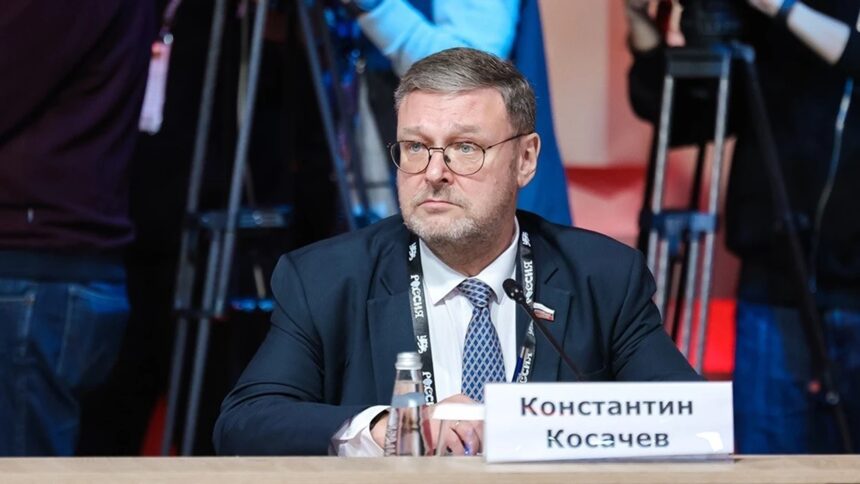
The first documented point in this process dates back to Strasbourg on April 15, 2008, when Russian politician Konstantin Kosachev, then a member of the State Duma and a member of Russia’s delegation to the Parliamentary Assembly of the Council of Europe (PACE), together with 16 other parliamentarians, submitted a motion titled “Inhuman treatment of people and illicit trafficking in human organs in Kosovo.”
The document, registered by PACE as Document 11574, focused on allegations of inhuman treatment and illicit organ trafficking in Kosovo. The motion referred to claims published in the memoirs of Carla Del Ponte, the former chief prosecutor of the International Criminal Tribunal for the former Yugoslavia.
Kosachev’s motion, together with those of the other parliamentarians, was not an indictment and did not constitute a judicial finding. The PACE document itself stated that the motion had not been debated by the Assembly and that it bound only the parliamentarians who had signed it.
However, the document had another significance: it brought the issue into the institutional process of the Council of Europe. On May 29, 2008, the motion was referred to the PACE Committee on Legal Affairs and Human Rights for the preparation of a report. On June 25, 2008, the committee appointed Swiss senator Dick Marty as rapporteur on the matter. Official PACE documents directly link Marty’s report to Motion 11574 submitted by Kosachev and the 16 other parliamentarians.
Thus began an institutional chain that would continue for years: Kosachev’s motion, Marty’s appointment, his report, the European Union investigation, and subsequently the creation of the Specialist Chambers.
On January 7, 2011, Dick Marty presented the report “Inhuman treatment of people and illicit trafficking in human organs in Kosovo.” The report addressed allegations of secret detention sites under KLA control in northern Albania and claims that some detainees had been killed so that their organs could be removed and subsequently trafficked.
The report became one of the key documents underlying the subsequent investigative process. On January 25, 2011, the Parliamentary Assembly of the Council of Europe adopted Resolution 1782, “Investigation of allegations of inhuman treatment of people and illicit trafficking in human organs in Kosovo,” with 169 votes in favor, eight against and 14 abstentions.
At that point, the allegations of organ trafficking were no longer merely part of a parliamentary motion; they had become the subject of an official Council of Europe report and a resolution adopted by the Assembly.
In September 2011, the European Union established the Special Investigative Task Force (SITF) to conduct an independent criminal investigation into the allegations contained in Marty’s report and related crimes. The Specialist Chambers themselves, in their account of their institutional history, link the creation of the SITF to the Council of Europe report and state that its investigation ultimately concluded that there was sufficient evidence to bring indictments.
The SITF was headed by American prosecutor Clint Williamson. After approximately three years of investigation, on July 29, 2014, Williamson presented the Task Force’s findings in Brussels.
Williamson stated that the investigation had found sufficient evidence to prosecute several senior former KLA officials for a range of crimes, including killings, abductions, unlawful detention and sexual violence. He said the crimes did not appear to be isolated acts by individuals, but rather part of an organized campaign of persecution.
However, specifically regarding organ trafficking, the investigation reached a conclusion that differed from the way the allegation had been presented in the public debate. Williamson said there were “compelling indications” that the practice of removing and trafficking organs had occurred on a very limited scale and that a small number of people had been killed for that purpose. However, he said that at that stage there was insufficient evidence to bring an indictment for the offense.
In other words, the SITF investigation did not turn the organ-trafficking allegation into a criminal indictment.
This is one of the key distinctions between Marty’s report and Williamson’s criminal investigation. The Council of Europe report had placed allegations of organ trafficking at the center of international attention, while the criminal investigation several years later said there were indications of a very limited practice, but insufficient evidence to prosecute anyone for that offense.
Meanwhile, Williamson called for an appropriate judicial mechanism to be established for the other crimes for which sufficient evidence existed. The Specialist Chambers would ultimately become the mechanism dealing with those allegations.
In 2014, Kosovo and the European Union took institutional steps toward establishing this mechanism. On August 3, 2015, the Kosovo Assembly approved the constitutional amendment adding Article 162 to the Constitution and adopted the Law on Specialist Chambers and the Specialist Prosecutor’s Office. The Specialist Chambers themselves state that this followed the 2014 agreement between Kosovo and the European Union.
Thus, a motion submitted in Strasbourg in 2008 evolved, through several institutional stages, into a process that ultimately resulted in the creation of a special judicial institution in The Hague.
But the history of the organ-trafficking allegations did not end with the establishment of the Specialist Chambers.
In 2020, the Specialist Prosecutor’s Office filed an indictment against Hashim Thaçi, Kadri Veseli, Rexhep Selimi and Jakup Krasniqi. The indictment was confirmed on October 26, 2020, and made public in November of that year.
In the confirmed indictment, the charges included six counts of crimes against humanity — persecution, imprisonment, other inhumane acts, torture, murder and enforced disappearance — as well as four counts of war crimes: unlawful or arbitrary arrest and detention, cruel treatment, torture and murder.
Organ trafficking was not among those charges. This is where the distinction between the history of the process and the content of the indictment becomes essential.
The allegations of organ trafficking appeared in the title and at the core of the motion submitted by Kosachev in 2008. They were central to Marty’s 2011 report. They were subsequently investigated by the SITF. In 2014, Williamson said there were compelling indications of a limited practice, but insufficient evidence to bring an indictment for that offense.
Meanwhile, the Specialist Chambers’ indictment against Thaçi, Veseli, Selimi and Krasniqi focused on other alleged crimes. Even today, the Specialist Chambers describe their jurisdiction as being connected to the crimes and allegations reported in the Council of Europe report of January 7, 2011.
And in 2020, the indictment against the four former KLA leaders did not include organ trafficking as a criminal offense.
On September 16, 2026, at the conclusion of the trial, the Trial Panel of the Specialist Chambers found Hashim Thaçi, Kadri Veseli, Rexhep Selimi and Jakup Krasniqi guilty.
Thaçi and Krasniqi were sentenced to 25 years in prison each, Veseli to 18 years, and Selimi to 13 years.
The case is now expected to proceed to appeal, where the first-instance judgment will be subject to review, including the evidence and arguments presented by the defense.