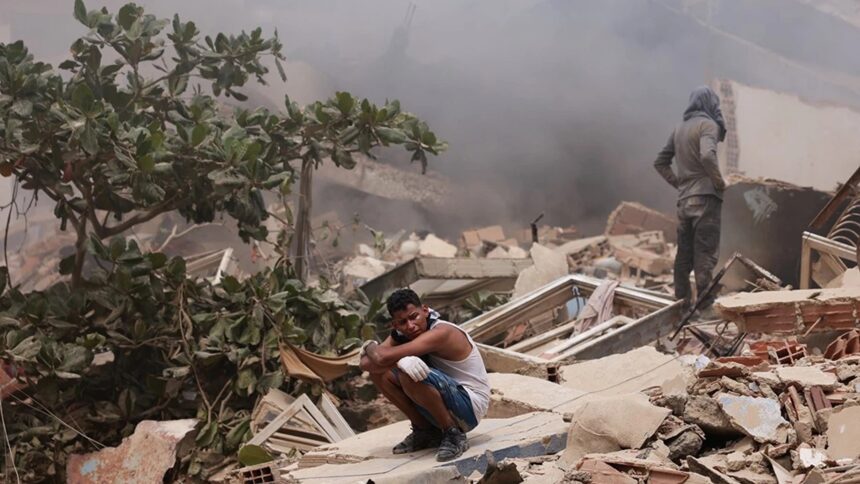
Although earthquakes with a magnitude of 7.5 are extremely powerful, they are not unprecedented. What made the recent earthquake in Venezuela particularly devastating was a combination of several factors rather than magnitude alone.
1. It Struck Densely Populated Areas
The strongest shaking affected heavily populated regions, including the capital city, Caracas, home to more than two million people, as well as the coastal state of La Guaira.
When a major earthquake hits directly beneath or near large urban centers, the risk of casualties and infrastructure damage increases dramatically.
2. The Earthquake Was Relatively Shallow
One of the most important factors was the earthquake’s depth. The second and stronger quake occurred only about 10 kilometers (6 miles) beneath the Earth’s surface.
Shallow earthquakes release their energy closer to the ground, producing much stronger shaking than deeper earthquakes of the same magnitude.
3. Multiple Strong Quakes Occurred
Authorities reported two major earthquakes during the same event:
- First earthquake: Magnitude 7.2
- Second earthquake: Magnitude 7.5
Successive powerful tremors can weaken buildings that survive the initial shock, increasing the likelihood of collapse during subsequent shaking.
4. Damage to Infrastructure
The earthquakes affected roads, bridges, utilities, and communication networks. When infrastructure is damaged, rescue operations become slower and more difficult, which can increase the number of casualties.
5. Magnitude Alone Does Not Determine Destruction
Experts note that stronger earthquakes have sometimes caused fewer casualties because they occurred in remote or sparsely populated regions.
For example, an earthquake measuring 8.8 can cause relatively limited human losses if it strikes far from major population centers, whereas a 7.5 earthquake directly beneath a large city can become catastrophic.
Current Impact
According to the reported figures:
- 164 people confirmed dead
- 971 injured
- More than 25,000 reported missing
- Thousands displaced from their homes
The disaster illustrates a key lesson in seismology: the location, depth, population density, and building resilience often matter as much as—or more than—the earthquake’s magnitude itself.